书单
百科
这个词条暂时没有中文维基百科条目,下面是英文维基百科的内容(英文原文):
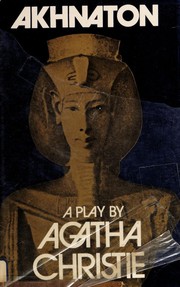
Akhnaton is a play by Agatha Christie. It was written in 1937, around the same time she was writing Death on the Nile. It is set in Ancient Egypt, and followed the exploits of the Egyptian Pharaoh Akhnaton, his wife Nefertiti and his successor Tutankhaton (who would take the name Tutankhamun when he became Pharaoh). In writing the play, Christie was assisted by the eminent Egyptologist Stephen Glanville, who was a friend of both her and her husband, Max Mallowan.
In her 1977 autobiography, Christie confessed that she never thought that the play would be produced but that she simply enjoyed writing plays or writing something different from that which she was used to. There is no record of any serious attempt to get the play staged once it had been written, but Charles Osborne, in his book The Life and Crimes of Agatha Christie puts forward the theory that the publishers thought it not commercial, and was not what the public expected of Agatha Christie, who was seen at the time as purely a writer of crime fiction.
In May 1972, Christie came across the manuscript, and sent it to her publisher in view of the interest in ancient Egypt prompted by the Treasures of Tutankhamun exhibition which ran at the British Museum from 30 March until 30 September of that year, although she admitted that it would be an expensive production to stage. She made minor revisions to her 1937 manuscript and asked that it be published; however there were still major differences between events in the play and what was then known of this time in Egyptian history (such as Akhnaton now being known to have a second wife called Kiya). The play was published by Collins in May 1973. A new, hardcover, facsimile edition of the play was issued in 2009.
The play has been used by some amateur groups and repertory theatres, but is seldom performed. Aside from the commercial issues of the subject matter, the play requires eleven scene changes and over twenty speaking parts.
Synopsis
Act One
Scene 1 – The Great Courtyard of the Royal Palace of Amenhotep III in the City of No Amon (Thebes): A delegation of Syrians arrive at the palace bringing the shrine of the goddess Ishtar of Nineveh with them in hope that it cures Pharaoh Amenhotep of his illness. The audience is introduced to the High Priest of Amon, Meriptah, and a young soldier Horemheb. Meriptah is loyal to himself, his polytheistic religion of Amon, his country and his Pharaoh, somewhat in that order, whereas Horemheb is a simpler though more honourable man for having equal loyalty to his country and his Pharaoh and through him his religion. Queen Tiye (called Tyi in the play) greets the delegation together with her son, Akhnaton, who is described as a "fragile-looking boy with intelligent eyes". He stays behind and meets Horemheb. Akhnaton is revealed to the audience as an artist, poet and mystic who believes in a world where all men are free and fighting will end through love. He also recognises the goodness in Horemheb, asks for and receives his allegiance. As the scene ends, Meriptah reveals that the Amenhotep has died and that Akhnaton is now Pharaoh.
Scene 2 – A Room in the Palace (Three years later): Tyi is regent of Egypt until Akhnaton comes of age. The young man shows little interest in ruling as his father had done and antagonises Meriptah. It is revealed that it was Tyi who instilled in Akhnaton a dislike of the religion of Amon and a reverence of Ra when he was a child. In conversation with another priest, Ay, Akhnaton realises his destiny and that he is the son of Ra. He gives orders that his barge be prepared for a voyage down the Nile to a spot where he will build a new city to the glory of Ra. Nefertiti is introduced. She and her husband Akhnaton have a genuine love for each other and their only child, a daughter. Tyi warns Nefertiti that she must persuade her husband not to oppose the cult of Amon to any great degree, knowing the danger that such a move would present to him, but she is too loyal to her husband to go against his wishes. Nefertiti's calculating sister, Nezzemut asks her dwarf servant, Para, for a vision of the future through sand divining. Para foretells that Horemheb will one day be Pharaoh and that Nezzemut will be his Queen.
Scene 3 – A bank of the Nile, 300 miles below Thebes (A month later): On his royal barge, Akhnaton decides on the spot for his new city of Horizon (at the site of modern-day Amarna).
Act Two
Scene 1 – A bank of the Nile in the City of No Amon (eight years later): The populace of the old city are revealed as being angry with the changes that Akhnaton has brought to their country with his attack on the old religion. Meriptah overhears their complaints as he waits for an acolyte, Ptahmose to arrive from Horizon with news of events there. Ptahmose reveals that Tutankhaton is betrothed to Akhnaton's second daughter, Horemheb is now commander of the armies of Egypt and that Ptahmose has an ally in the cunning Nezzemut. Meriptah's plan is the restoration of the old religion and his own power and riches.
以上文字摘自英文维基百科「Akhnaton (play)」(有删节,去掉了参考文献等尾部小节),按 CC BY-SA 4.0 使用,作者为维基百科的各位编者。
资料卡
- 原作语言
- 英语
- 作品形式
- 剧作
资料卡来自 Wikidata Q2829015(CC0),众包数据,个别字段可能不全。