书单
百科
这个词条暂时没有中文维基百科条目,下面是英文维基百科的内容(英文原文):
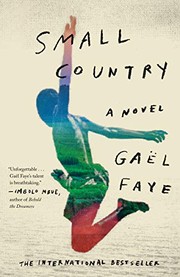
Small Country (French: Petit pays) is the debut novel by the Franco-Rwandan rapper, songwriter and novelist, Gaël Faye, set in the country of his birth, Burundi. It was first published in France in August 2016 by Grasset, and has since been translated into 36 languages. Translated into English in 2018 by Sarah Ardizzone, the English audiobook is narrated by Dominic Hoffman.
Process
Small Country is Faye's debut novel. Faye, who writes music, said in an interview that he felt there were some limits to poetry that prose would better capture. His song, ‘L’ennui des après midi sans fin’ (transl. The boredom of never ending afternoons), is about childhood and the loss of innocence; Faye found himself wanting to expand on that idea with a novel. Although initially hesitant, he was encouraged to try writing more about his life by editor Catherine Nabokov. In order to help himself bridge the gap to novel writing, Faye included epistolary-style letters in Small Country.
Faye has said that he did not find it difficult to write about the Rwandan genocide, considering it is a part of everyday life in Rwanda, a country he visits frequently. According to Faye, he feels that Small Country actually minimizes the extent of the trama inflicted from the genocide.
Events in contemporary France, such as the 2015 Charlie Hebdo shooting, reminded Faye of his tumultuous childhood in Burundi. The title, Small Country (French: Petit pays), refers to one of Faye's songs, Petit Pays.
Summary
Small Country opens with the 33-year-old narrator, Gabriel, reflecting on his life in France. Unable to let go of his past, Gabriel makes the decision to return to Burundi, the country of his childhood, as the novel's main story begins.
Set in Burundi and Rwanda from 1993 onwards, the novel is subsequently narrated by ten-year-old Gaby, who lives with his French father and Rwandan mother in an impasse in a comfortable district of Bujumbura, Burundi. Gabriel's sheltered upbringing leaves him oblivious to the increasing tensions between the Hutu majority and the Tutsi minority (to which he, through his mother, belongs). As neighboring Rwanda faces the outbreak of civil war and genocide, which spill over into Burundi, the innocence of Gaby and his group of friends is brutally shattered.
Literary devices
The novel is based on Gaël Faye's own experiences growing up in Burundi during this period; the author has, however, stressed that it is not strictly autobiographical. On the topic, Faye has said that "I think every novel is a form of autobiography." The similarities between Faye and the character of Gaby are purposeful, but also not identical. Faye used his advantage of adult perspective to write about a boy who went through a similar situation to him as a child.
Child's perspective
The novel has been praised on its use of a child's point of view. The narrator, Gaby, is between 10 and 11 for much of the story. Using the perspective of a child can introduce a sense of naivety. A review published in Words Without Borders praises Gaby's perspective as being able to simplify the conflict into its basic roots.
Reception
The novel was very well-received upon its publication in France, selling 700,000 copies. It was shortlisted for the Prix Goncourt in 2016, as well as for awards by Fémina, Médicis, Interallié, the Académie française and Renaudot. In the same year, it won the Prix Goncourt des lycéens, chosen by lycée students (typically from 15-18 years of age).
An English translation, Small Country, was translated by Sarah Ardizzone and published in 2018 by Hogarth Press. The English translation also received favourable reviews and was longlisted for the 2019 Aspen Words Literary Prize and the 2019 Andrew Carnegie Medals for Excellence in Fiction and Non-Fiction. In April 2019 it was shortlisted for the 2019 Albertine Prize. Writing in The Guardian, Anthony Cummins called the work "a sharp shock of a novel"; he also, however, expressed disappointment at certain elements of Faye's use of characters, noting that "Faye seems to squander the dramatic potential that a child's point of view might bring."
The novel has also been translated into Irish, Italian, Serbian, Portuguese and into the official language of Burundi, Kirundi.
Small Country's English edition has been criticized for its awkward prose. In a review for Kirkus Books, the critic writes that the language is not strong throughout the book, and is unable to pinpoint this to Faye himself or the translator Ardizzone.
Awards and honors
2016 Prix du roman Fnac
2016 Prix du Premier Roman
2016 Prix Goncourt des Lycéens
2016 Prix France Culture/Télérama
2019 Aspen Words Literary Prize longlist (English translation)
2019 Andrew Carnegie Medals for Excellence in Fiction and Non-Fiction longlist (English translation)
2019 Albertine Prize shortlist (English translation)
Film adaptation
In 2020, the novel was adapted into the film Small Country: An African Childhood, directed by Éric Barbier. Although Faye has, on multiple occasions, stressed that Small Country is not autobiographical, the film was marketed as a "true story." Djibril Vancoppenolle plays the main character, Gaby.
以上文字摘自英文维基百科「Small Country」(去掉了参考文献等尾部小节),按 CC BY-SA 4.0 使用,作者为维基百科的各位编者。
资料卡
- 原题
- Petit Pays
- 原作语言
- 法语
- 首次出版
- 2016 年 8 月 24 日
- 作品形式
- 长篇小说
- 首版出版社
- 格拉塞出版社
- 主题
- 布隆迪内战、卢旺达大屠杀
- 故事发生地
- 布琼布拉、基加利
- 故事年代
- 20世纪80年代、20世纪90年代
资料卡来自 Wikidata Q27660315(CC0),众包数据,个别字段可能不全。