书单
百科
这个词条暂时没有中文维基百科条目,下面是英文维基百科的内容(英文原文):
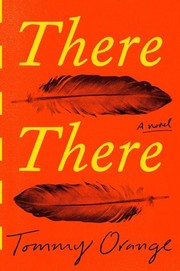
There There is the debut novel by Cheyenne and Arapaho author Tommy Orange. Published in 2018, the book follows a large cast of Native Americans living in the Oakland, California, area and contains several essays on Native American history and identity. The characters struggle with a wide array of challenges, ranging from depression and alcoholism, to unemployment, fetal alcohol syndrome, and the challenges of living with an "ambiguously nonwhite" ethnic identity in the United States. All of the characters unite at a community powwow and its attempted robbery.
The book explores the themes of Native peoples living in urban spaces, and issues of ambivalence and complexity related to Natives' struggles with identity and authenticity. There There was favorably received, and was a finalist for the 2019 Pulitzer Prize. The book was also awarded a Gold Medal for First Fiction by the California Book Awards.
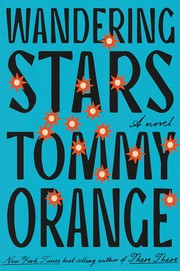
Orange's second novel, Wandering Stars, was published in February 2024 and serves as both a prequel and sequel to There There.
Plot
The book begins with an essay by Orange, detailing "brief and jarring vignettes revealing the violence and genocide that Indigenous people have endured, and how it has been sanitized over the centuries."
As the novel continues into fiction it alternates between first, second, and third person perspectives, following twelve characters who are Native American or closely related to Native Americans in the area of Oakland, California. The main characters include Tony Loneman, Dene Oxendene, Opal Viola Victoria Bear Shield, Edwin Black, Bill Davis, Calvin Johnson, Jacquie Red Feather, Orvil Red Feather, Octavio Gomez, Daniel Gonzales, Blue, and Thomas Frank.
The characters face similar conflict throughout the novel. A teenager, Orvil Red Feather, turns to Google to answer the question "What does it mean to be a real Indian," and in the mirror, wearing tribal regalia, sees only "a fake, a copy, a boy playing dress-up." Calvin Johnson confronts his guilt at claiming to not be Native at all, admitting, "Mostly I just feel like I'm from Oakland." One character struggles with his place in society as "ambiguously nonwhite," while Edwin Black, "overweight and constipated, has a graduate degree in Native American literature but no job prospects — a living symbol of the moribund plight of Indian culture in the United States." Thomas Frank, who is an alcoholic and has lost his job working as a janitor, wrestles with a life lived suspended between his mother, who is white, and his "one-thousand-percent Indian" father who is a medicine man. Orange writes:
You're from a people who took and took and took and took. And from a people taken. You're both and neither. In the bath, you'd stare at your brown arms against your white legs in the water and wonder what they were doing together on the same body, in the same bathtub.
Tony Loneman grapples with the fetal alcohol syndrome left to him by his alcoholic mother. Octavio Gomez remembers alcohol through the drunk driving incident that claimed his family. Jacquie Red Feather faces sobriety from the perspective of a substance abuse counselor in the wake of her daughter's suicide thirteen years prior. Blue recalls how she initially remained in Oklahoma with her abusive partner before finally leaving. Jacquie and her half-sister Opal Viola Victoria Bear Shield recall their childhood experiences in the Native American occupation of Alcatraz island.
All storylines and characters eventually coalesce around a powwow taking place at the Oakland–Alameda County Coliseum, where Octavio, Tony, Calvin, and others have smuggled in 3D printed handguns in an attempt to rob the event to repay drug debts.
Themes
Orange, a member of the Cheyenne and Arapaho tribes, was raised in the Oakland area.
The title of the novel (despite taking note of the song "There There" by English rock band Radiohead in the second chapter) is a reference to Gertrude Stein's own description, in her 1937 Everybody's Autobiography, of an attempt to return to her childhood home in Oakland but finding that the rural Oakland she remembered was gone: "There is no there there." For Native people, Orange writes that cities and towns represent "buried ancestral land, glass and concrete and wire and steel, unreturnable covered memory. There is no there there."
Alcatraz Island and its prison also serves as a meaningful location in the novel: a desolate institution that had no running fresh water and no electricity; these conditions were used as an example comparable to the conditions that many Native American reservations faced. The character Opal Viola Victoria Bear Shield, her half-sister Jacquie, and their mother Vicky, were on Alcatraz during the Native American Occupation of Alcatraz.
Writing in The New York Times, Alexandra Alter described the book in terms of ambivalence and complexity, quoting Orange, himself a graduate of the Institute of American Indian Arts, born to a Cheyenne father and white mother who converted to evangelical Christianity and denounced his father's spiritual beliefs, "I wanted to have my characters struggle in the way that I struggled, and the way that I see other native people struggle, with identity and with authenticity."
以上文字摘自英文维基百科「There There (novel)」(有删节,去掉了参考文献等尾部小节),按 CC BY-SA 4.0 使用,作者为维基百科的各位编者。
资料卡
- 原题
- There There
- 原作语言
- 英语
- 首次出版
- 2018 年 6 月 5 日
- 作品形式
- 长篇小说
- 获奖
- 海明威奖(2019)、弗莱贺蒂-邓南首作小说奖(2018)、安斯非德-禾夫图书奖(2019);另有 2 项只有外文名
资料卡来自 Wikidata Q55635667(CC0),众包数据,个别字段可能不全。