书单
百科
这个词条暂时没有中文维基百科条目,下面是英文维基百科的内容(英文原文):
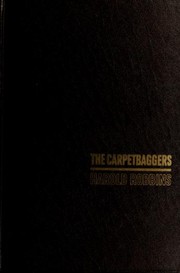
The Carpetbaggers is a 1961 bestselling novel by Harold Robbins, which was adapted into a 1964 film of the same title. The prequel Nevada Smith (1966) was also based on a character in the novel.
In the United States, the term "carpetbagger" refers to an outsider relocating to exploit locals. It derives from postbellum Southern United States usage, where it referred specifically to opportunistic Northerners who flocked to the occupied southern states in hopes of increasing their political, financial and social power during the Reconstruction era. In Robbins' novel, the exploited territory is the film industry, and the newcomer is a wealthy heir to an industrial fortune who, like Howard Hughes, simultaneously pursued aviation and filmmaking avocations.
Roman à clef
Ian Parker described the book as "a roman à clef — it was generally thought to have been inspired by the life of Howard Hughes". In an interview with Dick Lochte, Robbins said, "The airplane manufacturer in The Carpetbaggers was Bill Lear, not Howard Hughes, by the way." TV Guide Online's capsule summary of the movie says, however, "Deny it though he might, Harold Robbins obviously used parts of the life of Howard Hughes as the basis for his major character, Jonas Cord." Lear, the developer of the Lear jet and the 8-track tape player, was better known as an engineer rather than as an aviator, and had no connection with Hollywood.
Parallels between Cord and Hughes include:
Cord is the heir to his father's Cord Explosives Company, Hughes to his father's Hughes Tool Company.
Cord personally sets aviation records, as did Hughes.
Much of the novel concerns itself with Cord's ventures into film production; Hughes produced 26 films.
Cord owns an airline named ICA; Hughes owned TWA.
Cord personally pilots a gigantic flying boat called the Centurion, "the biggest airplane ever built", to prove its airworthiness in order to meet a naval contract condition. Hughes personally piloted the Hughes H-4 Hercules or Spruce Goose, by some criteria the largest aircraft ever built, to prove its airworthiness in order to deflect Congressional criticism of his war contracts.
Ian Parker and others identify the character Rina Marlowe with Jean Harlow, whom Howard Hughes had under personal contract for a few years and who many believe had an affair with Hughes; although actual evidence of such an affair is patchy at best, and Harlow often complained about Hughes making a fortune loaning her to other studios and paying her a paltry salary (her contract with Hughes was eventually bought out by MGM). Carroll Baker, the actress who played Rina in The Carpetbaggers, was chosen a year later to play the title role in the biopic Harlow. Fictional Rina Marlowe's husband, cinema director Claude Dunbar, commits suicide shortly after their marriage, as did Jean Harlow's second husband, producer Paul Bern. Marlowe dies tragically of encephalitis in about 1934; Harlow died of kidney failure in 1937.
In other respects, correspondences between the novel's characters and real individuals are imprecise. In the novel, Jonas Cord's first movie production is entitled The Renegade; is released in 1930; and stars Rina Marlowe in her screen debut. Marlowe has a 38C bust, and Cord has one of his aeronautical engineers design a special brassiere for her. There is a brief reference to his producing a movie four years later entitled Devils in the Sky. These movie titles bear an unmistakable similarity to two movies produced and directed by Hughes: The Outlaw (1943) and Hell's Angels (1930).
Hell's Angels starred Jean Harlow, but it was not her debut; she was an established actress with seventeen earlier screen credits. Jean Harlow was famous as (in the words of her official estate-sponsored website) "Hollywood's Original Blonde Bombshell", but her bust measurement was not extraordinary. The real-life person who did make her screen debut as a star, was famous for her large bust, and for whom Hughes really did have an engineer design a special brassiere, was Hughes' later discovery (and model for the character Jennie Denton) Jane Russell, who starred in The Outlaw.
The names of real people whom Robbins' fictional characters resemble are often mentioned briefly within the novel, potentially further confusing the situation. When Rina Marlowe dies, a studio official says that, to replace Marlowe in an upcoming picture, "I'm already talking to Metro about getting Jean Harlow." A fictional Charles Standhurst, who owns "more than twenty newspapers stretched across the nation", is said to be "second only to Hearst".
The character Nevada Smith is a cowboy who breaks into the movies by volunteering to perform a risky stunt, becomes fabulously wealthy as a movie cowboy star, and becomes proprietor of a Wild West show. In these details he bears a vague resemblance to Tom Mix, who was a star performer in the 101 Wild West Show and became in turn a movie extra, stuntman, and major star. Some also see a resemblance between Nevada Smith and William Boyd, who became famous as Hopalong Cassidy. Others say that Smith was based on cowboy actor Ken Maynard. A movie entitled Nevada Smith (1966) starring Steve McQueen was based on Smith's role in this book. The role of Billy the Kid in Hughes' The Outlaw was played by Jack Buetel, who prior to his movie career was neither an outlaw nor a cowboy, but an insurance clerk.
Reviews
Murray Schumach's review in The New York Times on June 25, 1961, opens: "It was not quite proper to have printed The Carpetbaggers between covers of a book. It should have been inscribed on the walls of a public lavatory." He complains that the plot is merely "an excuse for a collection of monotonous episodes about normal and abnormal sex—and violence ranging from simple battery to gruesome varieties of murder".
以上文字摘自英文维基百科「The Carpetbaggers」(有删节,去掉了参考文献等尾部小节),按 CC BY-SA 4.0 使用,作者为维基百科的各位编者。
资料卡
- 原题
- The Carpetbaggers
- 原作语言
- 英语
- 首次出版
- 1961 年
- 作品形式
- 长篇小说
- 体裁
- 纪实小说
资料卡来自 Wikidata Q7721433(CC0),众包数据,个别字段可能不全。
改编作品
电影2
名单来自 Wikidata(CC0):只列条目里写明「改编自 / 取材于」这本书的作品,不按名字猜;众包数据,可能不全。