书单
不公正时代:美国黑奴经济学 (1974)
百科
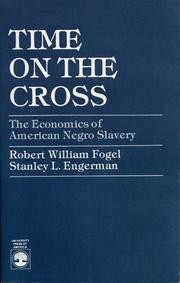
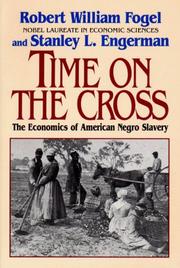
《苦难的时代:美国奴隶制经济学》(英语:Time on the Cross: The Economics of American Negro Slavery)是一本由美国经济学家罗伯特·福格尔与经济史学家斯坦利·L·恩格尔曼合著的著作,主题为美国奴隶制的经济史,1974年由W·W·诺顿公司出版,获得了1975年的班克洛夫特奖。
以上文字摘自维基百科「苦难的时代:美国奴隶制经济学」(去掉了参考文献等尾部小节),按 CC BY-SA 4.0 使用,作者为维基百科的各位编者。
中文维基百科的条目比较短,下面附上英文维基百科的内容(英文原文):
Time on the Cross: The Economics of American Negro Slavery (1974) is a quantitative study of slavery by the economists Robert Fogel and Stanley L. Engerman. The book argued that slavery was an economically rational institution and that the economic exploitation of slaves was not as catastrophic as presumed, because there were financial incentives for slaveholders to maintain a basic level of material support for those they held as property. It was controversial and attracted media attention as it contradicted the long-standing notion that slavery was economically inefficient, underdeveloped the Southern United States, and was on the path to extinction before the American Civil War broke out.
Content
The scholar Thomas L. Haskell wrote in 1975 that Time on the Cross had two main themes: to revise the history of slavery and to support the use of the scientific method in history.
The book directly challenged the long-held conclusions that American slavery was unprofitable, a moribund institution, inefficient, and extremely harsh for the typical slave. The authors proposed that slavery before the Civil War was economically efficient and profitable, especially in the case of the South, which grew commodity crops such as cotton, tobacco, and sugar. These types of crops were usually grown on plantations that employed a gang system of labor, which was closely monitored and considered more efficient than task-based work by smaller groups.
Fogel wrote that slave farms were just as productive as free farms. He said that the large plantation-style slave farms (16+ slaves) were the most efficient due to economies of scale, having a Total Factor Productivity ratio (Ai/Aj) to be around 1.33. Fogel also wrote that if slaves had a day of rest, they tended to be more efficient because of the extra day of rest. They would be able to regain their energy and thus have more energy to produce more. "In their revised view slaves were hard working; slave labor was of superior quality. Indeed, this helps explain why large slave plantations were much more efficient than free Southern farms." In addition, since different crops were grown in the South and the North, he noted that although slavery was efficient in the South, it would not have been so in the North due to different weather and other conditions.
The authors predicted that if slavery had not been abolished, the price of slaves would have continued to rise rapidly in the late 19th century as more land was put into production for cotton. The book compares conditions and economics in the "Old South" (Atlantic Coastal states) with the "New South" (areas farther west, commonly called the Deep South). It evaluates available statistics to shed light on slave life. The authors point out that following emancipation and the end of the Civil War, the life expectancy of freedmen declined by 10 percent, and their illnesses increased by 20 percent, over slavery times. (At the same time, there was considerable social dislocation across the South following the widespread destruction of the war and loss of life among a generation of men. White militias directly attacked and intimidated freedmen, and with the agricultural economy being decimated, causing widespread problems and suffering among the entire population.)
The authors evaluated the Slave Narrative Collection, oral interviews conducted by the Federal Writers' Project of the Works Progress Administration, United States Census information, and other statistical data to assert that many slaves were encouraged to marry and maintain households, they were given garden plots, the dehumanizing practice of "slave breeding" was virtually non-existent, the quality of their daily diets and medical care were comparable to the white population, and many trusted slaves were given great responsibility in managing plantations. This was in contrast to other accounts of the dehumanizing effects of slavery.
以上文字摘自英文维基百科「Time on the Cross: The Economics of American Negro Slavery」(有删节,去掉了参考文献等尾部小节),按 CC BY-SA 4.0 使用,作者为维基百科的各位编者。
资料卡
- 原题
- Time on the Cross: The Economics of American Slavery
- 原作语言
- 英语
- 首次出版
- 1974 年
- 体裁
- 非虚构作品
- 主题
- 美国奴隶制度
- 获奖
- 班克洛夫特奖(1975)
资料卡来自 Wikidata Q7805419(CC0),众包数据,个别字段可能不全。