书单
百科
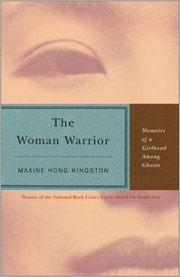
《女勇士》是华裔美国人作家汤婷婷写的一本书,由克诺夫出版社于1976年出版。该书将自传与中国古代民俗融为一体。《女勇士》获得美国国家书评人协会奖,并被时代杂志评为20世纪70年代最佳非虚构类书籍之一。
以上文字摘自维基百科「女勇士」(去掉了参考文献等尾部小节),按 CC BY-SA 4.0 使用,作者为维基百科的各位编者。
中文维基百科的条目比较短,下面附上英文维基百科的内容(英文原文):
The Woman Warrior: Memoirs of a Girlhood Among Ghosts is a book written by Chinese American author Maxine Hong Kingston and published by Alfred A. Knopf in 1976. The book blends autobiography with old Chinese folktales.
The Woman Warrior won the National Book Critics Circle Award and was named one of TIME magazine's top nonfiction books of the 1970s.
Genre
The specific genre of The Woman Warrior has been disputed due to Kingston's blend of perspectives, specifically traditional Chinese folktale and memoir. With this mixture, Kingston tries to provide her audience with the cultural, familial, and personal context needed to understand her unique position as a first-generation Chinese-American woman.
Susan Stanford Friedman's assessment of autobiography with regard to women and minority groups explains Kingston's intricate blend of perspective and genre: women and cultural minorities often don't have the privilege of viewing themselves as individuals isolated from their gender or racial group. Kingston illustrates this condition through her use of Chinese talk-story, her mother's traditional Chinese perspective, and her own first-person view as a Chinese American.
Plot summary
The book is divided into five interconnected chapters, which read like short stories.
"No-Name Woman"
In the first part of this chapter, the narrator is recounting how her mother once told her the story of the No-Name Woman. The chapter essentially opens as a vignette told from the mother's point of view. She tells the story of the No-Name Woman, her husband's deceased sister. The middle portion of this chapter is Kingston's retelling of the No-Name Woman Story. Kingston uses her own experiences with Chinese tradition and culture to substantiate alternate "versions" of the tale. At the end of "No-Name Woman", Kingston reflects on the importance of her mother's story. She concludes that the real lesson is not how No-Name Woman died, but rather, why she was forgotten.
"White Tigers"
In the first part of "White Tigers", Kingston recounts her mother's talk-story of Fa Mu Lan, a woman warrior who took her father's place in battle. Kingston reverts to talking about her life in America and compares it to the story of Fa Mu Lan. She cannot gather the courage to speak up against her racist boss, let alone save her people in China. In the end, Kingston decides that she and Fa Mu Lan are similar.
"Shaman"
Using her mother's old diplomas and photos from her years in China, Kingston recounts the story of her mother's life as a lady scholar. Brave Orchid, Kingston's mother, returns home after two years of study. Kingston was born during World War II and grew up with her mother's talk-stories. Her mother taught her that all white people around her were "ghosts".
"At the Western Palace"
"At the Western Palace" opens with Brave Orchid, her two children, and her niece at San Francisco International Airport. Brave Orchid is waiting for her sister, Moon Orchid, to arrive from Hong Kong. Moon Orchid is emigrating to the United States after being separated from her sister for 30 years. The sisters arrive back at Brave Orchid's house in the Valley. They are greeted by Brave Orchid's husband, who has aged significantly in Moon Orchid's eyes. Moon Orchid spends the summer in Brave Orchid's house. Brave Orchid, her oldest son, Moon Orchid, and Moon Orchid's daughter drive South to Los Angeles. They are on a mission to find Moon Orchid's husband. At the end of the chapter, Moon Orchid declines in mental health and is forced to return to live with Brave Orchid.
以上文字摘自英文维基百科「The Woman Warrior」(有删节,去掉了参考文献等尾部小节),按 CC BY-SA 4.0 使用,作者为维基百科的各位编者。
资料卡
- 原题
- The Woman Warrior
- 原作语言
- 英语
- 首次出版
- 1976 年
- 作品形式
- 长篇小说
- 首版出版社
- 阿尔佛雷德·A·克诺夫
- 故事发生地
- 中华人民共和国、洛杉矶
资料卡来自 Wikidata Q14981259(CC0),众包数据,个别字段可能不全。