书单
百科
这个词条暂时没有中文维基百科条目,下面是英文维基百科的内容(英文原文):
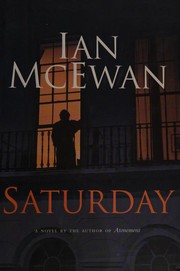
Saturday (2005) is a novel by Ian McEwan. It is set in Fitzrovia, central London, on Saturday, 15 February 2003, as a large demonstration is taking place against the United States' 2003 invasion of Iraq. The protagonist, Henry Perowne, a 48-year-old neurosurgeon, has planned a series of errands and pleasures, culminating in a family dinner in the evening. As he goes about his day, he ponders the meaning of the protest and the problems that inspired it; however, the day is disrupted by an encounter with a violent, troubled man.
To understand his character's world-view, McEwan spent time with a neurosurgeon. The novel explores one's engagement with the modern world and the meaning of existence in it. The main character, though outwardly successful, still struggles to understand meaning in his life, exploring personal satisfaction in the post-modern, developed world. Though intelligent and well read, Perowne feels he has little influence over political events.
The book, published in February 2005 by Jonathan Cape in the United Kingdom and in April in the United States, was critically and commercially successful. Critics noted McEwan's elegant prose, careful dissection of daily life, and interwoven themes. It won the 2005 James Tait Black Memorial Prize for fiction. It has been translated into eight languages.
Composition and publication
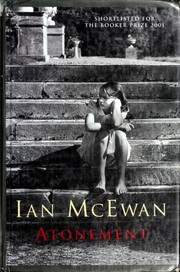
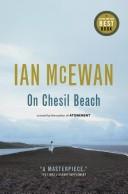
Saturday is McEwan's ninth novel, published between Atonement and On Chesil Beach, two works of historical fiction. McEwan has discussed that he prefers to alternate between writing about the past and the present.
While researching the book, McEwan spent two years work-shadowing Neil Kitchen, a neurosurgeon at The National Hospital for Neurology and Neurosurgery in Queen Square, London. Kitchen testified that McEwan did not flinch in the theatre, a common first reaction to surgery; "He sat in the corner, with his notebook and pencil". He also had several medical doctors and surgeons review the book for accuracy, though few corrections were required to the surgical description. Saturday was also proof-read by McEwan's longstanding circle of friends who review his manuscripts, Timothy Garton Ash, Craig Raine, and Galen Strawson.
There are elements of autobiography in Saturday: the protagonist lives in Fitzroy Square, the same square in London that McEwan does and is physically active in middle age. Christopher Hitchens, a friend of McEwan's, noted how Perowne's wife, parents and children are the same as the writer's. McEwan's son, Greg, who like Theo played the guitar reasonably well in his youth, emphasized one difference between them, "I definitely don't wear tight black jeans".
Excerpts were published in five different literary magazines, including the whole of chapter one in the New York Times Book Review, in late 2004 and early 2005. The complete novel was published by the Jonathan Cape Imprint of Random House Books in February 2005 in London, New York, and Toronto; Dutch, Hebrew, German, French, Spanish, Polish, Russian, and Japanese translations followed.
Synopsis
The book follows Henry Perowne, a successful, middle-aged surgeon. Five chapters chart his day and thoughts on Saturday 15 February 2003, the day of the demonstration against the 2003 invasion of Iraq, the largest protest in British history. Perowne's day begins in the early morning, when he sees a burning aeroplane streak across the sky. This casts a shadow over the rest of his day as reports on the television change and shift: is it an accident, or terrorism?
En route to his weekly squash game, a traffic diversion reminds Perowne of the anti-war protests occurring that day. After being allowed through the diversion, he collides with another car, damaging its wing mirror. At first the driver, Baxter, tries to extort money from him. When Perowne refuses, Baxter and his two companions become aggressive. Noticing symptoms in Baxter's behaviour, Perowne quickly recognises the onset of Huntington's disease. Though he is punched in the sternum, Perowne manages to escape unharmed by distracting Baxter with discussions of his disease.
Perowne goes on to his squash match, still thinking about the incident. He loses the long and contested game by a technicality in the final set. After lunch he buys some fish from a local fishmonger for dinner. He visits his mother, suffering from vascular dementia, who is cared for in a nursing home.
After a visit to his son's rehearsal, Perowne returns home to cook dinner, and the evening news reminds him of the grander arc of events that surround his life. When Daisy, his daughter, arrives home from Paris, the two passionately debate the coming war in Iraq. His father-in-law arrives next. Daisy reconciles an earlier literary disagreement that led to a froideur with her maternal grandfather; remembering that it was he who had inspired her love of literature. Perowne's son Theo returns next.
Rosalind, Perowne's wife, is the last to arrive home. As she enters, Baxter and an accomplice 'Nige' force their way in armed with knives. Baxter punches the grandfather, intimidates the family and orders Daisy to strip naked. When she does, Perowne notices that she is pregnant. Finding out she is a poet, Baxter asks her to recite a poem. Rather than one of her own, she recites Dover Beach, which affects Baxter emotionally, effectively disarming him. Instead he becomes enthusiastic about Perowne's renewed talk about new treatment for Huntington's disease. After his companion abandons him, Baxter is overpowered by Perowne and Theo, and knocked unconscious after falling down the stairs. That night Perowne is summoned to the hospital for a successful emergency operation on Baxter. Saturday ends at around 5:15 a.m. on Sunday, after he has returned from the hospital and had sex with his wife again.
以上文字摘自英文维基百科「Saturday (novel)」(有删节,去掉了参考文献等尾部小节),按 CC BY-SA 4.0 使用,作者为维基百科的各位编者。
资料卡
- 原题
- Saturday
- 原作语言
- 英语
- 首次出版
- 2005 年
- 作品形式
- 长篇小说
- 首版出版社
- 乔纳森·凯普
- 前作
- 赎罪
- 续作
- On Chesil Beach
- 故事发生地
- 伦敦
资料卡来自 Wikidata Q1723053(CC0),众包数据,个别字段可能不全。