书单

百科
这个词条暂时没有中文维基百科条目,下面是英文维基百科的内容(英文原文):
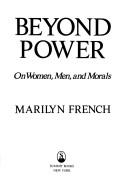
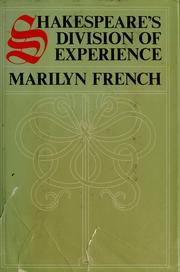
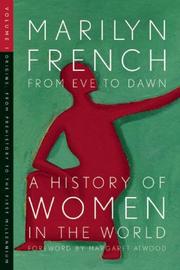
The Women's Room is the debut novel by American feminist author Marilyn French, published in 1977. It launched French as a major participant in the feminist movement and, while French states it is not autobiographical, the book reflects many autobiographical elements. For example, French, like the main character, Mira, was married and divorced, and then attended Harvard where she obtained a Ph.D. in English Literature. Despite the connection of The Women's Room to the feminist movement, French stated in a 1977 interview with The New York Times: "The Women's Room is not about the women's movement ... but about women's lives today."
The Women's Room has been described as one of the most influential novels of the modern feminist movement. Its instant popularity brought criticism from some well-known feminists that it was too pessimistic about women's lives and anti-men.
The Women's Room is set in 1950s America and follows the fortunes of Mira Ward, a woman in a traditional marriage, and her gradual feminist awakening. The novel met stark media criticism when published but went on to be an international best seller.
Historical context
The Women's Room was published in 1977, but the novel is written as a reflective work, following the main character, Mira, from adolescence in the late 1940s to adulthood and independence in the 1960s.
Mira's primary childbearing years were in the 1950s, during the Baby Boom. Though she had only two children, many of her friends throughout the novel had three or more.
The 1950s was also a period in which American women were expected to be housewives, to prioritize their roles as wives and mothers before anything else, and to dutifully serve their families and find happiness inside their homes and marriages, rather than in a career.
Second-wave feminism emerged in the 1960s. This movement focused on a multitude of issues ranging from women gaining control over their sexuality to women having equality in the workplace. In The Feminine Mystique (1963), Betty Friedan refers to one of those issues as "the problem that has no name". The Women's Room encompasses many ideas central to this movement, and Mira experiences much of the dissatisfaction common to housewives, discussed in The Feminine Mystique.
Major characters
Mira is the main character of the novel. Her life is followed from her teenage years into adulthood, during which time she undergoes several transformations.
Norm is Mira's husband and father of her two children, Normie and Clark. Norm is a doctor and spends a limited amount of time at home with Mira and the children.
Martha is Mira's closest friend during her life as a housewife with Norm. Martha and Mira are able to sympathize with each other's respective situations as trapped housewives.
Val is Mira's closest friend in Cambridge. She introduces Mira to second-wave feminist ideas, and Val's comments are some of the most radical in the novel.
Ben is Mira's love interest. He helps her find sexual satisfaction and independence in a relationship.
Plot
Mira and her friends represent a wide cross-section of American society in the 1950s and 1960s. Mira herself is from a middle-class background. She is mildly rebellious in that she disagrees with her mother's view of the world. In her late teens she dates a fellow student named Lanny; one night, when she was supposed to be out on a date with him, Lanny ignores her, and in response Mira dances with several men. Mira's actions in this instance gain her a reputation for being loose. Through this experience and several others with Lanny, Mira realizes she does not want to marry him because he would leave her at home, alone, scrubbing floors.
Later, Mira marries Norm, a future doctor. Mira and Norm have two sons, Norm, Jr. (referred to as Normie throughout the book) and Clark. During the first few years of her marriage, Mira develops friendships with three neighborhood women: Natalie, Adele, and Bliss—all of whom are married with children. The women begin to throw dinner parties in order to create fun evenings together that involve their husbands. At the dinner parties there is flirtation among the different couples. Natalie begins to believe that her husband and Mira are having an affair, but Mira is able to dismiss Natalie's accusation, and their bonds survive until Mira discovers that Bliss and Natalie are having affairs with Adele's husband. The suspicion and actuality of affairs within the group results in irreversible damage to their friendships.
Mira and Norm later move to the small town of Beau Reve, where Mira meets fellow married women with children: Lily, Samantha, and Martha. During this time Mira's marriage becomes increasingly routine, and Mira finds herself at home, alone, scrubbing floors. Also while in Beau Reve, Mira witnesses her friends' struggles: Lily goes mad as a result of her son's rebellious behavior, Samantha is evicted after her husband loses his job and leaves her, and Martha takes a married lover who simultaneously gets his wife pregnant. Through her friends, Mira begins to understand the unfair advantages enjoyed by men in relationships.
After many years of marriage, Norm files for divorce (it is hinted that he has been having an affair for some time) and remarries, leaving Mira on her own. During this time, Mira, lost without her routine life of wifely duties, attempts to commit suicide. She is found by Martha, who helps her pick herself up. Mira returns the help in due time when Martha, too, attempts suicide when trying to deal with her failed affair and resulting divorce.
以上文字摘自英文维基百科「The Women's Room」(有删节,去掉了参考文献等尾部小节),按 CC BY-SA 4.0 使用,作者为维基百科的各位编者。
资料卡
- 原题
- The Women's Room
- 原作语言
- 英语
- 首次出版
- 1977 年
- 作品形式
- 长篇小说
- 主题
- 女人、女权论者、20世纪70年代、美国
资料卡来自 Wikidata Q7775594(CC0),众包数据,个别字段可能不全。