书单

百科
这个词条暂时没有中文维基百科条目,下面是英文维基百科的内容(英文原文):
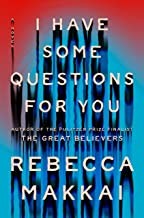
The Great Believers is a historical fiction novel by American writer Rebecca Makkai published on June 4, 2018 by Viking Press.
The novel follows two storylines in alternating chapters. The first, set in 1980s and '90s Chicago, centers on Yale Tishman, an art gallery acquisitions manager living in Boystown. As he navigates a career-defining deal, the largely gay male community to which he belongs crumbles around him due to the devastation of the AIDS epidemic. The second plotline takes place in Paris in 2015. It follows Fiona Marcus, a secondary character from the first storyline, as she searches for her estranged adult daughter and reckons with the lasting impact that the AIDS epidemic has had on her life.
The book was an Andrew Carnegie Medal for Excellence in Fiction winner, National Book Award for Fiction finalist, Stonewall Book Award winner, and Pulitzer Prize for Fiction finalist.
Plot
1985–1992
In 1985 Chicago, Yale Tishman and his long-term boyfriend, Charlie Keene, attend a party honoring the life of Nico Marcus, a close friend who has recently died of AIDS. Overwhelmed by emotion during a slideshow featuring photos of Nico and his friends, Yale briefly retreats to a room upstairs and emerges to an abandoned house. He later learns from Charlie that the partygoers had left to raid Nico's apartment and take his belongings as mementos.
The next morning, Yale heads to work at the Brigg Gallery at Northwestern University, where he has been hired to help build a permanent collection. Upon arriving, Yale learns that Nico's great-aunt, Nora Lerner, with encouragement from Nico's sister Fiona, has offered to donate her personal collection of previously undiscovered pieces by Modigliani, Soutine, Pascin, Foujita, and other Lost Generation artists from the 1920s. The following day, he sets out on an overnight business trip to Nora's home in Door County, Wisconsin, with Cecily Pearce, Northwestern's Director of Planned Giving, to meet Nora and assess the potential authenticity of her collection. She reveals that the paintings and sketches, mostly of her, were given to her as personal gifts by the artists whom she modeled for while attending art school in Paris after World War I. Though Yale remains hopeful after their visit, Cecily is evidently skeptical of the legitimacy of the pieces due to Nora's apparent lack of wealth. Later, she warns Yale that Frank Lerner, Nora's son, has enlisted the help of a major donor to block the donation from occurring so that he can inherit the collection.
At home, tensions rise in the Boystown apartment that Yale and Charlie share. Charlie is prone to fits of jealousy, and his accusatory outbursts are a frequent source of arguments. Since the two have been in a monogamous committed relationship for several years, they believe themselves to be safe from the AIDS epidemic. However, the increasing number of gay men in their immediate circle and wider community testing positive for HIV, developing debilitating symptoms, and dying from AIDS places further stress on their relationship.
Meanwhile, Nora mails photos of her collection to the office that convince Yale and his supervisor, Bill Lindsey, of the pieces' authenticity. They enlist the help of donors Allen and Esmé Sharp and the university's general counsel, Herbert Snow, to financially and legally support the acquisition as soon as possible, as Nora is dying of congestive heart failure and her living descendants actively oppose her donation of the pieces. Yale, Bill, and Yale's graduate student intern Roman travel back to Door County to see the pieces in person. Despite Frank's best efforts to stop them, the group is able to secure the deal and officially acquire Nora's complete set of paintings and sketches as part of the Brigg's permanent collection.
Yale returns home triumphant only to discover that Charlie has contracted HIV/AIDS, having secretly gotten tested after learning of the HIV-positive status of Julian Ames, an attractive young actor in their circle of friends. On the night of Nico's memorial party, Charlie had sex with Julian in a fit of jealousy, believing that Yale had left with Teddy Naples, another friend of theirs. Hurt and filled with rage over Charlie's hypocrisy and infidelity, Yale leaves him and spends the rest of the novel crashing at various places: the apartment of Nico's partner Terrence, Cecily's couch, and eventually the Sharps' spare apartment in the Marina Towers.
Yale and Roman return to Door County twice more to visit Nora and record the stories behind the collection. One condition of her donation is that the gallery display the pieces by Ranko Novak, an unknown artist and her former lover, alongside those by the famous painters in her collection. She reveals that Ranko was the love of her life, but suffered from severe trauma due to his experiences on the battlefield and killed himself in front of her soon after returning from the war. Soon after this visit, Yale leaves the Brigg, sacrificing his job to appease the donor Frank had enlisted to block the donation of Nora's collection. He begins a sexual relationship with Roman, whom he believes to be a repressed Mormon coming into his sexuality. Yale later learns that Roman has been sleeping with various other men, including Bill. He gets retested and learns that he has contracted HIV/AIDS. After cracking one of his ribs at an ACT UP protest, Yale's condition begins to decline. In his final few years, Cecily and Fiona take over his care, and he lives to see the exhibition of Nora's pieces at the Brigg before dying alone in a hospital bed at the Advocate Illinois Masonic Medical Center.
以上文字摘自英文维基百科「The Great Believers」(有删节,去掉了参考文献等尾部小节),按 CC BY-SA 4.0 使用,作者为维基百科的各位编者。
资料卡
- 原题
- The Great Believers
- 原作语言
- 英语
- 首次出版
- 2018 年
- 体裁
- 历史类虚构作品
资料卡来自 Wikidata Q110552755(CC0),众包数据,个别字段可能不全。