书单
百科
这个词条暂时没有中文维基百科条目,下面是英文维基百科的内容(英文原文):
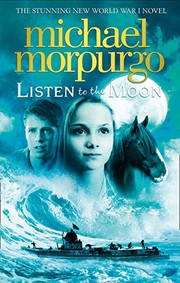
Listen to the Moon is a British children's novel written by Michael Morpurgo. It was originally published in Great Britain by HarperCollins in September 2014, to coincide with the centenary commemorations of World War I, in which the novel's time period is set in. The inspiration for the novel was the sinking of the British civilian liner, the Lusitania, which was torpedoed by a German U-boat in 1915.
The book was short-listed for the Costa Book Award, and also short-listed for the UK Children's Book Award. In 2016, under the French title, Le mystère de Lucy Lost, it was awarded the Prix Sorcières in the junior novels category. In 2024, French animation studio Xilam Films announced they would be adapting the novel into a family feature film titled Lucy Lost, which was released in 2026.
Synopsis
The story takes place in the Scilly Isles, off the coast of Cornwall, in 1915 during World War I, when German U-boats are constantly patrolling the sea in that region, looking to sink British ships. Young Alfie Wheatcroft, his parents Jim and Mary and Uncle Billy live on the island of Bryher, and make a living by fishing and farming. One day Alfie skips school to go fishing for mackerel with his dad, as mackerel is a preference of his mother, and if they catch some, it might take the sting out of the scolding he is sure to get for skipping school.
Alfie suggests they row over to St Helen's, an abandoned island, where he is sure there are mackerel to be caught. After catching three fish, Alfie hears what he believes to be crying coming from the island, so they row over to the island to investigate. What they find is a young girl hiding out in a dilapidated pest house, a quarantine building that previously housed diseased sailors, who arrived on visiting ships to the Scilly Isles. She is clutching a teddy bear and a blanket with a German name sewn on it, and is obviously sick and traumatised, and she can't speak other than to utter the name "Lucy". Father and son take her back to their home, where she is taken in and cared for by Mary and the kindhearted village doctor. Lucy Lost, as they now call her, slowly starts to regain her physical health, but she still remains silent. As she gets better, they discover she likes to draw, and has a knack for taming their grumpy workhorse named Peg.
As the months go by, they still don't know her real identity or how she got to the abandoned island in the first place. She starts to attend school with Alfie, but she still does not speak. Initially, the villagers are just intrigued with her presence, but when word gets out around town,that she was found with a blanket with a German name sewn on it, the villagers become paranoid and suspicious, thinking she might actually be a German spy sent to the island, and the family and doctor begin to be shunned and ostracised by the folks in town. Towards the end of the story, Uncle Billy has sailed off, with no one knowing where he was headed to. He eventually returns to the island with a German sailor named Willhelm Kreuz, whom he found and saved from drowning. When the sailor sees Lucy, he recognises her, and tells the story of how she was a survivor of the sinking of the Lusitania, and they came across Lucy lying on the ships piano in the middle of the ocean, so they rescued her, and brought her to St. Helen's, and he is the one who had given Lucy his blanket.
Miraculously, Lucy recovers her voice finally, and thanks Wilhelm for saving her, and announces to the stunned crowd that has gathered – I am not Lucy Lost, I am Merry Macintyre. So she begins to tell them the story of her family and friends; being from New York, and how they boarded the doomed ship that day, and how her family had drowned when the ship was torpedoed. When asked why she uttered the name Lucy when she was found, she replies that she was referring to the Lusitania's nickname, which was "Lusy". Merry finally returns to New York, where she is reunited with her remaining relatives who are ecstatic that she is still alive.
Background
Morpurgo said the sinking of the Lusitania was what inspired him to write this book. In one instance, he explains that his wife told him a story of when she was around seven-years-old, she had gotten chickenpox, and her family quarantined her in a separate room to avoid infecting other members of the family. And she starting rooting around in a chest of drawers, and found a Lusitania medal hidden amongst her fathers socks. On one side of the medal, there is a skeleton selling tickets to the passengers standing in line, and on the other side, there is the ship depicted going down. He said, "ever since, those two images stayed with him".
He also states that additional research led him to the stories of how the people of Kinsale in southern Ireland, a town near where the ship went down, went out in their boats to rescue some of the passengers, and to retrieve the dead bodies. Morpurgo says he learned from some of those stories that the townspeople had found the ship's grand piano from the dining room of the passenger ship, floating in the ocean, and lying on top of the piano was a child they rescued. He goes on to say that "no one knows who that child was, but I wanted to write the story of who that child might have been and who that child might have become". Morpurgo says these two stories combined, "was the trigger that set it all going".
以上文字摘自英文维基百科「Listen to the Moon」(有删节,去掉了参考文献等尾部小节),按 CC BY-SA 4.0 使用,作者为维基百科的各位编者。
资料卡
- 原题
- Listen to the Moon
- 原作语言
- 英语
- 作品形式
- 长篇小说
- 体裁
- 历史类虚构作品
- 故事发生地
- 锡利群岛
- 故事年代
- 第一次世界大战
资料卡来自 Wikidata Q131798385(CC0),众包数据,个别字段可能不全。
改编作品
电影1
名单来自 Wikidata(CC0):只列条目里写明「改编自 / 取材于」这本书的作品,不按名字猜;众包数据,可能不全。
更多资料与书评
在哪读
迈克尔·莫普格 的其他作品
作者页 ›