 书单
百科
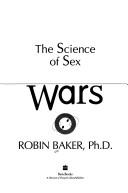
精子战争(英语:Sperm Wars)是演化生物学家罗宾·贝克关于精子竞争的一本科普书,于1996年由伦敦出版商第四阶级出版。
以上文字摘自维基百科「精子战争」(去掉了参考文献等尾部小节),按 CC BY-SA 4.0 使用,作者为维基百科的各位编者。
中文维基百科的条目比较短,下面附上英文维基百科的内容(英文原文):
Sperm Wars is a popular science book by evolutionary biologist Robin Baker about sperm competition. Originally published in English in 1996, it has since appeared in 25 languages and in 2006 a 10th anniversary edition was published in the United States.
Description
Through a series of short fictional stories and discussion following them, Baker proposes evolutionary functions for sexual habits, mostly on the principle of competition between sperm of different men for a prized egg. The "sperm wars" include both literal battles between sperm inside a woman's reproductive tract, as well as figurative battles between men competing for the chance to mate. The book is controversial, both because of its explanations of homosexuality, sexual assault, and prostitution, and because some critics have claimed that several of the hypotheses in the book are not supported by scientific research.
Oral sex is explained as an opportunity for partners to judge each other's reproductive health, and for mates to detect recent infidelity (also proposed by Kohl & Francoeur, 1995 "The Scent of Eros"). The shape of the penis and the thrusting during intercourse serve to remove other men's semen. Male masturbation is said to discard old, dying sperm, so that an ejaculate contains younger sperm that will stay active inside the cervix longer, with more of a chance of being present during the window of ovulation. Baker also proposes that men adjust the amount of sperm they ejaculate based on the time their mate has spent away from them. Likewise, women are found to be more likely to engage in extra-pair copulation and retain larger amounts of sperm during their most fertile phase of the month, and more likely to have sex with their regular partner during the infertile phase.
Focus
A major focus of the book is sperm heteromorphism, in which not only are a variety of morphological types of sperm apparent in every normal human ejaculate, but also at any one time fewer than 1% seem capable of responding to and fertilizing an egg. A similarly low proportion of fertile sperm is found in the ejaculates of mice. Baker calls these fertile sperm "egg-getters", and claims that the rest of the sperm in the ejaculate are infertile "kamikaze sperm" or "blockers", whose primary purpose is to prevent other men's sperm from getting to the egg. He cites data suggesting that in Britain at least 4% of children (but perhaps as many as 6–12%) are conceived via sperm competition, and claims that this lower figure is consistent with the earlier finding that 10% of children have a biological father who is other than their supposed father. Baker describes in detail how "killer sperm" actively seek out rival sperm and kill them with poison from acrosomes to prevent them from getting to the egg. This literal sperm warfare was not observed in a subsequent experiment, but Baker criticizes the protocol in this latter experiment.
Studies
Based on studies with a fiber optic endoscope attached to a man's penis during sex, Baker describes how the cervix behaves during sex and orgasm, dipping down "like an elephant's trunk" into the pool of semen so that the sperm can more easily swim into it, the so-called "upsuck theory" of female orgasm. This has also come under some criticism; see Cervix#Function. He theorizes about how the timing of orgasm can affect fertility, due to changes in the cervical mucus said to accompany orgasm, which then affect its ability to "filter out" sperm and prevent them from traveling into the cervix. Other studies have found no connection to sperm transport or fertility.
以上文字摘自英文维基百科「Sperm Wars」(有删节,去掉了参考文献等尾部小节),按 CC BY-SA 4.0 使用,作者为维基百科的各位编者。
资料卡
- 首次出版
- 1996 年
- 首版出版社
- 第四权
- 主题
- 进化
资料卡来自 Wikidata Q7576367(CC0),众包数据,个别字段可能不全。