书单
百科
这个词条暂时没有中文维基百科条目,下面是英文维基百科的内容(英文原文):
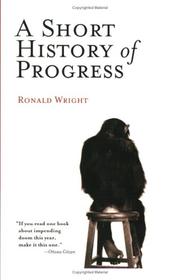
A Short History of Progress is a non-fiction book and lecture series by Ronald Wright about societal collapse. The lectures were delivered as a series of five speeches, each taking place in different cities across Canada as part of the 2004 Massey Lectures which were broadcast on the CBC Radio program, Ideas. The book version was published by House of Anansi Press and released at the same time as the lectures. The book spent more than a year on Canadian best-seller lists, won the Canadian Book Association's Libris Award for Non-Fiction Book of the Year, and was nominated for the British Columbia's National Award for Canadian Non-Fiction. It has since been reprinted in a hardcover format with illustrations and also in Kindle and EPUB digital formats.
Wright, an author of fiction and non-fiction works, uses the fallen civilisations of Easter Island, Sumer, Rome, and Maya, as well as examples from the Stone Age, to see what conditions led to the downfall of those societies. He examines the meaning of progress and its implications for civilizations—past and present—arguing that the twentieth century was a time of runaway growth in human population, consumption, and technology that has now placed an unsustainable burden on all natural systems.
In his analysis of the four cases of fallen civilizations, he notes that two (Easter Island and Sumer) failed due to depletion of natural resources—"their ecologies were unable to regenerate". The other two failed in their heartlands, "where ecological demand was highest", but left remnant populations that survived. He asks the question: "Why, if civilizations so often destroy themselves, has the overall experiment of civilization done so well?" For the answer, he says, we must look to natural regeneration and human migration. While some ancient civilizations were depleting their ecologies and failing, others were rising. Large expanses of the planet were unsettled. The other factor, evident in both Egypt and China, was that due to abundant resources (e.g., topsoil), farming methods (ones that worked with, rather than against, natural cycles), and settlement patterns, these civilizations had greater longevity.
Changes brought on by the exponential growth of human population (at the time of the book's publication, over six billion and adding more than 200 million people every three years) and the worldwide scale of resource consumption, have altered the picture, however. Ecological markers indicate that human civilization has now surpassed (since the 1980s) nature's capacity for regeneration. We are now using more than 125 percent of nature's yearly output. "If civilization is to survive, it must live on the interest, not the capital of nature". He concludes that "now is our chance to get the future right"—the collapse of human civilization is imminent if we do not act now to prevent it.
Background
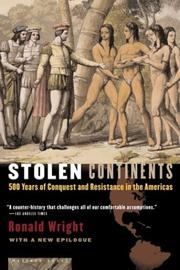
Prior to being selected to deliver the Massey Lectures, Wright had written award-winning fiction and non-fiction books that deal with anthropology and civilizations. His 1992 non-fiction book Stolen Continents was awarded the 1993 Gordon Montador Award from the Writers' Trust of Canada and his 1998 novel A Scientific Romance, about a museum curator who travels into the future and investigates the fate of the human race, won the David Higham Prize for Fiction for first-time novelists. Wright traces the origins of the ideas behind A Short History of Progress to the material he studied while writing A Scientific Romance and his 2000 essay for The Globe and Mail titled "Civilization is a Pyramid Scheme" about the fall of the ninth-century Mayan civilisation.
Synopsis
The first chapter, "Gauguin's Questions", poses the questions that provide a framework for the book. Referring to Paul Gauguin's painting of the same name the questions are: Where do we come from? What are we? Where are we going? Wright defines progress using Victorian terms "the assumption that a pattern of change exists in the history of [hu]mankind...that it consists of irreversible changes in one direction only, and that this direction is towards improvement". Despite the extended period of the Stone Age, Wright places the first sign of progress as being the ability to create fire. The competition between Cro-Magnon and Neanderthals is examined concerning the conditions that allowed one to out-compete the other.
The second chapter, "The Great Experiment", continues the examination of Stone Age progress by looking at the advancements in hunting. Wright uses the term "progress trap" to refer to innovations that create new problems for which the society is unable or unwilling to solve, or inadvertently create conditions that are worse than what existed before the innovation. For example, innovations in hunting during the Stone Age, specifically during the Pleistocene-Holocene transition, allowed for more successful hunts and consequently more free time during which culture and art were created (e.g., cave paintings, bone carvings, etc.), but also led to extinctions, most notably of megafauna. As smaller and smaller game were hunted to replace larger extinct animals, the hunts became less successful and culture declined. Agriculture, and subsequently civilisations, independently arising in multiple regions at about the same time, about 10,000 years ago, indicates to Wright that "given certain broad conditions, human societies everywhere will move towards greater size, complexity and environmental demand". The chapter title refers to the human experience which Wright sees as a large experiment testing what conditions are required for human civilisation to succeed.
以上文字摘自英文维基百科「A Short History of Progress」(有删节,去掉了参考文献等尾部小节),按 CC BY-SA 4.0 使用,作者为维基百科的各位编者。
资料卡
- 首次出版
- 2004 年 10 月
- 体裁
- 非虚构作品
- 首版出版社
- 阿南西出版社
- 所属系列
- 梅西公民讲座
- 续作
- 与时间赛跑:在艾滋病肆虐的非洲寻找希望
- 主题
- 社会崩溃
资料卡来自 Wikidata Q2927261(CC0),众包数据,个别字段可能不全。
改编作品
电影1
- 《科技不进化论》Surviving Progress
名单来自 Wikidata(CC0):只列条目里写明「改编自 / 取材于」这本书的作品,不按名字猜;众包数据,可能不全。