书单
百科
这个词条暂时没有中文维基百科条目,下面是英文维基百科的内容(英文原文):
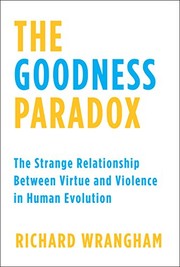
The Goodness Paradox: The Strange Relationship Between Virtue and Violence in Human Evolution is a book by British primatologist Richard Wrangham.
Wrangham argues that humans have domesticated themselves by a process of self-selection similar to the selective breeding of foxes described by Dmitry Belyayev, a theory first proposed by Johann Friedrich Blumenbach in the early 1800s. Charles Darwin disagreed, as have most evolutionary biologists since.
According to paleoanthropologist John D. Hawks, Wrangham follows scholars including Kenneth A. Dodge in dividing human aggression into two types. The first type, "reactive aggression", is when individuals attack in response to provocation. The second type, "proactive aggression", is planned, premeditated, and involves deliberate tactical strikes. To explain his idea, Wrangham invited readers to imagine a commercial airline flight. Other primates crowded into such a space would react by, in Hawks' words, "ripping one another limb from limb". Humans do not because they have a comparatively very low tendency to reactive aggression. Proactive aggression, by contrast, is so highly developed in humans that we must put elaborate security measures in place to prevent others from carrying out plans to bring the plane down.
Wrangham offers a new perspective on a topic that has been investigated notably by Konrad Lorenz and Erich Fromm, whose research is briefly acknowledged.
以上文字摘自英文维基百科「The Goodness Paradox」(去掉了参考文献等尾部小节),按 CC BY-SA 4.0 使用,作者为维基百科的各位编者。
资料卡
- 原题
- The Goodness Paradox
- 原作语言
- 英语
- 首次出版
- 2019 年
资料卡来自 Wikidata Q64874487(CC0),众包数据,个别字段可能不全。