书单
百科
这个词条暂时没有中文维基百科条目,下面是英文维基百科的内容(英文原文):
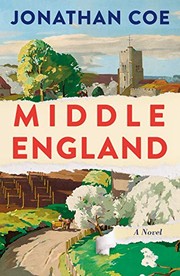
Middle England is a 2018 novel by Jonathan Coe. It is the third novel in a trilogy, following The Rotters’ Club (2001) and The Closed Circle (2004). The novel explores the experiences of characters from those earlier novels against the backdrop of the major events taking place before, during and after the Brexit referendum.
Characters
Benjamin Trotter: At the start of the novel, Benjamin is happily divorced from Cicely and lives in semi-retirement in Shropshire, having become fairly wealthy in London prior to the housing crisis. Since the events of The Closed Circle, he no longer speaks to his brother Paul.
Colin Trotter: After the death of his wife Sheila, Colin moves in with his son Benjamin. During the course of the novel, he begins to experience the psychological effects of old age.
Lois Potter (née Trotter): Lois continues to experience trauma as a result of the Birmingham pub bombings, where her then-boyfriend was killed shortly after proposing to her in The Rotters' Club. She lives separately from her husband Christopher and isn't in love with him, but cannot bring herself to admit this.
Christopher Potter: Despite being married to Lois, Christopher lives separately from his wife and is happy when he discovers that his daughter, Sophie, temporarily moves in with him.
Sophie Potter: Near the beginning of the novel, Sophie has to attend a driving safety class as a result of being caught speeding, and she falls in love with Ian, one of the instructors. She works as a lecturer in art history.
Ian: Ian is a driving safety instructor. He meets Sophie at one of his classes and eventually becomes her husband.
Helena: Helena is Ian's mother. Her political views become a point of tension with Sophie and, to a lesser extent, Ian. She is Eurosceptic and anti-immigration, at one point showing solidarity with the views expressed by Enoch Powell in his Rivers of Blood speech.
Doug Anderton: Doug is a left-wing journalist who primarily writes op-eds for The Guardian and other publications. Despite growing up in a staunchly socialist family, Doug is married to an heiress and lives in Chelsea. He attended school with Benjamin and Philip in the 1970s.
Philip Chase: Benjamin and Doug's friend from secondary school. In Middle England, Philip runs his own publishing house, creating artbooks that contain archival images of British towns and cities. He offers to help Benjamin edit and publish his novel.
Claire Newman: Ex-wife of Philip. Claire attended King William's sixth form with Benjamin, Doug and Philip, and she continues to keep in contact with them.
Charlie Chappell: Benjamin's childhood friend. Although he attended a different secondary school to Benjamin, they rekindle their friendship as adults. Charlie works as a children's entertainer, performing as a clown.
Ronald Culpepper: Culpepper was in the same year as Benjamin, Doug and Philip at King William's School. At the time, he expressed racist views towards a black classmate of theirs; by the time of the novel, he has become the leader of a group called Imperium, a right-wing think tank focused on English nationalism.
Sohan: Sophie's Sri Lankan colleague. After same sex couples are given the right to get married in the UK, Sophie attends the wedding of Sohan and his partner.
Other characters from Coe's previous works appear in the novel including author Lionel Hampshire and his assistant Hermione (from his short story "Canadians Can't Flirt", collected in Tales from a Master’s Notebook), while characters from The Rotters’ Club and The Closed Circle, such as Cicely Boyd and Paul Trotter, are mentioned in passing.
Development
In an author's note at the end of the novel, Coe states that there were two main inspirations behind his desire to revisit the characters from his earlier novels. After an interview with the novelist Alice Adams, in which she praised The Closed Circle, he entered into a correspondence with her, and “her enthusiasm” persuaded him that he “should revisit these abandoned characters”. In addition, after seeing Richard Cameron's theatrical adaptation of The Rotters’ Club, he became aware of the importance of Benjamin and Lois's relationship to the series of novels, and felt the desire to explore it further. In addition, Coe states that the character of Emily Shamma is named after a woman who made the winning bid to have a character in Coe's next novel named after her at an auction for the charity Freedom from Torture. Coe incorporated information about the origin of Shamma's name into the novel.
In an article he wrote for The Guardian a few days before the publication of the novel, the author stated that he “wanted to convey a strong and specific sense of the texture of English public life in the last eight years”. Although he had many doubts about whether or not this would affect the longevity of the novel, he ultimately concluded that it was important for novelists to focus on contemporary events, since their works become “vital resources in trying to understand what happened”.
Reception
Alex Preston, writing for The Guardian, felt that Coe's use of characters spanning multiple generations, covering almost a decade in British history, made him “the first author to address our current crisis of national identity using the form that feels most suited to the task”, contrasting the novelist's work with contemporaneous efforts by Ali Smith and Amanda Craig. In The Irish Times, John Boyne ended his review by saying: “Millions of words have been and will be written on Brexit but few will get to the heart of why it is happening as incisively as Middle England.” A number of reviewers compared Coe's series of novels to the works of Anthony Powell, with Ian Sansom calling it “the closest thing we have to a contemporary middle-class, middle-England Dance to the Music of Time”.
以上文字摘自英文维基百科「Middle England (novel)」(有删节,去掉了参考文献等尾部小节),按 CC BY-SA 4.0 使用,作者为维基百科的各位编者。
资料卡
- 原题
- Middle England
- 原作语言
- 英语
- 首次出版
- 2018 年
- 作品形式
- 长篇小说
- 前作
- Number 11
- 主题
- 英国脱欧
- 故事年代
- 2016年、2012年
资料卡来自 Wikidata Q62992042(CC0),众包数据,个别字段可能不全。