书单
百科
这个词条暂时没有中文维基百科条目,下面是英文维基百科的内容(英文原文):
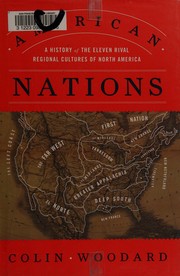
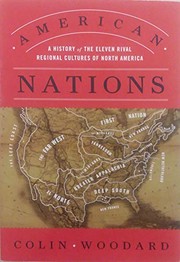
American Nations: A History of the Eleven Rival Regional Cultures of North America is an American non-fiction book written by Colin Woodard and published in 2011. Woodard proposes a framework for examining American history and current events based on a view of the country as a federation of eleven nations, each defined by a shared culture established by each nation's founding population.
Noting that the original Thirteen Colonies were established at different times and by different groups with different goals and values, Woodard shows how these colonies both cooperated and competed from their founding. The principles held dear by each colony often conflicted with those of other colonies, and those conflicting agendas shaped the founding and growth of the United States. As the country expanded, the populace that moved into the new territory brought with it the culture of the society from which they came, resulting in nations – a group that shares a common culture and origin – divorced from legal state and international boundaries. American Nations argues that the contrasts between regional cultures, as opposed to state or national borders, provide a more useful and accurate explanation of events and movements.
Woodard has written two sequels: American Character: A History of the Epic Struggle Between Individual Liberty and the Common Good (Viking, 2016) and Union: The Struggle to Forge the Story of United States Nationhood (Viking, 2020). He has referred to them as an "informal American Nations trilogy."
The eleven nations
Of the nations, Woodard explains, "It isn’t that residents of one or another nation all think the same, but rather that they are all embedded within a cultural framework of deep-seated preferences and attitudes – each of which a person may like or hate, but has to deal with nonetheless."
Yankeedom began with the Puritans (Calvinist English settlers) in New England and spread across upstate New York, the northern parts of Pennsylvania, Ohio, Indiana, Illinois, and Iowa, into the eastern Dakotas, Michigan, Wisconsin, Minnesota, and the Canadian Maritimes. The area values education, communal decision-making, broad participation in democracy, the assimilation of outsiders to Yankee values, and aims at creating a religious utopian communal society to be spread over other regions.
Deep South was settled by former Anglo-American West Indies plantation owners in Charleston, and spread to encompass the lowlands of South Carolina, Georgia, Alabama, Mississippi, Louisiana, West Tennessee, northern and central Florida, the southeastern corner of North Carolina, the southern half of Arkansas, and the eastern woods of Texas. It has valued old Greco-Roman enlightened, civilized, idle slave society, the free market and individualism. It has fought centuries with Yankeedom over the control of America’s destiny, such as in the Civil War and the "culture wars" started by the civil rights movement since the 1960s. Though the Deep South’s caste system (which put rich white Protestants at the top, poor white Protestants and all non-Protestant whites in the middle, and African Americans at the bottom regardless of social status) was crushed by intervention from northern nations, it continues to fight against progressive reforms such as LGBTQ+ rights, taxes on capital and the wealthy, and business regulations.
New Netherland, established by Dutch colonists in the 17th century, is now Greater New York City, as well as the lower Hudson Valley, northern New Jersey, western Long Island, and southwestern Connecticut. Long a destination for immigrants, this region, with its global commercial culture, promotes liberal, multicultural values, capitalism and the freedom of the press.
Tidewater was founded by Cavaliers (Royalists during the era of the English Civil War and Stuart Restoration), and consists of eastern Virginia, Maryland (around Chesapeake Bay), southern Delaware, and northeastern North Carolina. Has cooperated often with Deep South and Greater Appalachia. Together with George Washington, many of the Founding Fathers came from here. Appalachian Mountains cut its expansion westwards, and the region is now being overrun by the Midlands.
Greater Appalachia was populated by waves of immigrants that Woodard calls Borderlanders, from the borders of Northern Ireland, northern England, and the Scottish Lowlands. Greater Appalachia covers the highlands of the American South including Kentucky, most of Tennessee, West Virginia, and the western parts of Virginia and North Carolina, the southern parts of Ohio, Indiana, and Illinois, the Ozarks of Arkansas and Missouri, most of Oklahoma, and Texas Hill Country. Its fighting spirit is embodied by figures such as Davy Crockett, Andrew Jackson and Douglas MacArthur. This is a culture known for its warrior ethic, and a commitment to individualism.
Midlands, founded by English Quakers followed by the Pennsylvania Dutch, consists of southeast Pennsylvania, southern New Jersey, northern Delaware and Maryland, central Ohio, Indiana and Illinois, northern Missouri, most of Iowa, and the eastern halves of South Dakota, Nebraska, and Kansas, as well as southern Ontario and southeastern Manitoba. The border city of Chicago is shared with Yankeedom and St. Louis with Greater Appalachia. Midlands promotes peaceful values and has often been in several elections the great swing-region between Yankeedom and the Southern Nations, rejecting top-down government and strong ideology. According to Woodard it is culturally the most "American" of the nations.
New France began in 1604 with an expedition from France led by Pierre Dugua. It grew to encompass the lower third of Quebec, north and northeast New Brunswick, and southern Louisiana.
以上文字摘自英文维基百科「American Nations」(有删节,去掉了参考文献等尾部小节),按 CC BY-SA 4.0 使用,作者为维基百科的各位编者。
资料卡
- 原题
- American Nations
- 原作语言
- 美国英语
- 主题
- 美国历史、美国文化
资料卡来自 Wikidata Q96371958(CC0),众包数据,个别字段可能不全。