 书单
百科
这个词条暂时没有中文维基百科条目,下面是英文维基百科的内容(英文原文):
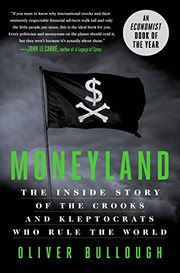
Moneyland: The Inside Story of the Crooks and Kleptocrats Who Rule the World is a 2018 book by British writer Oliver Bullough about 'Moneyland', which he defines as a metaphorical virtual space and secret country that is used by kleptocratic governments and the lawless super-wealthy to steal, conceal and spend wealth with the aid of offshore financial centres, money laundering and tax evasion.
Bullough argues that 'Moneyland' is key to the flow of anonymous and uncontrolled money into politics, which contributes to a broad loss of trust in democratic processes and the spread of political instability. He also highlights the role of Western legal and financial institutions and consultancies in enabling and obscuring these acts, and emphasises the need for greater global regulation.
Moneyland was well-received, garnering praise for its accessible writing and detailed insight, however some criticism was aimed at the scant discussion of solutions to the issues discussed in the book. The book was shortlisted for the 2019 Orwell Prize.
The concept of 'Moneyland' has been used in reference to state capture, and the three-step process of kleptocracy ('steal-hide-spend') outlined in the book has been further explored in academic research. The book has been cited as part of research that identifies significant faults in the efficacy of UK and US regulatory regimes aimed at preventing corruption funds from entering the international financial system.
In September 2021, Angolan vice-president Bornito de Sousa and his daughter sued Bullough and his publisher in Portugal for defamation, seeking €750,000 in legal claims. The case was dismissed in 2024.
Summary
The book begins in 2014 with the author's tour through the Mezhyhirya Residence, the former estate of ex-Ukrainian president Viktor Yanukovych that has been repurposed as a museum displaying Yanukovych's luxurious lifestyle. The second chapter describes the birth of Moneyland via the establishment of the Bretton Woods system and Siegmund Warburg's role in establishing the Eurobond, which allowed owners to transport and redeem them anywhere while paying tax-free interest. The third chapter describes the gatekeepers of Moneyland via the author's visit to the Caribbean island of Nevis, detailing the role of offshore financial centres in asset protection, fraud, money laundering, and obstruction of financial transparency and regulatory compliance. The use of trusts in Jersey is also examined.
The fourth chapter utilises the Yury Skuratov scandal and his disclosure of FIMACO, a Jersey shell company used by top Russian Communist Party officials, to demonstrate how the power of Moneyland is wielded at a state level. The fifth chapter describes company mills such as Formations House in London that create and register corporate entities for clients. The sixth chapter discusses the use of shell corporations to shield assets, using the corruption cases of ex-president of Zambia Frederick Chiluba, ex-president of Uzbekistan's daughter Gulnara Karimova, and alleged money laundering by Raúl Salinas with the aid of Citibank.
The seventh chapter looks at corruption in Ukraine's healthcare system via interviews with mothers of child cancer patients, doctors, a Security Service of Ukraine agent, and anti-corruption lawyers. The author also describes a legal case by the U.S. Securities and Exchange Commission against Teva Pharmaceuticals, where the company paid $519 million to settle charges alleging payments to Ukrainian officials in charge of drug procurement.
The eighth chapter examines how corruption originates in developing countries and former colonies, citing statesman S. Rajaratnam, sociologist Stanislav Andreski, Nigerian author Chinua Achebe, and political theorist Francis Fukuyama. Using the corruption of Equatoguinean President Obiang and his use of Western lawyers and bankers as an example, the author highlights that Westerners are not only passive observers of corruption, but active enablers.
The ninth chapter focuses on immigrant investor programs as the author visits a conference organised by Henley & Partners, the company that pioneered the industry of selling citizenship and passports. The tenth chapter looks at the use of diplomatic immunity as a way to gain legal immunity through the case of Saudi businessman Walid Juffali. Other notable holders of diplomatic immunity include Nigerian oil minister Diezani Alison-Madueke (Dominican diplomatic credentials) and Chinese billionaire Xiao Jianhua (Antigua and Barbuda diplomatic passport).
The eleventh chapter explains the use of English defamation law for "libel tourism", a defence mechanism of Moneyland that enables claimants to protect against public exposure of questionable behaviour. Examples given include the book Putin's Kleptocracy and an unsuccessful defamation case against financier Bill Browder. The chapter also describes a "reputation laundering" industry in the UK comprising PR agencies, law firms and consultancies.
The twelfth chapter describes attempts to pursue and return stolen money to countries that were or are ruled by kleptocrats, specifically focusing on Ukraine after the 2014 Revolution of Dignity. The thirteen chapter uses the death of Alexander Litvinenko as an example of the extreme methods that Moneylanders can use to defend themselves, i.e. by preventing information on financial misconduct by killing whistleblowers.
以上文字摘自英文维基百科「Moneyland」(有删节,去掉了参考文献等尾部小节),按 CC BY-SA 4.0 使用,作者为维基百科的各位编者。
资料卡
- 原题
- Moneyland
- 原作语言
- 英国英语
- 首次出版
- 2018 年
资料卡来自 Wikidata Q117480358(CC0),众包数据,个别字段可能不全。