书单
百科
这个词条暂时没有中文维基百科条目,下面是英文维基百科的内容(英文原文):
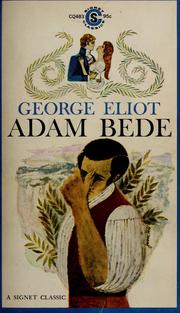
Adam Bede was the first novel by English author George Eliot, pen name of Mary Ann Evans, first published in 1859. It was published pseudonymously, even though Evans was a well-published and highly respected scholar of her time. The novel has remained in print ever since and is regularly used in university studies of 19th-century English literature. Eliot described the novel as "a country story full of the breath of cows and scent of hay".
Synopsis
According to The Oxford Companion to English Literature (1967),
"the plot is founded on a story told to George Eliot by her aunt Elizabeth Evans, a Methodist preacher, and the original of Dinah Morris of the novel, of a confession of child-murder, made to her by a girl in prison."
The novel follows the lives of four characters in the fictional community of Hayslope—a rural, pastoral, and close-knit community—in 1799. The novel revolves around a love "rectangle" among the beautiful but self-absorbed Hetty Sorrel; Captain Arthur Donnithorne, the young squire who seduces her; Adam Bede, her unacknowledged suitor; and Dinah Morris, Hetty's cousin, a fervent, virtuous and beautiful Methodist lay preacher. Adam, a local carpenter much admired for his integrity and intelligence, is in love with Hetty. She is attracted to Arthur, the local squire's charming grandson and heir, and falls in love with him. When Adam interrupts a tryst between them, Adam and Arthur fight. Arthur agrees to give up Hetty and leaves Hayslope to return to his militia. After he leaves, Hetty Sorrel agrees to marry Adam but shortly before their marriage, discovers that she is pregnant. In desperation, she leaves in search of Arthur but cannot find him. Unwilling to return to the village on account of the shame and ostracism she would have to endure, she delivers her baby with the assistance of a friendly woman she encounters. She subsequently abandons the infant in a field but not being able to bear the child's cries, she tries to retrieve the infant. However, she is too late, the infant having already died of exposure.
Hetty is caught and tried for child murder. She is found guilty and sentenced to hang. Dinah enters the prison and pledges to stay with Hetty until the end. Her compassion brings about Hetty's contrite confession. When Arthur Donnithorne, on leave from the militia for his grandfather's funeral, hears of her impending execution, he races to the court and has the sentence commuted to penal transportation.
Ultimately, Adam and Dinah, who gradually become aware of their mutual love, marry and live peacefully with his family.
Allusions/references to other works
The importance of William Wordsworth's Lyrical Ballads to the way Adam Bede is written has often been noted. Like Wordsworth's poems, Adam Bede features minutely detailed empirical and psychological observations about illiterate "common folk" who, because of their greater proximity to nature than to culture, are taken as emblematic of human nature in its more pure form. In Adam Bede, Eliot sought to manifest in novelistic form this principle of Wordsworth's aesthetic philosophy.
Genre painting and the novel arose together as middle-class art forms and retained close connections until the end of the nineteenth century. According to Richard Stang, it was a French treatise of 1846 on Dutch and Flemish painting that first popularised the application of the term realism to fiction. Stang, The Theory of the Novel in England, p.149, refers to Arsène Houssaye, Histoire de la peinture flamande et hollandaise (1846; 2d ed., Paris: Jules Hetzel, 1866). Houssaye speaks (p, 179) of Terborch's "gout tout hollandais, empreint de poesie realiste", and argues that "l'oeuvre de Gerard de Terburg est le roman intime de la Hollande, comme l'oeuvre de Gerard Dow en est le roman familiere.", and certainly it is with Dutch, Flemish, and English genre painting that George Eliot's realism is most often compared. Eliot herself invites the comparison in chapter 17 of Adam Bede, and Mario Praz applies it to all her works in his study of The Hero in Eclipse in Victorian Fiction.
Literary significance and criticism
Immediately recognised as a significant literary work, Adam Bede has enjoyed a largely positive critical reputation since its publication. An anonymous 1859 review in The Athenaeum praised it as a "novel of the highest class," and The Times called it "a first-rate novel." An anonymous review by Anne Mozley was the first to speculate that the novel was probably written by a woman. Contemporary reviewers, often influenced by nostalgia for the earlier period represented in Bede, enthusiastically praised Eliot's characterisations and realistic representations of rural life. Charles Dickens wrote: "The whole country life that the story is set in, is so real, and so droll and genuine, and yet so selected and polished by art, that I cannot praise it enough to you." (Hunter, S. 122)
In fact, in early criticism, the tragedy of infanticide has often been overlooked in favour of the peaceful idyllic world and familiar personalities Eliot recreated. Other critics have been less generous. Henry James, among others, resented the narrator's interventions. In particular, Chapter 15 has fared poorly among scholars because of the author's/narrator's moralising and meddling in an attempt to sway readers' opinions of Hetty and Dinah. Other critics have objected to the resolution of the story. In the final moments, Hetty, about to be executed for infanticide, is saved by her seducer, Arthur Donnithorne. Critics have argued that this deus ex machina ending negates the moral lessons learned by the main characters. Without the eleventh hour reprieve, the suffering of Adam, Arthur, and Hetty would have been more realistically concluded. In addition, some scholars feel that Adam's marriage to Dinah is another instance of the author's/narrator's intrusiveness. These instances have been found to directly conflict with the otherwise realistic images and events of the novel.
Characters
The Bede family:
以上文字摘自英文维基百科「Adam Bede」(有删节,去掉了参考文献等尾部小节),按 CC BY-SA 4.0 使用,作者为维基百科的各位编者。
资料卡
- 原题
- Adam Bede
- 原作语言
- 英语
- 首次出版
- 1859 年
- 作品形式
- 长篇小说
- 体裁
- 历史类虚构作品
- 首版出版社
- John Blackwood
- 主要人物
- Adam Bede、Hetty Sorrel、Dinah Morris
资料卡来自 Wikidata Q2611046(CC0),众包数据,个别字段可能不全。