书单
百科
这个词条暂时没有中文维基百科条目,下面是英文维基百科的内容(英文原文):
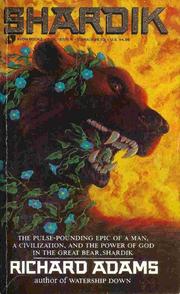
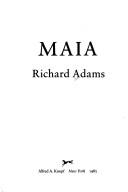
Maia is a fantasy novel by Richard Adams, published in 1984. It is set in the Beklan Empire, the fictional world of Adams's 1974 novel Shardik, to which it stands as a loose prequel, taking place a few years earlier.
Plot summary
Part 1: The Peasant
Maia, at 15, lives in the Beklan Empire's province of Tonilda with her mother, Morca, her three younger sisters, and her stepfather, Tharrin. Their small, poor farm is on the edge of Lake Serrelind, and Maia tends to shirk her chores by swimming in the lake.
Tharrin secretly seduces Maia. When Morca discovers the affair, she sells Maia to a slave dealer Lalloc. Maia is almost raped by one of his employees, but is saved by Occula, a black slave girl. Maia and Occula become very good friends and even lovers. They are sent to the city of Bekla.
Occula relates her past: her father, a jewel-merchant, brought her across the desert to Bekla. They were received by the noblewoman Fornis. She had Occula's father murdered and his emeralds incorporated into the Sacred Queen's crown. Occula was sold as a slave.
Adams outlines Bekla's political situation in several chapters that bypass Maia. The "Leopard" faction led by the High Baron Durakkon, Fornis (now the Sacred Queen), the Lord General Kembri, and the High Counsellor Sencho came to power by ceding Suba, a western province, to the neighbouring kingdom of Terekenalt. They legalised slavery, and the capital's finances are now heavily based on taxation of it. Pockets of rebellion have sprung up around the empire.
Part 2: The Slave-Girl
Sencho buys both Maia and Occula as "bed-slaves". Terebinthia, the woman in charge of Sencho's household, supervises and trains them. At intervals, a peddler named Zirek visits and exchanges cryptic conversations with Occula.
Beautiful and fun-loving, Maia shows promise of going far, and finds some professional satisfaction in providing Sencho's decadent pleasures. To her surprise, she even enjoys the spectacle when a fellow bed-slave, the tempestuous Meris, is whipped and sold for dereliction of duty.
Terebinthia rents out the girls to other rich and powerful men. Using this means of contact, Lord General Kembri secretly enlists Maia and Occula as agents and charges Maia with gaining the trust of Bayub-Otal, the dispossessed heir to Suba and a potential ally of the rebels. Bayub-Otal is the son of the baron of a neighbouring province and a dancer nicknamed "Nokomis" ("dragonfly").
When Sencho becomes drastically ill, he comes to depend almost solely on Occula's intense caretaking. During a garden party, Occula lures Sencho out of sight and signals her rebel confederates, Zirek and Meris, to stab Sencho to death.
Maia and Occula are imprisoned on suspicion of colluding in Sencho's murder. Queen Fornis takes Maia into her household. As Maia fails to satisfy her sexual needs, Fornis gives her to Kembri; Maia seizes on this chance to interest the queen in Occula, hoping to save her friend from execution.
Kembri sends Maia to Bayub-Otal with a cover story of having escaped. Bayub-Otal takes her with him as he secretly makes his way back to Suba. Maia learns that one reason for his extraordinary standoffish respect for her is that she looks (and dances) like his dead mother, Nokomis, who is still revered throughout the province. Bayub-Otal hopes to use the resemblance to rally Suban patriotism on behalf of an alliance with Terekenalt.
At the rallying site, Maia falls passionately in love with the handsome young Zen-Kurel, an officer of Terekenalt. Zen-Kurel accepts her invitation to bed, but leaves quickly to take part in a surprise attack scheduled for that very night. The River Valderra, the boundary between the two countries, is thought to be uncrossably swift and rocky, but the Terekenalters plan to ford it with heavy ropes and strong men, thus surprising the detachment of Tonildan soldiers guarding the other side.
In hopes of saving her fellow Tonildans' lives as well as her lover's, Maia swims the river. Despite serious wounds, she warns the Beklan commander and thwarts the invasion.
Part 3: The Serrelinda
Maia returns to Bekla, freed and celebrated. She gains an informal title as the "Serrelinda" after Lake Serrelind. Hoping to reunite with Zen-Kurel, she takes no lovers, despite expectations that she will find a rich husband or become an expensive courtesan. Her popularity and single status bring her under threat from Fornis; since the Sacred Queen is chosen periodically by popular acclaim, Maia is an obvious rival despite not wanting the crown.
Maia sees her stepfather, Tharrin, dragged into Bekla as a rebel informant. He is condemned to be sacrificed. Maia does her best to free him, and he reveals to her that her real mother was not Morca but a pregnant girl who had fled to Morca's cottage and died there in childbirth; Maia deduces she is the daughter of Nokomis' younger sister and therefore a Suban.
Fornis causes Tharrin's death. Maia makes a desperate attempt to kill Fornis, but is thwarted by Occula, who was indeed inducted into the queen's household. Occula intends to take revenge on Fornis when the time is right; meanwhile she is performing the sort of sado-masochistic services of which Maia had been incapable.
As civil war breaks out in Bekla, Maia learns that Bayub-Otal and Zen-Kurel have been brought there as prisoners. In danger of Fornis' murderous fury, Maia frees the two men, and with them and Zirek and Meris (who have been hiding since assassinating Sencho), she flees Bekla.
Part 4: The Suban
The former prisoners are bitterly angry at Maia for betraying them at the Valderra, which she had idealistically considered an attempt to save their lives. Nevertheless, they agree to return with her to Suba or Terekenalt.
以上文字摘自英文维基百科「Maia (novel)」(有删节,去掉了参考文献等尾部小节),按 CC BY-SA 4.0 使用,作者为维基百科的各位编者。
资料卡
- 原题
- Maia
- 原作语言
- 英语
- 首次出版
- 1984 年 9 月
- 作品形式
- 长篇小说
- 体裁
- 奇幻
- 首版出版社
- 维京出版社
- 所属系列
- Beklan Empire
- 前作
- Shardik
- 主题
- 奴隶制度
资料卡来自 Wikidata Q6735205(CC0),众包数据,个别字段可能不全。