书单
百科
这个词条暂时没有中文维基百科条目,下面是英文维基百科的内容(英文原文):
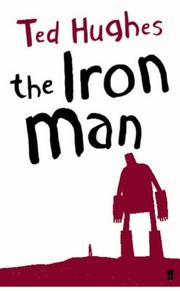
The Iron Man: A Children's Story in Five Nights is a 1968 science fiction novel by English writer Ted Hughes, first published by Faber and Faber in the UK with illustrations by George Adamson.
Described by some as a modern fairy tale, it narrates the unexpected arrival in England of a giant "metal man" of unknown origin who rains destruction on the countryside by eating industrial farm equipment, before befriending a small boy and defending the world from a dragon which attacks from outer space. Expanding the narrative beyond a criticism of warfare and inter-human conflict, Hughes later wrote a sequel, The Iron Woman (1993), describing retribution based on environmental themes related to pollution.
Story
The Iron Man arrives seemingly from nowhere, and his appearance is described in detail. He first appears falling off a cliff, but his various pieces reassemble themselves, starting with his hands finding his eyes and progressing from there. He is unable to find one ear, which was taken by seagulls earlier, and walks into the sea to find it.
He eventually returns to the country and begins to feed on local farm equipment. When the farm hands discover their destroyed tractors and excavators, a trap is set consisting of a covered pit on which a red lorry is set as bait. Hogarth, a local boy, lures the Iron Man to the trap. The plan succeeds, and the Iron Man is buried alive. The next spring, the Iron Man digs himself free of the pit. To keep him out of the way, Hogarth brings the Iron Man to a scrap-heap to feast. The Iron Man promises not to cause further trouble for the locals, as long as no one troubles him.
Time passes, and the Iron Man is treated as merely another member of the community. However, astronomers monitoring the sky make a frightening new discovery: an enormous space-being, resembling a dragon, moving from orbit to land on Earth. The creature (soon dubbed the "Space-Bat-Angel-Dragon") crashes heavily on Australia (which it is large enough to cover the whole of) and demands that humanity provide him with food (anything alive) or he will take it by force.
Terrified, humans send their armies to destroy the dragon, but it is unharmed by their weapons. When the Iron Man hears of this global threat, he allows himself to be disassembled and transported to Australia where he challenges the creature to a contest of strength. If the Iron Man can withstand the heat of burning petroleum for longer than the creature can withstand the heat of the Sun, the creature must obey the Iron Man's commands forevermore: if the Iron Man melts or is afraid of melting before the space being undergoes or fears pain in the Sun, the creature has permission to devour the whole Earth.
After playing this game for two rounds, the dragon is so badly burned that he no longer appears physically frightening. The Iron Man by contrast has only a deformed ear-lobe to show for his pains. The alien creature admits defeat. When asked why he came to Earth, the dragon reveals that he is a peaceful "star spirit" who experienced excitement about the ongoing sights and sounds produced by the violent warfare of humanity. In his own life, he was a singer of the "music of the spheres"; the harmony of his kind that keeps the cosmos in balance in stable equilibrium.
The Iron Man orders the dragon to sing to the inhabitants of Earth, flying just behind the sunset, to help soothe humanity toward a sense of peace. The beauty of his music distracts the population from its egocentrism and tendency to fight, causing the first worldwide lasting peace.
Publishing
The first North American edition was also published in 1968, by Harper & Row with illustrations by Robert Nadler. Its main title was changed to The Iron Giant, and internal mentions of the metal man changed accordingly, to avoid confusion with the Marvel Comics character Iron Man. Modern American editions have continued the practice, as Iron Man has since become an icon of popular culture, as well as spawning a multimedia franchise.
Faber and Faber published a new edition in 1985 with illustrations by Andrew Davidson, for which Hughes and Davidson won the Kurt Maschler Award, or the Emils. From 1982 to 1999 that award recognised one British "work of imagination for children, in which text and illustration are integrated so that each enhances and balances the other." The 1985 Davidson edition was published in Britain and America (retaining 'giant') and there were re-issues with the Davidson illustrations, including some with other cover artists. Yet the novel has been re-illustrated by at least two others, Dirk Zimmer and Laura Carlin (current, Walker Books).
In August 2019, an updated illustrated version was released in the UK with new illustrations from artist Chris Mould.
Adaptations
Pete Townshend produced a musical concept album based on the novel in 1989.
In 1999, Warner Bros. released an animated film using the novel as a basis, titled The Iron Giant, directed by Brad Bird and co-produced by Pete Townshend.
以上文字摘自英文维基百科「The Iron Man (novel)」(去掉了参考文献等尾部小节),按 CC BY-SA 4.0 使用,作者为维基百科的各位编者。
资料卡
- 原题
- The Iron Man
- 插图
- George Worsley Adamson
- 原作语言
- 英语
- 首次出版
- 1968 年
- 作品形式
- 短中篇小说
- 体裁
- 科学幻想
- 首版出版社
- 华特迪士尼公司
- 续作
- The Iron Woman
资料卡来自 Wikidata Q3820039(CC0),众包数据,个别字段可能不全。
改编作品
电影1
- 《铁巨人》The Iron Giant
名单来自 Wikidata(CC0):只列条目里写明「改编自 / 取材于」这本书的作品,不按名字猜;众包数据,可能不全。