书单
百科
这个词条暂时没有中文维基百科条目,下面是英文维基百科的内容(英文原文):
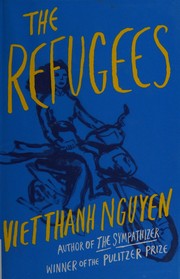
The Refugees is a 2017 short story collection by Viet Thanh Nguyen. It is Nguyen's first published short story collection and his first book after winning the Pulitzer Prize for The Sympathizer. The eight-story collection, set in different locations in California and Vietnam, earned favorable reviews from critics, particularly for offering insight into the lives of migrants like those the book depicts.
Synopsis
"Black-Eyed Women"
An unnamed ghostwriter takes up a job to write a memoir about Victor, a man who is stricken with survivor guilt. Living with her mother, the ghostwriter often listens to her mother's ghost stories about people she knew in her past; one of the recurring stories regards her deceased older brother. One night while writing, the ghostwriter is visited by her brother's ghost. After a brief exchange, he disappears when she turns away. The next day the ghostwriter tells her mother about her experience; her mother buys new clothes and asks the ghostwriter to give them to him.
When he returns the following night, the ghostwriter offers him the clothes, but he refuses, saying that ghosts' clothes exist for the living. They talk, which eventually leads to her reminiscing about the day her brother died; they were boat people boarded by pirates. In an attempt to prevent her from being abducted, he cut her hair, bounded her breast, and smeared oil on her face. It worked, but when one pirate grew suspicious, her brother knifed the pirate. In retaliation, the pirate struck him in the head with his rifle, killing him. Before he disappears, he tells her "You died too, you just don't know it."
Before sending in Victor's memoir, she remembers a conversation with him about ghosts; he says he believes in ghosts, that their aura has helped him through his loss. After the book is published, the ghostwriter decides to write her own work about ghosts. She talks to her mother for inspiration, and her mother tells her the story of how a man imprisoned for thirty years "meets" his lost wife through ghosts after his release. She also notes that the ghostwriter's brother will not appear again, as he has made his peace with this world.
The title comes from how the ghostwriter admires the elderly, "black-eyed women" in Vietnam who told ghost stories to passersby.
"The Other Man"
Liem, an eighteen-year-old refugee, arrives at the San Francisco International Airport and meets his sponsor Parrish Coyne and Marcus Chan, Parrish's lover from Hong Kong. After trading greetings, they drive him to their house in the Mission District. At first, Liem is uncomfortable with Parrish and Marcus's relationship and considers calling his refugee service contact, but instead, he slowly adapts. He also starts working at a liquor store to earn money and uses his downtime to study and write to his parents.
When Parrish goes on a business trip, Liem and Marcus begin to bond. They eat dim sum together and Marcus reveals he was disowned by his father due to his sexuality. When Liem receives a letter from his father, he is at first reluctant to read it, even at Marcus's insistence. A little later, they have sex. When Marcus is asleep, Liem answers a phone call from Parrish before reading the reply from his father, who asks him to "live a correct life." From behind one of the house windows, he catches sight of two men. They turn to face him and the three of them share a fleeting moment together.
"War Years"
When not attending enrichment summer school, an unnamed boy, works at his parents' convenience store in a Vietnamese enclave in San Jose. The boy is potentially an analog to the author, who speaks of a similar store. He gets a small allowance for his work which he uses to buy comic books and games. One day, Mrs. Hoa enters their store demanding that they contribute money to fighting communism in Vietnam; she says that a group of riled refugees are currently in Thailand gearing up for an assault on the homeland. His mother refuses to pay, citing that it is futile at this point. Before leaving Mrs. Hoa states and she will return. After she is gone, his father reminds his mother that not paying may hurt their business as rumors about their "unpatriotic" behavior could spread throughout the community and turn people against them.
One night, the family experiences a home invasion but precautions are taken by his mother, and the aggressor's inexperience results in minimal injuries and little theft. During church that same week, they run into Mrs. Hoa who says that she will visit their shop next week and will expect a donation. His mother takes this chance to surreptitiously follow Mrs. Hoa home to learn of her address.
Mrs. Hoa visits them the following week demanding "they do their part," but his mother again refuses, calling her an extortionist. Mrs. Hoa reluctantly leaves, and his father reminds his mother again their this act could doom their business. Realizing this to be true, he and his mother travel to Mrs. Hoa house after closing hours, seeking a compromise as well as an apology. When they arrive, they are greeted by a surprised Mrs. Hoa who welcomes them into her house upon insistence. Inside they see a family of nine people from three generations. When his mother catches sight of a soldier's uniform, Mrs. Hoa tells them that it belonged to her husband, who died in the war; she all continues to tell about how she also lost two of her sons. Upon hearing this, his mother offers her condolences and a $200 donation. After they leave, she takes her son to a nearby 7-Eleven, gives him $5, and tells him to buy whatever he wants. Upon browsing the store, the boy is unsure of what he wants to buy.
以上文字摘自英文维基百科「The Refugees (short story collection)」(有删节,去掉了参考文献等尾部小节),按 CC BY-SA 4.0 使用,作者为维基百科的各位编者。
资料卡
- 原作语言
- 英语
- 首次出版
- 2017 年 2 月
- 作品形式
- 短篇小说集
资料卡来自 Wikidata Q30610147(CC0),众包数据,个别字段可能不全。