 书单
百科
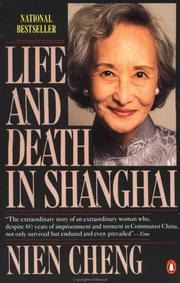
《上海生死劫》(又名《申江梦回》)是女作家郑念的一部自传,最早于1986年出版了英文版,随后该书被译为多种文字在各国出版。在书中郑念记述了从文化大革命开始到1980年代初出国这段时间的个人经历。从1966年上海红卫兵以革命的名义对她进行抄家和逮捕,她在看守所单人牢房长达六年半的拘禁过程,和她由于始终不承认各种指控,坚持自己无罪,而受到的监狱当局的种种迫害和她对此进行的抗争直到出狱。1973年她出狱后,得知自己的独生女儿郑梅平早已在自己入狱后不久受迫害而死,继而努力查找女儿死因的过程。
她在文革中拒绝承认间谍的罪名并要求当局道歉,此书追述知识分子理想如何被政治粉碎,是根据作者亲身经历写下的回忆录而非小说。
中文版
此书最初在1987年出版了英文版,中文版为:
《上海生死劫》程乃珊、潘佐君译,中国文化出版公司,1988年10月
《上海滩的沉浮》,春风文艺出版社
《生死在上海》方耀光、郑培君,方耀楣译,百家出版社,1988年8月
《上海生与死》曾国清、陈小安译,新陆书局,民国81年(1992)8月
以上文字摘自维基百科「上海生死劫」(去掉了参考文献等尾部小节),按 CC BY-SA 4.0 使用,作者为维基百科的各位编者。
中文维基百科的条目比较短,下面附上英文维基百科的内容(英文原文):
Life and Death in Shanghai (Chinese: 上海生死劫) is an autobiographical memoir published in November 1987 by Chinese author Yao Nien-Yuan under the pen name Nien Cheng. Written while in exile in the United States, it tells the story of Cheng's arrest during the early days of the Cultural Revolution, her more than six years' of confinement, persecution, efforts to leave China, and life in exile.
Background
Cheng was named "an enemy of the state" and arrested in late 1966 after the Red Guards looted her home. During her confinement, she was pressured to make a false confession that she was a spy for "the imperialists" because for many years after her husband's death she had continued to work as a senior partner for Shell in Shanghai. Cheng refused and was thus tortured.
She was eventually paroled under the pretense that her attitude had shown improvement. However, Cheng resisted leaving the detention house without receiving acknowledgment from her captors that she had been unjustly treated.
When released from jail in 1973, Cheng found that her daughter Meiping, who had been studying to become a film actress, had been murdered by the Red Guards, although the official position was that she had committed suicide. Cheng conducted a discreet investigation and found that this scenario was impossible. The alleged killer of Meiping, a rebel worker named Hu Yongnian, was arrested and given a suspended death sentence by Shanghai authorities in 1980, but was eventually paroled in 1995.
After being relocated from her spacious home to a mere two bedrooms on the second floor of a two-story building, Cheng continued her life under constant surveillance, including spying by the family living on the first floor.
She lived in China until 1980, when the political climate warmed enough for her to apply for a visa to the United States to visit family. She never returned, first emigrating to Canada, later to Washington, D.C., where she wrote the memoir.
Summary
The memoir goes into great detail about Cheng's persecution, confinement, and torture, so much so that she said she had to put the manuscript away many times as she wrote it because the memories were so troubling.
Reception
In a 1987 piece for the New York Times Books Review, J.M. Coetzee said the memoir provided "fascinating insights into thought reform in Mao's China" and that it tells "an absorbing story of resourcefulness and courage, spoiled only by a touch of self-righteousness: Mrs. Cheng is always right, her persecutors always wrong."
In a 1987 New York Times review, Christopher Lehmann-Haupt wrote: "Far from depressing, it is almost exhilarating to witness her mind do battle. Even in English, the keenness of her thought and expression is such that it constitutes some form of martial art, enabling her time and again to absorb the force of her interrogators’ logic and turn it to her own advantage.”
In a 1987 review for The Washington Post, Stanley Karnow wrote: "It is, on one level, a gripping, poignant chronicle of her courage, fortitude and, above all, stubborn integrity during more than six years of cold, hunger, disease, terror and humiliation in a Shanghai jail. At moments I could not continue reading, so vividly does she relate her agony. Yet, inevitably, I felt compelled to go back to its pages, riveted by her struggle to endure, which exalts the triumph of the human spirit over mindless inhumanity."
Elena Brunet of The Los Angeles Times wrote in a 1988 review: "A harrowing story of personal suffering and tragedy, and at the same time a savage and compelling indictment of Mao Zedong’s Cultural Revolution, if not of Chinese communism itself."
Inspired by the memoir, Corey Hart dedicated an instrumental song to Cheng titled "Ballade for Nien Cheng" in his 1990 album Bang!.
Awards
Life and Death in Shanghai won multiple awards, including New York Times Best Book of the Year (1987) and American Library Association's Outstanding Books for The College Bound (1996), among others.
以上文字摘自英文维基百科「Life and Death in Shanghai」(去掉了参考文献等尾部小节),按 CC BY-SA 4.0 使用,作者为维基百科的各位编者。
资料卡
- 原题
- Life and Death in Shanghai
- 原作语言
- 英语
- 首次出版
- 1987 年 5 月
- 首版出版社
- 格罗夫出版公司、企鹅出版集团
- 故事发生地
- 中国
资料卡来自 Wikidata Q1255697(CC0),众包数据,个别字段可能不全。