书单
百科
这个词条暂时没有中文维基百科条目,下面是英文维基百科的内容(英文原文):
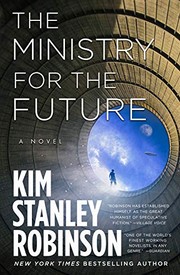
The Ministry for the Future is a climate fiction novel by American science fiction writer Kim Stanley Robinson, published in 2020. Set in the near future, the novel follows a subsidiary body, established under the Paris Agreement, whose mission is to act as an advocate for the world's future generations of citizens as if their rights were as valid as the present generation's. While the ministry pursues various ambitious projects, the effects of climate change are determined to be the most consequential. The plot primarily follows Mary Murphy, the head of the titular Ministry for the Future, and Frank May, an American aid worker traumatized by experiencing a deadly heat wave in India. Many chapters are devoted to other (mostly anonymous) characters' accounts of future events, as well as their ideas about ecology, economics, and other subjects.
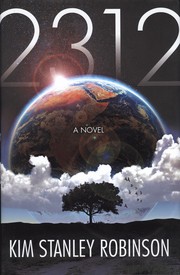
With its emphasis on scientific accuracy and nonfiction descriptions of history and social science, the novel is classified as hard science fiction. It also belongs to the growing body of climate fiction. Robinson has previously written other climate fiction novels, such as 2312 and New York 2140. The Ministry for the Future also includes elements of utopian fiction, as it portrays society addressing a problem, and elements of horror fiction, as climate change threatens characters.
Background
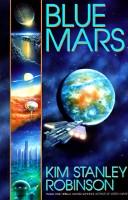
At the time of the novel's publication, American science fiction author Kim Stanley Robinson was 68 years old and living in Davis, California. He had previously written 20 novels, and he had received the Robert A. Heinlein Award and the Arthur C. Clarke Foundation's Award for Imagination in Service to Society for his body of work. Before The Ministry for the Future, his most recent novel had been Red Moon, published two years earlier. With The Ministry for the Future, Robinson was seeking to return to the climate fiction genre that he had previously written in with 2312, New York 2140, and the Science in the Capital series (Forty Signs of Rain, Fifty Degrees Below, Sixty Days and Counting).
His previous climate fiction had approached the topic from an aftermath point of view; with the new novel, he sought to write with the near future as the starting point, and with existing real-world technologies, economics, and societies—and then to push the narrative further into the future. This approach is reflected in the book's dedication to Fredric Jameson, Robinson's doctoral supervisor, who wrote that "It is easier to imagine the end of the world than to imagine the end of capitalism." Whereas many science-fiction and climate fiction stories illustrate future societies as end products of a future history, Robinson was seeking to write about a bridge time to a future when the effects of climate change are mitigated and the Holocene extinction is halted.
Plot
The book follows an international organization named the Ministry for the Future in its mission to act as an advocate for the world's future generations of citizens as if their rights were as valid as the present generation's. Beginning in 2025, the organization, established as a subsidiary body under the Paris Agreement and based in Zurich, is led by protagonist Mary Murphy, a former foreign minister of Ireland and a composite character based on diplomats Mary Robinson, Christiana Figueres, and Laurence Tubiana. Climate change is established as a threat that compromises the safety and prosperity of the future. While the narrative includes chapters of nonfiction history and descriptions of events from the perspectives of other characters and objects, the plot follows Murphy as she seeks to convince central banks of the threats to currency and market stability posed by the effects of climate change. Specifically, a coordinated global round of unconventional quantitative easing through the issuance of a complementary currency, called the carbon coin, to be issued in proportion to the mass of carbon that is mitigated. The monetary concept, called carbon quantitative easing, is based on a specific real-life policy proposal, called a Global Carbon Reward, and an academic paper referred to throughout the book as the "Chen Paper". In Antarctica, various countries cooperate in a geoengineering project to drill to the bottom of glaciers and pump meltwater up to slow basal sliding while the program incentivizes multiple other simultaneous efforts like carbon farming, sail-driven container ships for cargo and airships for personal transport.
Style and genre
The novel comprises 106 short chapters. The chapters mostly alternate between the two protagonists: Mary, as she leads the Ministry, and Frank, as he seeks to act on his frustration from surviving an extreme heat wave. However, numerous chapters are presented from the point of view of other characters or nameless narrators. The style also shifts from chapter to chapter, from third-person narration by the two protagonists to first-person presentation by others (including object narratives by a photon and a carbon atom). Various chapters also take the forms of meeting notes, an encyclopedia article, a prose poem, a Socratic seminar, and explanatory essays, among other writing styles. Describing this presentation, Robinson stated that the standard structure of the novel did not work for the topic and story that he wanted to write. He was seeking to write with an "international scope," with characters who provide explanations for how or why institutions and systems work as they do, and how they might change. His editor at Orbit Books, Tim Holman, encouraged Robinson to try an alternative approach that resulted in various modes of writing, principally unnamed characters who provide eyewitness accounts, but potentially also the forms of an essay, drama, dialogue, radio interview, riddle, etc. In an interview with Amy Brady, editor-in-chief of the Chicago Review of Books, Robinson described his approach as heteroglossia or polyvocal, in which form follows function.
以上文字摘自英文维基百科「The Ministry for the Future」(有删节,去掉了参考文献等尾部小节),按 CC BY-SA 4.0 使用,作者为维基百科的各位编者。
资料卡
- 原题
- The Ministry for the Future
- 原作语言
- 英语
- 首次出版
- 2020 年 10 月 6 日
- 作品形式
- 长篇小说
- 体裁
- 科学幻想、Cli-FI
- 首版出版社
- Orbit
- 页数
- 563
- 主题
- 全球变暖
- 故事发生地
- 苏黎世
- 主要人物
- Mary Murphy
- 获奖
- 库尔德·拉斯维茨最佳外国作品奖(2022);另有 1 项只有外文名
资料卡来自 Wikidata Q102036201(CC0),众包数据,个别字段可能不全。