书单
百科
这个词条暂时没有中文维基百科条目,下面是英文维基百科的内容(英文原文):
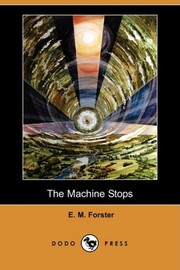
"The Machine Stops" is a science fiction short story by E. M. Forster. After initial publication in The Oxford and Cambridge Review (November 1909), the story was republished in Forster's The Eternal Moment and Other Stories in 1928. After being voted one of the best novellas up to 1965, it was included that same year in the popular anthology Modern Short Stories. In 1973 it was also included in The Science Fiction Hall of Fame, Volume Two.
The story, set in a world where humanity lives underground and relies on a giant machine to provide its needs, predicted technologies and cultural impacts similar to instant messaging, social media, the Internet, and artificial intelligence.
Background
In the preface to his Collected Short Stories (1947), Forster wrote that "The Machine Stops" was intended as a rebuttal to one of the "earlier heavens" of H. G. Wells"; specifically his quasi-novel, A Modern Utopia, published in 1905. In contrast to Wells's political commentary, Forster points to the technology itself as the ultimate controlling force.
Plot summary
The story describes a world in which most of the human population has lost the ability to live on the surface of the Earth due to extreme climate changes and toxic air. Each individual now lives in isolation below ground in a small standard room, with all survival, comfort and entertainment needs met by the omnipotent, global Machine. Travel to the surface is permitted but is unpopular and rarely necessary. Communication is made via a kind of instant messaging/video conferencing machine with which people conduct their only activity: the sharing of ideas and what passes for knowledge.
The two main characters, Vashti and her son Kuno, live on opposite sides of the world. Vashti is content with her life, which, like most inhabitants of the world, she spends producing and endlessly discussing second-hand 'ideas'. She enjoys talking to friends but uses her work to defend herself against their invitations to be more social, remaining in her ‘room’ where all her basic needs are met. Her son Kuno, however, is passionate, free-spirited and is considered a rebel in this world.
Kuno persuades a reluctant Vashti to endure the long, uncomfortable journey (and the resultant unwelcome personal interaction) to his room. He tells her of his disenchantment with the sanitised mechanical world and how this has led to his current troubles.
He confides to her that he ordered a respirator and strengthened his body enough to explore and found a way to visit the surface of the Earth without permission. There, he saw other humans living outside the world of the Machine.
However mechanical agents of the Machine soon recaptured him and he is now threatened with 'Homelessness': expulsion from the underground environment and all supportive infrastructure, which is expected to result in death. Despite the toxicity of the surface air, Kuno longs to return and sees the controlling underground world as a kind of hell. Vashti listens to her son's story but considers the implications of his rebellion to be unthinkable, akin to dangerous madness. She dismisses his perspective and returns to her part of the world.
As time passes, and Vashti continues the routine of her daily life, there are two important developments. Following Kuno’s escape, individuals are no longer permitted use of the respirators which are needed to visit the Earth's surface. Most welcome this development, as they are sceptical and fearful of first-hand experience and of those who desire it. Secondly, "Mechanism", a kind of religion, is established in which the Machine is the object of worship. People forget that humans created the Machine and treat it as a mystical entity whose needs supersede their own.
Those who do not accept the deity of the Machine are viewed as 'unmechanical' and threatened with Homelessness. The Mending Apparatus—the system charged with repairing defects that appear in the Machine proper—has also failed by this time, but concerns about this are dismissed in the context of the supposed omnipotence of the Machine itself.
During this time, Kuno is transferred to a room near Vashti's. He comes to believe that the Machine is breaking down and tells her cryptically "The Machine stops." Vashti continues with her life, but defects begin to appear in the one-room world around her. At first, Vashti and all the people she knows accept the minor malfunctions in their environment as the whim of the Machine, to which they are now wholly subservient. Eventually the deterioration creates major problems but they are unfixable as the knowledge of how to repair the Machine has been lost.
Finally, the Machine collapses, bringing 'civilization' down with it. Kuno comes to Vashti's ruined room which has stopped supplying clean air, medicine, water and food and is in danger of collapse. They physically embrace one another for the first time since his childhood. Before they both perish, they acknowledge that humanity and its connection to the natural world are what truly matters, and that it will fall to the surface-dwellers who still exist to rebuild the human race and to prevent the mistake of the Machine from being repeated.
Themes
The main theme of the story is the danger that humanity faces when it becomes overly reliant on technology for its survival; a less obvious, though equally important theme is what Forster refers to as "the sin against the body." This occurs when people's intellectual refinement and spirituality advance to such a point that they become disconnected from their physical bodies and are unable to adapt to changing environments.
Critical reception
The Fantasy Book Review calls The Machine Stops "dystopic and quite brilliant," noting, "In such a short novel The Machine Stops holds more horror than any number of gothic ghost stories. Everybody should read it, and consider how far we may go ourselves down the road of technological 'advancement' and forget what it truly means to be alive;" rating the story as 10 out of 10.
以上文字摘自英文维基百科「The Machine Stops」(有删节,去掉了参考文献等尾部小节),按 CC BY-SA 4.0 使用,作者为维基百科的各位编者。
资料卡
- 原题
- The Machine Stops
- 原作语言
- 英语
- 首次出版
- 1909 年 11 月
- 作品形式
- 短篇小说
- 体裁
- 末日后幻想
- 首发于
- The Science Fiction Hall of Fame, Volume Two B
- 首版出版社
- Archibald Constable
- 主题
- 社会崩溃、洗脑
- 主要人物
- Vashti、Kuno
资料卡来自 Wikidata Q287448(CC0),众包数据,个别字段可能不全。