 书单
百科
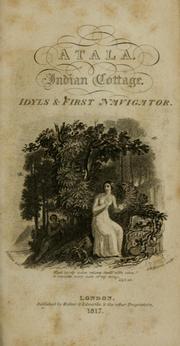
《阿达拉》(Atala, ou Les Amours de deux sauvages dans le désert)是法国作家弗朗索瓦-勒内·德·夏多布里昂的一部早期中篇小说,出版于1801年4月2日。 故事从73岁的英雄沙克达斯的角度讲述,他的故事保存在塞米诺尔人 的口头传统中。这部作品受他在北美旅行的启发, 反映了18世纪的法国浪漫主义和异国情调,第一年出版了五版。它经常被改编登上舞台,并被翻译成多种语言。
《阿达拉》与《勒内》一开始都是作者在1793年至1799年间创作的一部长篇散文史诗《纳切兹》中的一段散文片段,后者直到1826年才公开发表。1802年,《阿达拉》与《勒内》都作为《基督教真谛》的一部分出版。
以上文字摘自维基百科「阿达拉」(去掉了参考文献等尾部小节),按 CC BY-SA 4.0 使用,作者为维基百科的各位编者。
中文维基百科的条目比较短,下面附上英文维基百科的内容(英文原文):
Atala, ou Les Amours de deux sauvages dans le désert (English: Atala, or The Loves of two Indian savages in the desert) is an early novella by French author François-René de Chateaubriand, first published on 12 germinal IX (2 April 1801). The story is told from the point of view of the 73-year-old hero, Chactas, whose story is preserved by an oral tradition among the Seminoles. The work, at least partially inspired by his travels in North America, reflects the eighteenth-century French Romanticism and exoticism of its time, and went through five editions in its first year. It was adapted frequently for stage, and translated into many languages.
Along with René, Atala began as a discarded fragment from a long prose epic the author had composed between 1793 and 1799, Les Natchez, which would not be made public until 1826. In 1802, both Atala and René were published as part of Chateaubriand's Génie du christianisme.
Themes
Christianity
Contrasting the cruelty and warfare of the natives with the saintliness of the missionary, it is intended as a condemnation of the philosophes' praise of the "noble savage"; the author insisted that the Natchez man Chactas was "more than half civilised", and positive values are considered more or less synonymous with Christianity and Europeanisation. Nevertheless, the decision to portray at least two natives sympathetically irked later generations of readers, whose attitudes had been shaped by scientific racism, and even today it is often assumed by casual readers (who do not read the prefaces) that Chateaubriand was a supporter, rather than a denouncer, of the "noble savage" concept. In later writings on native peoples, Chateaubriand conceded a surprising amount of ground to Rousseau, but continued to insist on the primacy of Christianity over all other religions and forms of spirituality.
Nature and wilderness
In the prologue, Chateaubriand starts the novella with a vividly detailed description of the natural environment of formerly French North America more than two pages long. The expanse of wilderness is portrayed as empty and its nature as an Eden, referring to the biblical Garden of Eden. Throughout the text, this image of the New World as empty wilderness is also used to overlook the presence of indigenous peoples.
While the book's accuracy on the subject of the North American flora is a controversial matter, it seems to be agreed that Chateaubriand never saw much of the southern territories he describes and his descriptions are based on naturalists' books. Some critics, however, argue that this is a deliberate decision, intended to relate the landscape of America to that of biblical and Miltonesque Eden, creating an extended metaphor of a paradise both post and pre-fall, symbolizing the internal conflict of the character's hearts.
Characters (in order of appearance)
Chactas: Natchez Native American who serves as the main character and narrator for the whole story except the prologue
René: Frenchman that was accepted into the Natchez tribe/nation and adopted as a son by Chactas
Celuta: Native American wife of René
Outalissi: The father of Chactas
Lopez: Spanish man who sheltered Chactas in St. Augustine and biological father of Atala; also referred to as Philip
Simaghan: The head of the group of Muscogee and Seminole natives who captured Chactas after leaving St. Augustine and adopted father of Atala
Miscou: The grandfather of Chactas and father of Outalissi
Atala: Love of Chactas, biological daughter of Lopez, adopted daughter of Simaghan; serves as secondary main character
The Hermit: Christian priest and missionary who lives in a cave and small mission village in the mountains; also referred to as Father Aubry
Plot summary
The frame story: A young disillusioned Frenchman, René, has joined an Indian tribe and married a woman named Céluta. On a hunting expedition, one moonlit night, René asks Chactas, the old man who adopted him, to relate the story of his life.
以上文字摘自英文维基百科「Atala (novella)」(有删节,去掉了参考文献等尾部小节),按 CC BY-SA 4.0 使用,作者为维基百科的各位编者。
资料卡
- 原题
- Atala
- 原作语言
- 法语
- 首次出版
- 1802 年
- 作品形式
- 中篇小说、短篇小说
- 续作
- 勒内
- 主要人物
- Atala、Chactas
资料卡来自 Wikidata Q753251(CC0),众包数据,个别字段可能不全。
改编作品
舞台剧 / 歌剧 / 芭蕾1
名单来自 Wikidata(CC0):只列条目里写明「改编自 / 取材于」这本书的作品,不按名字猜;众包数据,可能不全。