书单
百科
这个词条暂时没有中文维基百科条目,下面是英文维基百科的内容(英文原文):
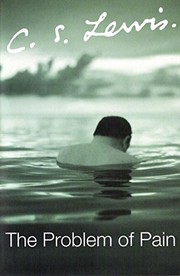
The Problem of Pain is a 1940 book on the problem of evil by C. S. Lewis, in which Lewis argues that human pain, animal pain, and hell are not sufficient reasons to reject belief in a good and powerful God.
Lewis states that his writing is "not primarily arguing the truth of Christianity but describing its origin – a task ... necessary if we are to put the problem of pain in its right setting". He begins by addressing the flaws in common arguments against the belief in a just, loving, and all-powerful God such as: "If God were good, He would make His creatures perfectly happy, and if He were almighty He would be able to do what he wished. But the creatures are not happy. Therefore God lacks either goodness, or power, or both." Topics include human suffering and sinfulness, animal suffering, and the problem of hell, and seeks to reconcile these with an omnipotent force beyond ourselves.
Summary
Introduction
Lewis starts with his former atheistic stance and paints in broad strokes the "problem of pain". He asks how, if the world is so bad, did humans ever attribute it to a benevolent deity? He then describes three attributes that all developed religions have and a fourth attribute peculiar to Christianity.
An experience with the Numinous (a sort of awe, dread, and a general sense of experiencing something otherworldly "uncanny").
An acknowledgement of morality.
The Numinous as guardian of the morality.
Actual historical events.
Divine Omnipotence
Lewis states the problem of pain again in a simpler way: "If God were good, He would wish to make His creatures perfectly happy, and if God were almighty, He would be able to do what he wished. But the creatures are not happy. Therefore, God lacks either goodness, or power, or both."
Lewis says that if the popular meanings attached to the words are the best or only possible then the problem is unanswerable. The possibility of answering it depends on understanding the words 'good,' 'almighty,' and 'happy' in a bigger sense.
He discusses the nature of "impossible" with the conclusion that anything self-contradictory is not under the auspice of God’s omnipotence because it would be a non-entity; anything is possible with God.
Lewis then talks about the nature of nature/matter. Because there are things outside an individual and God, things cannot be configured to suit the individual perfectly. He also introduces the concept of Free Will and how that further inhibits everyone being pain-free all the time, although he does allow and say miracles do exist. Lewis postulates that maybe this world is not the 'best of all possible' universes but the only possible one.
He acknowledges the objection that if God is good and he saw how much suffering it would produce why would he do it. Lewis doesn’t know how to answer that type of question and says that that is not his objective, but only to conceive how goodness (assured on other grounds) and suffering are without contradiction.
Divine Goodness
Lewis draws an analogy to compare our understanding of goodness to that of God’s. He says it differs like that of a child’s attempt at drawing a circle for the first time to that of a perfect circle. He goes on to say that people don’t want a good God or a Father but a "senile benevolence who likes to see the young people enjoying themselves." Love and kindness are not one and the same thing. Lewis then summarizes all the different kinds of loves and analogies in scripture that describe God’s relation to humans. Lewis says that the problem of pain is insoluble if we attach a "trivial meaning to the word ‘love’." God loves His goodness into us and our highest activity is response and not initiation; the love may cause us pain but only because the object needs alteration to become fully lovable.
Human Wickedness
Lewis starts off by asking why humans need so much alteration. Immediately he shares the Christian answer that humans have used free will to become very bad. He then talks about when Jesus and the apostles preached people understood a real consciousness deserving a divine anger, but in the 20th century people don’t believe they are "mortally ill". He blames misattributing kindness to ourselves and the effect of psychoanalysis on the public mind for driving out a healthy sense of shame from our collective minds.
Lewis acknowledges the critique of what specific, individual harm have we done to God for God to be always angry. Lewis says that when a person feels real guilt, this critique falls away. "When we merely say that we are bad, the ‘wrath’ of God seems a barbarous doctrine; as soon as we perceive our badness, it appears inevitable, a mere corollary from God’s goodness."
He then goes on to add a few considerations "to make the reality less incredible".
We are deceived by looking on the outside of things: we should not mistake our inevitably limited utterances for a full account of the worst that is inside.
While there is a social conscious and corporate guilt, don’t let the idea distract you from your own "old-fashioned guilts" that have nothing to do with the ‘system’. Often, it’s an excuse for evading the real issue. Once we’ve learned of our individual corruption, we can go on to think about corporate guilt.
"We have a strange illusion that mere time cancels sin."
We must guard against the feeling that there is "safety in number".
Different ages excelled in different virtues. Other times might have been more courageous or chaste but God was not content with them, so why should he be content with us.
All the virtues need to control one another, if not then the virtue which stands above others will tumble all into vice.
The Holiness of God is something more and other than moral perfection.
Don’t shift blame for human behavior to the Creator. While it is not possible to follow the moral law perfectly, "the ultimate problem must not be used as one more means of evasion". You could be as pious as the early Christians but many don’t intend it.
以上文字摘自英文维基百科「The Problem of Pain」(有删节,去掉了参考文献等尾部小节),按 CC BY-SA 4.0 使用,作者为维基百科的各位编者。
资料卡
- 原题
- The Problem of Pain
- 原作语言
- 英语
- 首次出版
- 1940 年
- 体裁
- 随笔
- 页数
- 148
资料卡来自 Wikidata Q4179147(CC0),众包数据,个别字段可能不全。