书单
百科
这个词条暂时没有中文维基百科条目,下面是英文维基百科的内容(英文原文):
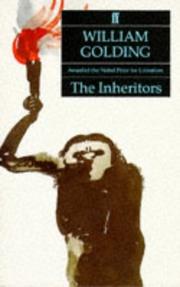
The Inheritors is a work of prehistoric fiction and the second novel by the British author William Golding, best known for his first novel, Lord of the Flies (1954). It concerns the extinction of one of the last remaining tribes of Neanderthals at the hands of the more sophisticated Homo sapiens. It was published by Faber and Faber in 1955.
Background
Like Lord of the Flies, The Inheritors began life in a Bishop Wordsworth's School notebook. This handwritten manuscript and the typescript that ensued are now held in the University of Exeter's Special Collections Archives, where they can be used for further research and study.
Golding began work on The Inheritors in the autumn of 1954, mere weeks after the publication of Lord of the Flies; Golding was concerned that he would be unable to write another novel and had sent a 'long, anxious letter in return' to his editor Charles Monteith when asked what his next publication would be. He had started writing a novel exploring the father-son relationship through the mythical character of Telegonus (son of Odysseus), titled In Search of My Father, a year prior; Monteith requested a chapter, the typescript for which demonstrates 'some of Golding's most spectacular prose'. Monteith was 'enormously interested', but after favourable reviews of Lord of the Flies, it was left unfinished owing to Golding's belief that it would come off as a cheap imitation of other historical epics.
Golding finished his first draft of The Inheritors on 11 November 1954, though he deemed his own handwriting illegible and worked on the novel significantly over Christmas, redrafting, reworking, and typing the manuscript to submit to Monteith. The following February, Monteith received the revised typescript along with a letter from Golding featuring a host of disclaimers that betrayed his nervousness surrounding the novel that would follow up Lord of the Flies. Golding had also wanted to finish the book sooner; after moving house to the Victorian vicarage across the road, his increased rent had made him 'consequently hard up'. But Golding had no reason to worry and, in fact, soon found that the book would be completed more quickly than he had previously anticipated; after a few proof readings, Monteith saw that the book was fit to publish. There was little editing required and, although he was initially unsure about having cavemen as the subject of a novel, Monteith knew that the book was a masterpiece that was 'perfect as it stood'.
Plot
This novel is an imaginative reconstruction of the life of a band of Neanderthals, consisting of an old man (Mal), an unnamed old woman, four adults (Ha, Nil, Lok and Fa), a little girl (Liku) and a baby, simply referred to as "the new one". It is written in such a way that the reader might assume the group to be modern Homo sapiens as they gesture and speak simply among themselves, and bury their dead with heartfelt, solemn rituals. They also have powerful sense impressions and feelings, and appear sometimes to share thoughts in a near-telepathic way. As the novel progresses it becomes more and more apparent that they live very simply, using their considerable mental abilities to connect to one another without extensive vocabulary or the kinds of memories that create culture. They have wide knowledge of food sources, mostly roots and vegetables. They chase hyenas from a larger beast's kill and eat meat, but they don't kill mammals themselves. They have a spiritual system centering on a female principle of bringing forth, but their lives are lived so much in the present that the reader realizes they are very different from us, living in something like an eternal present, or at most a present broken and shaped by seasons.
One of the band, Lok, is a point of view character. He is the one we follow as one by one the adults of the band die or are killed, then the young are stolen by the "new people", a group of early modern humans. Lok and Fa, the remaining adults, are fascinated and repelled by the new people. They observe their actions and rituals with amazement, only slowly understanding that harm is meant by the sticks of the new people.
The humans are portrayed as strange, godlike beings as the Neanderthals witness their mastery of fire, Upper Palaeolithic weaponry and sailing.
All save the last chapters of the novel are written from the Neanderthals' stark, simple stylistic perspective. Their observations of early human behaviour serve as a filter for Golding's exercise in paleoanthropology, in which modern readers will recognize precursors of later human societal constructs, e.g., religion, culture, sacrifice and war.
The penultimate chapter employs an omniscient viewpoint, observing Lok. For the first time, the novel describes the people the reader has been inhabiting through the first-person perspective. Lok, totally alone, gives up in despair.
In the final chapter, we move to the point of view of the new race, more or less modern humans fleeing in their boats, revealing that they are terribly afraid of the Neanderthals (whom they believe to be devils of the forest) and of pretty much everything around. This last chapter, the only one written from the humans' point of view, reinforces the inheritance of the world by the new species.
The fleeing humans carry with them an infant Neanderthal, of whom they are simultaneously afraid and enamoured, hinting at the later hypothesis of inter-breeding between Neanderthals and modern humans.
以上文字摘自英文维基百科「The Inheritors (Golding novel)」(有删节,去掉了参考文献等尾部小节),按 CC BY-SA 4.0 使用,作者为维基百科的各位编者。
资料卡
- 原题
- The Inheritors
- 原作语言
- 英语
- 首次出版
- 1955 年
- 作品形式
- 长篇小说
- 首版出版社
- 法伯尔和法伯尔
- 故事年代
- 旧石器时代
资料卡来自 Wikidata Q2087440(CC0),众包数据,个别字段可能不全。
更多资料与书评
在哪读
威廉·戈尔丁 的其他作品
作者页 ›相似的书
 豆瓣 #38
 豆瓣 #82