 书单
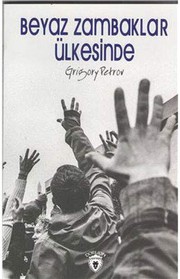
Finland: The Country of White Lilies (1923)
- 作者
- Grigory Spiridonovich Petrov
- 首版
- 1923 年
- Open Library
- 16 个版本
百科
这个词条暂时没有中文维基百科条目,下面是英文维基百科的内容(英文原文):
Finland, The Country of White Lilies is a non-fiction book authored by the Russian priest and social-activist Grigory Spiridonovich Petrov (1866–1925). Petrov dedicated a non-fiction book to Finland and Johan Vilhelm Snellman, written while he was living in Serbia after the October Revolution. The work describes the country as a role model and a living example for other states such as Russia. The book was published in Serbian under the title "Зидари живота" ("Creators of Life") in 1923.
The book was published and reprinted many times in different languages after Petrov's death (including 14 times in Bulgarian and 16 times in Turkish).
Author of the book
Grigory Spiridonovich Petrov (1866—1925) was a priest, public figure, journalist, publicist, and preacher. Born in Yamburg (now — Kingisepp of Leningrad Oblast). He graduated from the Saint Petersburg Theological Academy. He lectured, among other places, at the Mikhailovskoye Artillery School, Page Corps, Tsarskoye Selo Lyceum, Polytechnic Institute, and at various gymnasiums. He was quite popular especially in St. Petersburg as his public lectures attracted crowds of people. His books were sold in many bookstores and were in great demand. In 1898 his work "The Gospel as the Foundation of Life" was published, later going through about 20 editions and translated into many languages. In this work, Petrov called for turning to the Gospel as a source of knowledge about how one should behave in everyday life. Maxim Gorky in his letter to Anton Chekhov wrote about this book that "there is much soul in it, a clear and deeply believing soul...". Petrov's ideas had many points of contact with the moral preaching of Leo Tolstoy.
Petrov's writings and speeches created for him the reputation of an "unreliable" priest, and in 1903 he was dismissed from his position as rector and teacher. In 1907 he was elected deputy to the 2nd State Duma on the list of the Constitutional Democratic Party. In 1908 he was defrocked. He welcomed the February Revolution of 1917, but condemned the Bolsheviks' rise to power.
In 1920, Petrov traveled from Crimea to Constantinople in the hold of a steamship, then ended up in a refugee camp in Gallipoli (now — Gelibolu), then in Trieste, and later in Belgrade. He lived in Serbia and Bulgaria. He died in 1925 in a clinic near Paris.
Reissues
After the author's death, in 1925, the book was published in Bulgarian under the title "В страната на белите лилии" ("In the Country of White Lilies").
The book was translated from Bulgarian into Turkish, with the first edition being published in Istanbul in 1928. Mustafa Kemal Atatürk liked the book so much that he ordered it to be included in the curriculum of educational institutions, including military schools – as a guide to the "renewal of life".
Later, the book was published and republished many times in different languages under different titles, including 14 editions in Bulgarian and at least 16 editions in Turkish, and in the preface to one of the editions it was said that this was the most widely read book in modern Turkish in Turkey.
In 1978 the book was published in Finnish. Interestingly, this edition was translated from Turkish, while the book had originally been translated into Turkish from Bulgarian, despite the fact that Petrov wrote it in Russian.
The book was first published in Russian by the publisher "European House" in 2004 under the title "Finland, the Land of White Lilies". Financial and moral support for the publication was provided by the Institute of Russia and Eastern Europe of Finland, the presentation of the book in Helsinki took place in August 2004.
There are also known publications of the book in Arabic and Kurdish.
Contents of the book
In his book Petrov talks about Finland, idealizing it and setting it as an example, describing it as a model for imitation and a living example for other states such as Russia in the political, economic, and cultural spheres. Through a mixture of historical facts and his own ideas about an ideal state, in the construction of which both ordinary people and "leaders of the people" take active part, the author creates a myth, "an almost fairy-tale narrative about a heroic people," “an instruction for the organization of an ideal state".
The book begins with the author's reflections that the wisdom of state governance lies in timely renewal, in sensitive reaction to changes in circumstances, in replacing the foundation on which the "building of the state" stands; if such renewal does not occur, the state loses its vital force and inevitably perishes (Chapter I. Mene, Tekel, Peres). Petrov then writes that the condition in which a state finds itself depends both on rulers (heroes), that is, those who by virtue of their special qualities or circumstances have found themselves at the "edge of movement," and on the inhabitants of the country, on their will and aspirations. An example of how citizens themselves can influence the power and prosperity of a state "can be a small, poor country with two million inhabitants" — Finland (Chapter II. Heroes and the Mass).
以上文字摘自英文维基百科「Finland: The Country of White Lilies」(有删节,去掉了参考文献等尾部小节),按 CC BY-SA 4.0 使用,作者为维基百科的各位编者。
资料卡
- 原作语言
- 俄语
- 首次出版
- 1923 年
- 体裁
- 舆论新闻业
资料卡来自 Wikidata Q4484863(CC0),众包数据,个别字段可能不全。