书单
百科
这个词条暂时没有中文维基百科条目,下面是英文维基百科的内容(英文原文):
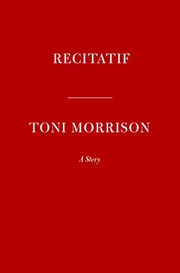
"Recitatif" is a short story by American author Toni Morrison. It was initially published in 1983 in Confirmation: An Anthology of African American Women, an anthology edited by Amiri Baraka and Amina Baraka. The story was reissued as a stand-alone book, published in February 2022.
"Recitatif" is a story in racial writing, as the race of Twyla and Roberta are debatable. Though the characters are clearly separated by class, neither is affirmed as African-American or White. Morrison has described the story as "the removal of all racial codes from a narrative about two characters of different races for whom racial identity is crucial".
Historical context
The name
Récitatif is the French form of recitative, a style of musical declamation that hovers between song and ordinary speech, particularly used for dialogic and narrative interludes during operas and oratories. An obsolete sense of the term was also "the tone or rhythm peculiar to any language". Both of these definitions suggest the story's episodic nature. Each of the story's five sections happens in a register that is different from the respective ordinary lives of its two central characters, Roberta and Twyla. The story's vignettes bring together the rhythms of the two main characters', Roberta and Twyla, lives for five, short moments, all of them narrated in Twyla's voice. The story is, then, in several ways, Twyla's "Recitatif".
The story
"Recitatif" is set in three different time periods, in which racial tensions and African-American progressive movements peaked, contributing to a shift in culture in the United States. The beginning of the story took place in the 1950s, when Twyla and Roberta first met as eight-year-olds. This time period is most notable as the Jim Crow segregation era and the period in which the Civil Rights Movement was launched. Also, during this period, the Supreme Court delivered the ruling of the case of Brown vs. Board of Education, which effectively outlawed racial segregation in learning institutions. As a result, protests erupted throughout the country in response to African-American students enrolling in previously segregated schools.
The next part of the story is set in the 1960s. During this time, the Civil Rights Movement gained momentum as the Civil Rights Act of 1964 was passed the United States federal government, outlawing discrimination based on race, religion, sex, and nationality. Four years later, civil rights leader, Dr. Martin Luther King, Jr. was assassinated, leading to the expansion of the Civil Rights Movement, and ultimately, an extensive culture shift in the United States as prejudicial social standards were increasingly rejected and progressive politics were increasingly embraced. The last part of the story is set in the early 1980s, which marked the beginning of Ronald Reagan's presidency. During Reagan's presidency, issues of race and prejudice were inflamed contributing to ongoing racial and social tensions.
Morrison's short story was greatly influenced and shaped by these critical historical movements as they affected and determined the plot of the story and the relationship between Twyla and Roberta, the main characters of the story.
"Recitatif" began as a screenplay that Morrison was enlisted to write as a costarring vehicle for Marlo Thomas and Cicely Tyson, who both passed on the project after expressing dissatisfaction with Morrison's script.
Plot summary
"Recitatif" is told from the perspective of Twyla in the 1960s, during a period of her childhood when her mother was not able to properly take care of her. She spent a portion at an orphanage where she met Roberta, a girl of a different race. They became friends during their time at St. Bonny's, although it was obvious to them both that they were different. In the short story, Morrison illustrates the theme of race and prejudice by using racial ambiguity through the interactions between two racially unidentified, but characteristically similar girls to highlight the racial barrier and tensions prevalent at that time.
First encounter
Twyla and Roberta first meet within the confines of an orphanage for children, St. Bonny's (named after St. Bonaventure), because each has been taken away from her mother. Roberta's mother is ill and Twyla's mother "just likes to dance all night." We learn immediately that the girls look different from one another as one is black, one is white, although we are not told which is which. Despite their initially hostile feelings, they are drawn together because of their similar circumstances.
The two girls turn out to be "more alike than unalike" as they were both "dumped" at the orphanage. They become allies against the "big girls on the second floor", whom they call "gar-girls" (a name they get from mishearing the word "gargoyle"), as well as against the home's "real orphans", the children whose parents have died. They share a fascination with Maggie, the old, sandy-colored woman "with legs like parentheses" who works in the home's kitchen and is unable to speak.
Twyla and Roberta are reminded of their differences on the Sunday that each of their mothers comes to visit and attend church with them. Twyla's mother, Mary, is dressed inappropriately, while Roberta's mother is wearing an enormous cross on her chest. Mary offers her hand, but Roberta's mother refuses to shake Mary's hand and Mary begins cursing. Twyla experiences humiliation as her mother's inappropriate behavior shames her, and she feels slighted by Roberta's mother's refusal.
After four months together, Roberta leaves the orphanage.
以上文字摘自英文维基百科「Recitatif」(有删节,去掉了参考文献等尾部小节),按 CC BY-SA 4.0 使用,作者为维基百科的各位编者。
资料卡
- 原题
- Recitatif
- 原作语言
- 英语
- 作品形式
- 短篇小说
资料卡来自 Wikidata Q7302499(CC0),众包数据,个别字段可能不全。