 书单
百科
这个词条暂时没有中文维基百科条目,下面是英文维基百科的内容(英文原文):
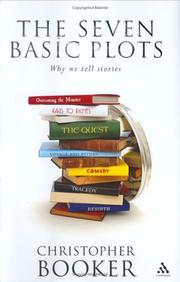
The Seven Basic Plots: Why We Tell Stories is a 2004 book by Christopher Booker that offers a Jungian‑influenced analysis of stories and their psychological significance. Booker worked on the book for thirty‑four years.
Summary
The Meta‑Plot
The meta‑plot opens with an anticipation stage, in which the hero is summoned to the adventure that lies ahead. This is followed by a dream stage, during which the adventure begins, the hero meets with some success and falls under an illusion of invincibility. The next phase is a frustration stage, in which the hero confronts the enemy for the first time and the illusion of invincibility is shattered. Matters deepen in the nightmare stage, the climax of the plot, where hope appears to be lost. Finally, at the resolution, the hero triumphs over adversity against all odds.
The central thesis of the book states: “However many characters may appear in a story, its real concern is with just one: its hero. It is the one whose fate we identify with, as we see them gradually developing towards that state of self‑realisation which marks the end of the story. Ultimately it is in relation to this central figure that all other characters in a story take on their significance. What each of the other characters represents is really only some aspect of the inner state of the hero himself.”
Overcoming the Monster
The protagonist sets out to defeat an antagonistic force (often evil) that threatens the protagonist and/or protagonist's homeland.
Examples: Perseus, Theseus, Beowulf (anonymous), Dracula (Bram Stoker), The War of the Worlds (H.G. Wells), Nicholas Nickleby (Charles Dickens), The Guns of Navarone (Alistair McLean), Seven Samurai and The Magnificent Seven, James Bond (Ian Fleming), Jaws, Star Wars: A New Hope, Naruto, Harry Potter (J.K. Rowling)
Rags to Riches
The poor protagonist acquires power, wealth, and/or a mate, loses it all and gains it back, growing as a person as a result.
Examples: Cinderella, Aladdin, Jane Eyre (Charlotte Brontë), A Little Princess (Frances Hodgson Burnett), Great Expectations (Charles Dickens), David Copperfield (Charles Dickens), Moll Flanders (Daniel Defoe), The Red and the Black (Stendhal), The Prince and the Pauper (Mark Twain), "The Ugly Duckling" (Hans Christian Andersen), The Gold Rush, The Jerk.
The Quest
The protagonist and companions set out to acquire an important object or to get to a location. They face temptations and other obstacles along the way.
Examples: The Iliad (Homer), The Pilgrim's Progress (John Bunyan), The Lord of the Rings (J.R.R. Tolkien), King Solomon's Mines (H. Rider Haggard), The Divine Comedy (Dante Alighieri), Watership Down (Richard Adams), The Aeneid (Virgil), Raiders of the Lost Ark
Voyage and Return
The protagonist goes to a strange land and, after overcoming the threats it poses or learning important lessons unique to that location, returns with experience.
Examples: Odyssey (Homer), Alice's Adventures in Wonderland (Lewis Carroll), "Goldilocks and the Three Bears", Orpheus, The Time Machine (H.G. Wells), Peter Rabbit (Beatrix Potter), The Hobbit (J.R.R. Tolkien), Brideshead Revisited (Evelyn Waugh), "The Rime of the Ancient Mariner" (Samuel Taylor Coleridge), Gone with the Wind (Margaret Mitchell), The Third Man, The Lion King, Back to the Future, The Lion, the Witch and the Wardrobe (C.S. Lewis), Gulliver's Travels (Jonathan Swift), Peter Pan (J. M. Barrie), The Epic of Gilgamesh, Ramayana.
Comedy
Light and humorous character with a happy or cheerful ending; a dramatic work in which the central motif is the triumph over adverse circumstance, resulting in a successful or happy conclusion. Booker stresses that comedy is more than humour. It refers to a pattern where the conflict becomes more and more confusing, but is at last made plain in a single clarifying event. The majority of romance films fall into this category.
Examples: The Wasps (Aristophanes), Aulularia (Titus Maccius Plautus), The Arbitration (Menander), A Midsummer Night's Dream (William Shakespeare), Much Ado About Nothing (William Shakespeare), Twelfth Night (William Shakespeare), The Taming of the Shrew (William Shakespeare), The Alchemist (Ben Jonson), Bridget Jones's Diary (Helen Fielding), Four Weddings and a Funeral, The Big Lebowski.
Tragedy
The protagonist is a hero with a major character flaw or great mistake which is ultimately their undoing. The protagonist's unfortunate end evokes pity at their folly and the fall of a fundamentally good character.
Examples: Bonnie and Clyde, Carmen (Prosper Mérimée), Citizen Kane, John Dillinger, Jules et Jim, Julius Caesar (William Shakespeare), Macbeth (William Shakespeare), Madame Bovary (Gustave Flaubert), Oedipus Rex (Sophocles), The Picture of Dorian Gray (Oscar Wilde), Romeo and Juliet (William Shakespeare), Hamilton, The Great Gatsby (F. Scott Fitzgerald), Hamlet (William Shakespeare).
Rebirth
An event forces the protagonist to change their ways and often become a better person.
Examples: "The Frog Prince", "Beauty and the Beast", "The Snow Queen" (Hans Christian Andersen), A Christmas Carol (Charles Dickens), The Secret Garden (Frances Hodgson Burnett), Peer Gynt (Henrik Ibsen), The Good Place, Groundhog Day, Iron Man.
The Rule of Three
The third event in a series of events becomes "the final trigger for something important to happen." This pattern appears in childhood stories such as "Goldilocks and the Three Bears", "Cinderella", and "Little Red Riding Hood".
In adult stories, the Rule of Three conveys the gradual resolution of a process that leads to transformation. This transformation can be downwards as well as upwards.
Booker asserts that the Rule of Three is expressed in four ways:
The simple, or cumulative three, for example, in the original version, Cinderella's three visits to the ball.
The ascending three, where each event is of more significance than the preceding, for example, the hero must win first bronze, then silver, then gold objects.
The contrasting three, where only the third has positive value, for example, The Three Little Pigs, two of whose houses are blown down by the Big Bad Wolf.
以上文字摘自英文维基百科「The Seven Basic Plots」(有删节,去掉了参考文献等尾部小节),按 CC BY-SA 4.0 使用,作者为维基百科的各位编者。
资料卡
- 原题
- The Seven Basic Plots
- 原作语言
- 英语
- 首次出版
- 2004 年
- 前作
- The Great Deception
资料卡来自 Wikidata Q11960326(CC0),众包数据,个别字段可能不全。