 书单
百科
这个词条暂时没有中文维基百科条目,下面是英文维基百科的内容(英文原文):
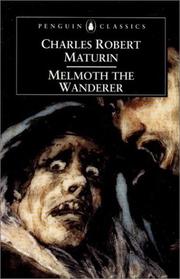
Melmoth the Wanderer is an 1820 Gothic novel by Irish playwright, novelist and clergyman Charles Maturin. The novel's titular character is a scholar who sold his soul to the devil in exchange for 150 extra years of life, and searches the world for someone who will take over the pact for him, in a manner reminiscent of the Wandering Jew.
The novel is composed of a series of nested stories within stories, gradually revealing the story of Melmoth's life. The novel offers social commentary on early 19th-century England, and denounces Roman Catholicism in favour of the virtues of Protestantism.
Background
The structure of the book as a series of short stories joined reflects its initial conception as such. In reality, Maturin was under pressure from his publisher to fulfil a contractual obligation, which goes some way to explaining the "chaotic and haphazard process by which (he) wrote". Maturin spent many hours researching the novel in Marsh's Library, Ireland's first public library (opened in 1707), which was a short distance from his home on York Street and place of work on Aungier Street. In the library, Maturin took inspiration from many sources, including the King James Bible, the Anglican liturgy, the works of William Shakespeare, Virgil's Aeneid, polemical books and pamphlets of the English Revolution of the mid-17th century, and various literature and theatre from the 16th and 17th centuries. Maturin spent so much time reading in Marsh's each day that he eventually constructed a special desk for himself there.
Synopsis
John Melmoth, a student in Dublin, visits his dying uncle. He finds a portrait of a mysterious ancestor called "Melmoth"; the portrait is dated 1646. At his uncle's funeral, John is told an old family story about a stranger called Stanton, who arrived looking for "Melmoth the Traveller" decades earlier.
A manuscript left by Stanton describes his first finding Melmoth laughing at the sight of two lovers who have been struck by lightning, and hearing of a wedding at which Melmoth was an uninvited guest: the bride died and the bridegroom went mad. Stanton's search for Melmoth is deemed to be madness and he is sent to a madhouse. Melmoth visits him there, and offers to free him, but Stanton refuses and escapes.
Following his uncle's wish, John burns the Melmoth portrait. He is visited by Melmoth in a dream, and later sees Melmoth laughing at a shipwreck. John tries to approach him, but slips and falls into the sea. He is saved from drowning by the sole survivor of the wreck, a Spaniard named Alonzo Monçada.
Alonzo Monçada tells his story (The Tale of the Spaniard), in which his family confines him to a monastery. He is mistreated by the monks, and his brother Juan arranges for him to escape with the help of a fellow monk, a parricide. The escape plan is a trap and Juan is killed. Monçada is taken to the prison of the Inquisition. There he is visited in his cell by Melmoth, who says he will help him escape. A fire breaks out, and in the confusion Monçada escapes. He meets a venerable Jewish scholar, Adonijah, who lives in a secret chamber decorated with the skeletons of his own family. In exchange for food and shelter, Adonijah compels Monçada to transcribe a manuscript for him: the Tale of the Indians.
The Tale of the Indians tells of an island in the Indian Ocean which is rumoured to be haunted by a white goddess named Immalee. In reality, Immalee is a castaway who grew up alone on the island, isolated from humanity. She is visited by Melmoth, who tells her he comes from "the world that suffers". He tries to destroy her innocence, showing her the shortcomings of human societies and religions. She falls in love with him and begs him to stay with her, but he departs. Three years later, Immalee, now named Isidora, has been restored to her family in Madrid. Melmoth reappears and he and Isidora elope by night; he leads her to a remote chapel where they are married by an undead hermit.
Isidora's father encounters a stranger at an inn who tells him the Tale of Guzman's Family. Guzman is a wealthy Spanish merchant whose sister marries a poor German musician, Walberg. Guzman decides to make Walberg's family his heirs, but his will leaves everything to the church, and the family sinks into poverty; almost insane, Walberg decides to end their poverty by killing them all – but before he does so news arrives that the true will has been found and the family is saved. By this point in the story, Isidora's father has fallen asleep, and wakes to find the stranger at the inn replaced by Melmoth.
Melmoth tells him the Lovers' Tale, about a young woman in Yorkshire named Elinor, who is jilted at the altar and is subsequently tempted by Melmoth, but refuses his help.
The Tale of the Indians resumes: Isidora returns to her family, but she is pregnant with Melmoth's child. She has a presentiment that she will not live, and gets Melmoth to promise that the child will be raised as a Christian. Isidora's father finds a husband for her, but in the middle of the wedding celebrations, Melmoth tries to abduct Isidora. Her brother tries to intervene, and Melmoth kills him. Isidora falls senseless and Melmoth escapes. Isidora reveals that she is already married, to Melmoth. She gives birth, but she and her baby daughter are imprisoned by the Inquisition. The inquisitors threaten to take away the child, but find that it is already dead. Isidora, dying of grief, remembers her island paradise, and asks if "he" will be in the heavenly paradise.
以上文字摘自英文维基百科「Melmoth the Wanderer」(有删节,去掉了参考文献等尾部小节),按 CC BY-SA 4.0 使用,作者为维基百科的各位编者。
资料卡
- 原题
- Melmoth the Wanderer
- 原作语言
- 英语
- 首次出版
- 67 年
- 作品形式
- 长篇小说
- 体裁
- 异性恋、浪漫主义
资料卡来自 Wikidata Q1475956(CC0),众包数据,个别字段可能不全。