 书单
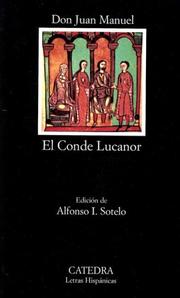
卢卡诺尔伯爵 (1335)
- 作者
- 堂胡安·马努埃尔
- 首版
- 1335 年
- 国家/地区
- 卡斯提尔王冠领地
- Open Library
- 158 个版本
百科
《卢卡诺尔伯爵》(西班牙语:El conde Lucanor),又名《帕特罗尼奥之书》(Libro de Patronio)是西班牙14世纪短篇故事散文集,作者为堂胡安·马努埃尔(Don Juan Manuel)。以问答体的形式记录卢卡诺尔伯爵和老师帕特罗尼奥之间的对话。伯爵就各种社会道德和政治问题向老师提问,而老师则以讲述寓言故事的形式来解答。
有一篇名为《织布骗子和国王的故事》被安徒生取来加以重新创作,而成为童话大师最有代表性的童话名作《皇帝的新衣》。
内容
整篇故事集可以分为两个部分。第一部分包括51篇内容独立、情节完整的故事,以对话体展开,主要人物是年轻而不经世事的卢卡诺尔伯爵,和他的家庭教师帕特罗尼奥。第一部分占整个故事集篇幅的六分之五。第二部分为谚语和寓言。
中译本
(西)堂胡安·马努埃尔. 《卢卡诺尔伯爵》. 伊利比亚文学丛书·西班牙经典系列丛书. 由刘玉树翻译 (昆仑出版社). 2000年12月. ISBN 9787800404849 (中文).
以上文字摘自维基百科「卢卡诺尔伯爵」(去掉了参考文献等尾部小节),按 CC BY-SA 4.0 使用,作者为维基百科的各位编者。
中文维基百科的条目比较短,下面附上英文维基百科的内容(英文原文):
Tales of Count Lucanor (Old Spanish: Libro de los enxiemplos del Conde Lucanor et de Patronio) is a collection of parables written in 1335 by Juan Manuel, Prince of Villena. It is one of the earliest works of prose in Castilian Spanish.
The book is divided into five parts. The first and best-known part is a series of 51 short stories (some no more than a page or two) drawn from various sources, such as Aesop and other classical writers, and Arabic folktales.
Tales of Count Lucanor was first printed in 1575 when it was published at Seville under the auspices of Argote de Molina. It was again printed at Madrid in 1642, after which it lay forgotten for nearly two centuries.
Purpose and structure
The book exhibits a didactic, moralistic purpose, as would much Spanish literature that followed it. Count Lucanor engages in conversation with his advisor Patronio, putting to him a problem ("Some man has made me a proposition..." or "I fear that such and such person intends to...") and asking for advice. Patronio responds always with the greatest humility, claiming not to wish to offer advice to so illustrious a person as the Count, but offering to tell him a story of which the Count's problem reminds him. (Thus, the stories are "examples" [ejemplos] of wise action.) At the end he advises the Count to do as the protagonist of his story did.
Each chapter ends in more or less the same way, with slight variations on: "And this pleased the Count greatly and he did just so, and found it well. And Don Johán (Juan) saw that this example was very good, and had it written in this book, and composed the following verses." A rhymed couplet closes, giving the moral of the story.
Origin of stories and influence on later literature
Many of the stories written in the book are the first examples written in a modern European language of various stories, which many other writers would use in the succeeding centuries. Many of the stories he included were themselves derived from other stories, coming from western and Arab sources.
Shakespeare's The Taming of the Shrew has the basic elements of Tale 35, "What Happened to a Young Man Who Married a Strong and Ill-tempered Woman".
Tale 32, "What Happened to the King and the Tricksters Who Made Cloth" tells the story that Hans Christian Andersen made popular as The Emperor's New Clothes.
Story 7, "What Happened to a Woman Named Truhana", a version of Aesop's The Milkmaid and Her Pail, was claimed by Max Müller to originate in the Hindu cycle Panchatantra.
Tale 2, "What happened to a good Man and his Son, leading a beast to market," is the familiar fable The miller, his son and the donkey.
Tale 11, "What Happened to a Dean of Santiago de Compostela and Don Yllán, the Grand Master of Toledo", is the source for a short story by Jorge Luis Borges titled "El brujo postergado" [A Wizard Postponed], included in his book Historia universal de la infamia [A Universal History of Infamy] (1935), which is a reelaboration of the original story.
The stories
The book opens with a prologue which introduces the characters of the Count and Patronio. The titles in the following list are those given in Keller and Keating's 1977 translation into English. James York's 1868 translation into English gives a significantly different ordering of the stories and omits the fifty-first.
What Happened to a King and His Favorite
What Happened to a Good Man and His Son
How King Richard of England Leapt into the Sea Against the Moors
What a Genoese Said to His Soul When He Was about to Die
What Happened to a Fox and a Crow Who Had a Piece of Cheese in His Beak
How the Swallow Warned the Other Birds When She Saw Flax Being Sown
What Happened to a Woman Named Truhana
What Happened to a Man Whose Liver Had to Be Washed
What Happened to Two Horses Which Were Thrown to the Lion
What Happened to a Man Who on Account of Poverty and Lack of Other Food Was Eating Bitter Lentils
What Happened to a Dean of Santiago de Compostela and Don Yllán, the Grand Master of Toledo
What Happened to the Fox and the Rooster
What Happened to a Man Who Was Hunting Partridges
以上文字摘自英文维基百科「Tales of Count Lucanor」(有删节,去掉了参考文献等尾部小节),按 CC BY-SA 4.0 使用,作者为维基百科的各位编者。
资料卡
- 原题
- Libro de los exemplos del Conde Lucanor et de Patronio
- 原作语言
- 中古西班牙语
- 首次出版
- 1335 年
- 作品形式
- 散文、短篇小说集
- 体裁
- 劝喻性故事
资料卡来自 Wikidata Q1324033(CC0),众包数据,个别字段可能不全。