书单
百科
这个词条暂时没有中文维基百科条目,下面是英文维基百科的内容(英文原文):
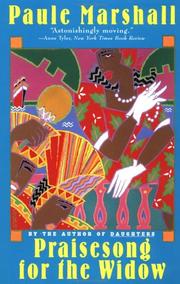
Praisesong for the Widow is a 1983 novel by Paule Marshall that takes place in the mid-1970s, chronicling the life of Avey Johnson, a 64-year-old African-American widow on a physical and emotional journey in the Caribbean island of Carriacou. Throughout the novel, there are many flashbacks to Avey's earlier life experiences with her late husband, Jerome Johnson, as well as childhood events that reconnect her with her lost cultural roots. The book was reissued in 2021, part of McSweeney's "Of the Diaspora" series highlighting important works in Black literature.
Explanation of the title
There is a reference here to the African heritage of Avey Johnson, to which she reconnects during the course of the novel. Through the use of song and remembrances of the past, Avey is able to come to terms with the death of her husband.
Plot summary
The opening begins with Avey "Avatara" Johnson packing her bags aboard her 17-day cruise on the Bianca Pride, during the late 1970s. The reason for her sudden departure began three nights before, when she had a dream about her great-aunt Cuney and a disturbing encounter in the Versailles dining-room with a peach parfait. Her first since the 1960s, the dream consists of Avey's aunt in Tatem attempting to convince Avey to follow her down the road in Tatem, South Carolina, a childhood vacation spot. When Avey resists, the two have a physical brawl. The next morning, Avey wants nothing more than to be alone, and yet cannot get away from anyone on the cruise ship, no matter where she goes. At this point, she makes the decision to leave the ship. The next morning, she packs her bags and leaves to the next port-of-call, which is the island of Grenada. On Grenada, the atmosphere seems to be festive, as people dressed in bright clothing, carrying packages, are getting onto boats. Confused, Avey Johnson is later informed by her taxi driver that it is the annual excursion to Carriacou, a nearby island. At the hotel, the sick feeling in Avey's stomach returns, and Avey spends her last moments of consciousness painfully reminiscing about her relationship with her late husband, Jerome "Jay" Johnson, and for the first time in four years, she mourns his loss.
Avey wakes up the next day in the home of Rosalie Parvay, the widow daughter of Lebert Joseph. Along with Milda the maid, Rosalie washes Avey and feeds her a typical Carriacou breakfast, during which Lebert enters the home to see how Avey is feeling. Despite her sickness of the previous day, Avey decides to go to the dances that will take place that night.
That night, Avey, Rosalie, Milda, and Lebert all go to the "Big Drum" dances. There, Avey is at first happy merely to be a bystander and watch Lebert and other elders of the community sing and dance for the ancestors. However, by the end of the night, Avey is dancing along with the other people celebrating their cultural roots to Africa. The next morning, Avey leaves on a plane back to New York, but decides to sell her home that she no longer needs and move to Tatem, in the home left for her by aunt Cuney. There, she will demand that her grandchildren come to see her, so that she may teach them about their heritage, like Cuney did for her.
Characters
Avey "Avatara" Johnson: Around 64 years of age, Avey is an African-American widow living in North White Plains, New York. She raised three girls in both Brooklyn and North White Plains, moving from the apartment when she and her late husband, Jerome "Jay" Johnson, changed economic status twenty years previously. She was raised in Harlem and has three brothers.
Marion Johnson: The youngest of Avey's three girls, Marion was the only child to oppose Avey's cruise. Seemingly more aware of her cultural roots, Marion teaches in a small community school and helps volunteer at a church in Harlem.
Annawilda: Avey and Jerome's middle child, Annawilda is a bright individual and through academic success is now an intern at Meharry Hospital. She thinks that Avey's cruise with the other women is a good vacation idea, and supports her mother.
Sis: Sis is the oldest daughter. Sis is helpful to Avery during the hard and easy times. Sis lives with Avery in the Harlem apartment and helps by caring for her sisters. Sis is married with two children and hopes the cruise will take Avey's mind off Jerome Johnson's death.
Jerome "Jay" Johnson: Avey's husband of many years, Jerome died four years before the beginning of the novel. During their married life, Jerome worked as a stock boy in a department store, in addition to later getting jobs as a vacuum cleaner salesman, and a certified accountant, through going back to school.
Thomasina Moore: A longtime friend of Avey and her traveling companion, Thomasina is widow as well, but has no children. She becomes very upset when she learns that Avey is leaving the cruise early, showing her typical short temper and outspokenness.
Clarice: Avey's other cruise ship partner, Clarice is much more passive in her reaction to Avey's leaving the ship. An overweight divorcee, Clarice is the youngest of the three African-American friends and has one son.
Lebert Joseph: The owner of the small rum shop on Grenada which Avey enters on the beach, Lebert is a very old man with one short, gimp leg. He has a daughter named Rosalie Parvay who lives on Carriacou, and many grandchildren who live in the states. He is proud to direct his African heritage to the Chamba tribe, for which he knows the ritual song and dance.
Rosalie Parvay: The widow daughter of Lebert Joseph, Rosalie lives on Carriacou with her maid, Milda.
Aunt Cuney: A major figure in the childhood of Avey, Aunt Cuney is a woman who tells stories to Avey about African slaves when Avey visits her in Tatem, South Carolina, as a child.
以上文字摘自英文维基百科「Praisesong for the Widow」(有删节,去掉了参考文献等尾部小节),按 CC BY-SA 4.0 使用,作者为维基百科的各位编者。
资料卡
- 原题
- Praisesong for the Widow
- 原作语言
- 英语
- 首次出版
- 1983 年 2 月 14 日
- 作品形式
- 长篇小说
- 体裁
- 社会现实主义
- 首版出版社
- 羽饰出版社、企鹅出版
资料卡来自 Wikidata Q7238112(CC0),众包数据,个别字段可能不全。