书单
百科
这个词条暂时没有中文维基百科条目,下面是英文维基百科的内容(英文原文):
Junkie: Confessions of an Unredeemed Drug Addict, or Junky, is a 1953 novel by American Beat Generation writer William S. Burroughs. The book follows "William Lee" as he struggles with his addiction to morphine and heroin. Burroughs based the story on his own experiences with drugs, and he published it under the pen name William Lee. Some critics view the character William Lee as simply Burroughs himself; in this reading, Junkie is a largely-autobiographical memoir. Others view Lee as a fictional character based on the author.
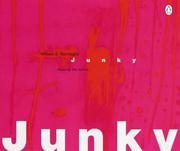
Junkie was Burroughs' first published novel (although he had previously written an unpublished novel with Jack Kerouac). It was initially published by Ace Books in 1953. Ace demanded substantial changes, censored some passages, and bundled it with a book about the Federal Bureau of Narcotics. This version was commercially successful, but did not receive critical attention when first released. In 1977, Penguin Books published an uncensored version of the novel under the alternate spelling Junky.
Critics have analyzed Junkie in the light of Burroughs' later and more experimental novels, such as Naked Lunch. The book is considered dry, lucid, and straightforward compared to those later works, which expand on Junkie's themes of drug addiction and control. The book's grotesque descriptions and hallucinatory imagery are also seen as precursors to his later work.
Plot
In New York City, 1944, William Lee is offered a job selling stolen morphine syrettes. He tries the drug for the first time, keeps some syrettes for himself, and sells the rest to a buyer named Roy, who warns him about the dangers of addiction.
Over the next month, Lee gradually uses up what he saved and becomes dependent. As their addictions worsen, Lee and Roy resort to "doctor shopping", convincing a series of physicians to prescribe them morphine. However, their scheme is risky; Lee is eventually arrested for using a fake name on a prescription. His wife bails him out, and he receives a suspended sentence.
Experiencing withdrawal symptoms, including hallucinations, Lee begins searching for an alternative to morphine. Roy connects him to a heroin supplier, and the two initially support their habit by pickpocketing drunk subway riders. Later, Lee forms a partnership with a dealer named Bill Gains, buying, cutting, and reselling heroin while keeping a portion for himself.
As police crack down on the drug trade, paranoia spreads among his circle of addicts and customers. Eventually, Gains decides his lifestyle has become too dangerous and checks himself into the Lexington Medical Center, a government-run facility for treating addiction.
Lee attempts to quit heroin on his own but fails. Following Gains’ lead, he enters Lexington in late 1945, where he listens to other patients’ stories of addiction and undergoes methadone treatment, which he considers a success. After four months, he leaves to start over in New Orleans. While there, Lee visits a gay bar and is invited to have sex, only to be robbed instead. That evening, he relapses and quickly resumes selling heroin.
His addiction worsens, and by 1947, he is arrested again. In jail, Lee suffers severe withdrawal symptoms, including rapid weight loss and hallucinations. His lawyer secures his transfer to a sanitorium for an experimental addiction cure, but his struggle with addiction continues.
After his release, Lee moves to Texas, where he attempts to support himself by growing cotton. This endeavor fails, leaving him financially desperate. Unable to maintain a stable life, he moves to Mexico City in 1948 and relapses once more, much to his wife’s distress. Lee spends the next year in Mexico, making repeated but unsuccessful attempts to quit opioids.
To manage his addiction, he begins drinking heavily, which only worsens his paranoia and deteriorating health. He eventually develops uremia, and later, his doctor warns him that he is drinking himself to death. His wife, realizing the hopelessness of his situation, leaves town with their children.
As anti-narcotics enforcement intensifies in the U.S., Bill Gains flees to Mexico and reunites with Lee. He informs him that Roy was arrested and died in prison. Lee helps Gains secure a heroin supply, but the drug is so heavily adulterated that Gains nearly dies from it.
By 1950, Lee’s marriage has completely collapsed, and he reflects on his separation from his wife. Seeking something beyond the emptiness of addiction, he reads about yagé (ayahuasca), a drug rumored to grant telepathic abilities. Hopeful that it will fill the void that “junk” could not, Lee leaves Mexico City a year later in search of it.
Background
William S. Burroughs was the grandson of William Seward Burroughs I, who founded the Burroughs Corporation. Burroughs' family was financially comfortable, and he received an allowance for most of his life. Burroughs volunteered for the army in 1942, but he was discharged for mental instability. In September 1943, he moved to New York, following his friends Lucien Carr and David Kammerer. Through them, he met Jack Kerouac and Allen Ginsberg; along with Burroughs himself, these writers would become the core figures of the Beat Generation. While in New York, Burroughs became addicted to opioids, and increasingly committed crimes as the cost of his addiction exceeded his allowance.
Carr fatally stabbed Kammerer in 1944. Burroughs and Kerouac were briefly arrested for not reporting the homicide, then co-wrote a novel inspired by the event called And the Hippos Were Boiled in Their Tanks, which they were unable to get published. The novel was eventually published in 2008.
In 1945, Burroughs met Joan Vollmer, who would become his common-law wife. In October 1946, Burroughs and Vollmer left New York for Texas, where they had a child. They later moved to Mexico City in October 1949, partly to avoid legal risks around Burroughs' drug use.
以上文字摘自英文维基百科「Junkie (novel)」(有删节,去掉了参考文献等尾部小节),按 CC BY-SA 4.0 使用,作者为维基百科的各位编者。
资料卡
- 原题
- Junkie
- 原作语言
- 英语
- 首次出版
- 1953 年
- 作品形式
- 长篇小说
- 首版出版社
- 爱司图书公司
- 续作
- Queer
- 主题
- 成瘾
资料卡来自 Wikidata Q2306586(CC0),众包数据,个别字段可能不全。