书单
百科
这个词条暂时没有中文维基百科条目,下面是英文维基百科的内容(英文原文):
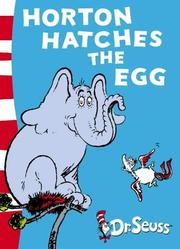
Horton Hatches the Egg is a children's book written and illustrated by Theodor Geisel under the pen name Dr. Seuss and published in 1940 by Random House. The book tells the story of Horton the Elephant, who is tricked into sitting on a bird's egg while its mother, Mayzie, takes a permanent vacation to Palm Beach. Horton endures a number of hardships but persists, often stating, "I meant what I said, and I said what I meant. An elephant's faithful, one hundred percent!" Ultimately, the egg hatches, revealing an elephant-bird, a creature with a blend of Mayzie's and Horton's features.
According to Geisel's biographers Judith and Neil Morgan, Geisel claimed the story was born in early 1940 when he left a window open in his studio, and the wind fortuitously blew a sketch of an elephant on top of a sketch of a tree. However, according to later biographer Charles Cohen, this account is probably apocryphal. He found elements of Horton in earlier Dr. Seuss works, most notably the 1938 short story "Matilda, the Elephant with a Mother Complex".
Horton Hatches the Egg was published to immediate critical acclaim and financial success and has remained popular with the general public. The book has also been used as the basis for academic articles on a variety of topics, including economics, Christianity, feminism, and adoption. Horton appeared again in the 1954 Dr. Seuss book Horton Hears a Who! These two books later provided the thrust of the plot for the 2000 Broadway musical Seussical.
Plot
The book centers on a genial elephant named Horton, who is convinced by Mayzie, an irresponsible and lazy bird, to sit on her egg while she takes a short "break", which turns into a permanent relocation to Palm Beach.
As Horton sits in the nest on top of a tree, he is exposed to the elements, laughed at by his jungle friends, captured by hunters, forced to endure a terrible sea voyage, and finally placed in a traveling circus. However, despite his hardships and Mayzie's clear intent not to return, Horton refuses to leave the nest because he insists on keeping his word, often repeating, "I meant what I said, and I said what I meant. An elephant's faithful, one hundred percent!"
The traveling circus ends up visiting near Mayzie's new Palm Beach residence. She visits the circus just as the egg is due to hatch (after 51 weeks in Palm Beach) and demands that Horton should return it, without offering him a reward. However, when the egg hatches, the creature that emerges is an "elephant-bird", a cross between Horton and Mayzie, and Horton and the baby are returned happily to the jungle, while Mayzie is punished for her laziness by ending up with nothing.
Background
According to Geisel's biographers Judith and Neil Morgan, Horton Hatches the Egg was born in 1940, the day after New Year's, when he took a break from drawing in his Park Avenue apartment and went for a walk. When he returned, he noticed that he had left a window open in his studio and that the wind had blown one sketch on transparent paper on top of another, making it look like an elephant was sitting in a tree. This account was based on interviews with Geisel, who had told similar stories about the book's creation to reporters asking about his creative process since as early as 1957. The story had changed with each telling but always involved the fortuitous juxtaposition of drawings of an elephant and a tree.
Charles Cohen, on the other hand, found traces of Horton Hatches the Egg in early Dr. Seuss works. In an early installment of Geisel's cartoon feature "Boids and the Beasties", which began in Judge magazine in 1927, he juxtaposed a bird and an elephant. A few weeks later, he drew a story in which a whale ends up passed out in a catalpa tree.
In 1938, two years before Horton Hatches the Egg, Judge published perhaps the most obvious precursor to Horton, "Matilda, the Elephant with a Mother Complex", a short story by Geisel about an "old maid elephant" who sits on a chickadee egg until it hatches, only to have the newborn chickadee fly away from her. In 1939, Geisel created an advertisement for NBC featuring a sympathetic-looking elephant lashed with ropes and contained in a cage made of sticks, similar to Horton's situation when the hunters capture him in Horton Hatches the Egg.
In early drafts, the elephant's name changed from Osmer to Bosco to Humphrey. The final choice, Horton, was apparently after Horton Conrad, one of Geisel's classmates at Dartmouth College. The bird's name changed from Bessie to Saidie and finally Mayzie. In the first draft, the elephant character volunteered to sit on the eggs for the bird, who was very reluctant.
Publication and reception
Horton Hatches the Egg was published by Random House in fall 1940 to immediate success. It received primarily positive notice from critics. Kirkus Reviews called it "sheer nonsense, but good fun." The reviewer for The New York Times Book Review wrote, "A moral is a new thing to find in a Dr. Seuss book, but it doesn't much interfere with the hilarity with which he juggles an elephant up a tree. To an adult, the tale seems a little forced compared to his first grand yarns, less inevitable in its nonsense, but neither young nor old are going to quibble with the fantastic comedy of his pictures."
以上文字摘自英文维基百科「Horton Hatches the Egg」(有删节,去掉了参考文献等尾部小节),按 CC BY-SA 4.0 使用,作者为维基百科的各位编者。
资料卡
- 原题
- Horton Hatches the Egg
- 原作语言
- 英语
- 首次出版
- 1940 年 6 月 19 日
- 体裁
- 儿童文学
- 首版出版社
- 兰登书屋
- 前作
- The Seven Lady Godivas
- 续作
- McElligot's Pool、Horton Hears a Who!
- 主要人物
- 霍顿
资料卡来自 Wikidata Q626884(CC0),众包数据,个别字段可能不全。
改编作品
电影2
名单来自 Wikidata(CC0):只列条目里写明「改编自 / 取材于」这本书的作品,不按名字猜;众包数据,可能不全。
更多资料与书评
在哪读
同系列 / 前后作品
苏斯博士 的其他作品
作者页 ›