 书单
百科
这个词条暂时没有中文维基百科条目,下面是英文维基百科的内容(英文原文):
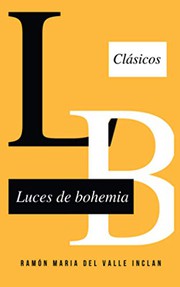
Bohemian Lights, or Luces de Bohemia in the original Spanish, is a play written by Ramón del Valle-Inclán, published in 1924. The central character is Max Estrella, a struggling poet afflicted by blindness due to developing syphilis. The play is a degenerated tragedy (esperpento) focusing on the troubles of the literary and artistic world in Spain under the Restoration. Through Max's poverty, ill fortune and eventual death, Valle-Inclán portrays how society neglects the creative.
Analysis of the play
Bohemian Lights is the first esperpento by Ramón del Valle-Inclán. The play tells the tragic story of the blind poet Max Estrella as he wanders the streets of early twentieth-century Bohemian Madrid on the last night of his life. Esperpentos depict the world as tragicomedy and the actors as puppets helpless to their fates. The audience is asked to consider what is authentic and what is spectacle. Bohemian Lights is equal parts Realism and Expressionism.
Based on the playwright's experiences in Old Madrid, Bohemian Lights is described as an esperpento within an esperpento and is written in episodic format. In the introduction to the Edinburgh Bilingual Library edition of Luces de Bohemia, Anthony N. Zahareas describes the action as "…a modern, nocturnal odyssey about the frustration, death, and burial of a blind poet, Max Estrella that follows the Classic sense of tragedy of the human condition. Max's struggles highlight the general disregard for artists and the social typology in Spain during that time period.
Valle-Inclán portrays both the Romani (Bohemians) and the members of the Establishment from a historical standpoint, neither praising nor condemning either group. Valle-Inclán juxtaposes the fictional life of Max Estrella and his family with historic events, such as the violent strikes of 1917 and the political arrests of 1919. Through this, Valle-Inclán makes a political statement about many of the controversial issues, both Spanish and international, of his time period: anarchism, revolution, law-of escape (ley de fugas), Lenin, Russia, the war, strikes, syndicates, and the press.
Bohemian Lights was initially serialized and published in a magazine, like many of Valle-Inclán's works. Due to censorship by the Spanish government, Bohemian Lights was not produced in Valle-Inclán's lifetime. It was first published in its entirety in 1920. A second version was published in 1924, with three additional scenes that added to the political statement of the piece: Scene 2, the discussion of Spanish realities versus absurdities in Zarathustra’s bookstore; Scene 6, the shooting of the Catalan prisoner; and Scene 11, the street gathering with the screaming mother.
Character List
Max Estrella – a suicidal blind Bohemian poet and modern artist (the character is inspired in the real-life Alejandro Sawa)
Madame Collet – Max's French wife
Claudinita – Max's daughter
Don Latino de Hispalis – Max's agent
Zarathustra – a bookseller
Don [Pilgrim] Gay – a wanderer who has made a career of writing about his travels
A dimwitted urchin
The concierge's little girl
Lizard-Chopper – a tavern owner
The bar boy
Henrietta Tread-well – a streetwalker
The King of Portugal
The Modernists – Dorio de Gadex, Rafael de los Vélez, Lucio Vero, Mínguez, Gálvez, Clarinito, and Pérez
Pitito – captain of municipal cavalry
A night watchman
The voice of a neighbor
Two officers of the law
Serafin-the-dandy
A bailiff
A prisoner
Newspaper office porter
Don Philbert – Editor-in-Chief
The Minister of the Interior
Dieguito Garcia – secretary to the Minister
A ministry usher
An old hag and Beauty Spot
An unknown youth
The mother of the dead child
The pawnbroker
The policeman
The concierge
A mason
An old woman
The rag-woman
The retired officer
People of the district
Another concierge
Cuca – a neighbor
Basilio Soulinake (based on real-life Ernesto Bark)
A hearse coachman
Two gravediggers
Rubén Darío
The Marquis of Bradomín
Fan-Fan – a fop
Pacona – an old news vendor
Crowds
Police
Dogs
Cats
A parrot
Synopsis
The play is one act with fifteen scenes. At rise, it is dusk and the blind poet Max Estrella is sitting on the garret with his wife, Madame Collet. Max suggests that he, his wife, and their daughter, Claudinita, all commit collective suicide by burning coal until they asphyxiate. Don Latino comes and informs Max that he has only been able to sell three books. Max and Latino embark on a journey into the streets of Madrid, against the protests of Claudinita and Madame Collet. Scene Two takes place in Zarathustra's bookstore. Max and Latino ask to break the deal with Zarathustra, who declines. Don Gay enters the store and regales the others with tales from his travels.
In Scene Three, Max and Latino enter Lizard-Chopper's tavern. The prostitute Henrietta Tread-well enters and sells lottery tickets to the men in the tavern. Immediately following, Max and Latino stumble drunkenly into the streets, where they meet up with a chorus of Modernists. They create a ruckus and policemen and night-watchmen are called. Max is arrested and taken to the police station, where he is put into a holding room with Serafin-the-Dandy. Max befriends a thirty-year-old Catalan revolutionary when he is taken into a prison cell.
Scene Seven takes place in the Editorial Offices of the People's Gazette. Latino speaks to Don Philbert about getting Max's writings published. Philbert tells Latino to urge Max not to drink so much.
In Scene Eight, Max goes to the office of the Secretary of the Interior. Max meets Latino again and they go to the Café Columbus. Max, Latino, and the café owner Rubén discuss mathematical theories. Max and Latino leave the café, along with Ill-Starred, and walk in the park where they meet Old Hag and Beauty Spot.
The next stop on Max's journey is Austrian Madrid, where they witness the shooting of the Catalan prisoner from Scene Two. The prisoner's death affects Max greatly and is the final straw in his decision to end his life.
以上文字摘自英文维基百科「Bohemian Lights」(有删节,去掉了参考文献等尾部小节),按 CC BY-SA 4.0 使用,作者为维基百科的各位编者。
资料卡
- 原作语言
- 西班牙语
- 首次出版
- 1920 年
- 作品形式
- 剧作
- 故事发生地
- 马德里
资料卡来自 Wikidata Q3312512(CC0),众包数据,个别字段可能不全。