 书单
百科
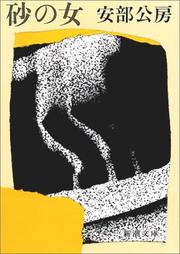
《沙丘之女》(日语:砂の女)是日本作家安部公房所创作的长篇小说,于1962年出版,是近代日本文学的杰作之一,海外评价也受到评论家高度的赞赏。
小说简介
一名男人在海边的沙丘上收集昆虫,却因为天色已晚而被村民骗进了生活在沙丘深处的寡妇家中居住,后来却发现是骗局后,男人以各种各样的方式逃出沙丘的故事。经过多次的逃出失败,仍然不放弃想办法逃出沙丘。直到有一次,男人没有任何障碍顺利爬出沙丘深处,但他的心理与多年的沙丘生活共容了,男人却再也不想离开这个沙丘。
日本导演敕使河原宏在1964年改编成电影,并获得戛纳影展评审团奖的肯定。
以上文字摘自维基百科「沙丘之女」(去掉了参考文献等尾部小节),按 CC BY-SA 4.0 使用,作者为维基百科的各位编者。
中文维基百科的条目比较短,下面附上英文维基百科的内容(英文原文):
The Woman in the Dunes (Japanese: 砂の女, Hepburn: Suna no Onna; lit. "Sand Woman") is a novel by the Japanese writer Kōbō Abe, published in 1962. It won the 1962 Yomiuri Prize for literature, and an English translation by E. Dale Saunders, and a film adaptation, directed by Hiroshi Teshigahara, appeared in 1964.
The novel is intended as a commentary on the claustrophobic and limiting nature of existence, as well as a critique of certain aspects of Japanese social behavior. The story is preceded by the aphorism "Without the threat of punishment there is no joy in flight."
Plot
In 1955, Jumpei Niki, a school teacher from Tokyo, visits a fishing village to collect insects. After missing the last bus, he is led by the villagers, in an act of apparent hospitality, to a house in the dunes that can be reached only by rope ladder. The next morning the ladder is gone and he finds he is expected to keep the house clear of sand with the woman living there, with whom he is also to produce children. He learns that the village, which is constantly on the verge of being destroyed by the advancing sand dunes, has developed a system of surveillance and forced labor to save itself: "Just to protect this pitiful bit of geography, more than ten households on the seaside had to submit to a life of slavery." From the woman in the house he learns that he is not the first visitor to the village to be trapped and subjugated in this way, and he becomes desperate to escape. After a doomed escape attempt in which he is chased into quicksand and forced to plea with his captors to save his life, he is returned to the house in the dunes. Ultimately, he finds a way to collect water which gives him a purpose and a sense of liberty. He also wants to share the knowledge of his technique of water collection with the villagers someday. He eventually gives up trying to escape when he comes to realize that returning to his old life would give him no more liberty. He accepts his new identity and family. After seven years, he is proclaimed officially dead. (In the original Japanese version, he is proclaimed officially as a missing person.)
Publication, reception, and legacy
The book attracted much attention in Japan on its publication in 1962, earning praise from critics as well as contemporaries such as Kenzaburō Ōe and Yukio Mishima. It won that year's Yomiuri Prize for literature. An English translation appeared in 1964, as did a film adaptation directed by Hiroshi Teshigahara starring Eiji Okada and Kyōko Kishida which won the Special Jury Prize at the 1964 Cannes Film Festival.
Major themes
Incarceration and forced labor
Marianne Marroum reads the novel alongside the work of Michel Foucault as a depiction of "the world as a penal colony." According to this reading, the villagers' demand for forced labor—men and women compelled to shovel away the sand that threatens constantly to destroy the village—can be interpreted as a portray of a society that must imprison some in order to ensure the freedom of others. The conditions in which Niki is kept, in which water is withheld from him if he refuses to work and he gradually loses contact with the outside world and his previous life, represent this society's means of disciplining his body and reducing him to an "instrument of labor." The novel's ambiguous ending, in which Niki seems to accept his role in the life of the village and no longer feels an urgent need to escape, results from a change in Niki's view of the village, which has ceased to be a penal colony for him and become instead a site of "resurrection and possible self-renewal," a testimony to Abe's conviction that individuals can choose to be free.
以上文字摘自英文维基百科「The Woman in the Dunes」(去掉了参考文献等尾部小节),按 CC BY-SA 4.0 使用,作者为维基百科的各位编者。
资料卡
- 原题
- 砂の女
- 译者
- E. Dale Saunders
- 原作语言
- 日语
- 首次出版
- 1962 年 6 月 8 日
- 作品形式
- 长篇小说
- 首版出版社
- 新潮社
- 页数
- 218
- 获奖
- 读卖文学赏(1963)
- 改编作品
- 砂丘之女
资料卡来自 Wikidata Q6455599(CC0),众包数据,个别字段可能不全。