书单
百科
这个词条暂时没有中文维基百科条目,下面是英文维基百科的内容(英文原文):
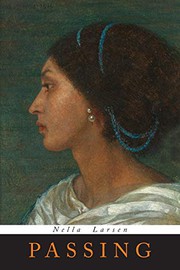
Passing is a 1929 novel by American author Nella Larsen. Set primarily in the Harlem neighborhood of New York City in the 1920s, the story centers on the reunion of two childhood friends—Clare Kendry and Irene Redfield—and their increasing fascination with each other's lives. The title refers to the practice of "racial passing", which is a key element of the novel. Clare Kendry's attempt to pass as white for her husband, John (Jack) Bellew, is significant and is a catalyst for the tragic events.
Larsen's exploration of race was informed by her own mixed racial heritage and the increasingly common practice of racial passing in the 1920s. Praised upon publication, the novel has since been celebrated in modern scholarship for its complex depiction of race, gender, and sexuality, and the book is the subject of considerable scholarly criticism. As one of only two novels that Larsen wrote, the novel has been significant in placing its author at the forefront of several literary canons.
The novel was adapted as a 2021 film of the same name by Rebecca Hall.
Plot
The story is written as a third person narrative from the perspective of Irene Redfield, an African-American woman of mixed race who could "pass" for white. She lives in Harlem in New York City.
Part One of the book, titled "Encounter," opens with Irene receiving a letter from Clare Kendry, causing her to recall a chance encounter she had had with her, at the roof restaurant of the Drayton Hotel in Chicago, during a brief stay in the city. Irene does not answer Clare's letters attempting to reconnect. The women grew up together but lost touch when Clare's white father died and she was taken to live with her two paternal white aunts. Irene learns that Clare is passing for white, living primarily in Europe with her unsuspecting, rich, racist white husband and their daughter.
Although Irene tries to avoid further engagement with Clare, she never is able to fully exclude her from her life as she later visits Clare for tea along with another childhood friend, Gertrude Martin. Toward the end of the visit, Clare's white husband John (Jack) Bellew arrives. Unaware that all three women have black ancestry, Jack enthusiastically affirms his hatred of black people, making the women uneasy. In a startling passage, he also reveals his pet name for Clare, "Nig". Although Jack does not suspect that his wife has black ancestry (and, in fact, believes that his "Nig" hates black people as much as he does), he gave her that name because he perceives that Clare, who was "white as a lily" when they were married, has been "gettin' darker and darker". Irene and Gertrude say nothing in response, in part to maintain Clare's secret identity. Afterwards, Irene receives a letter of apology from Clare but destroys it in an effort to forget about Clare. Irene seeks instead to focus on her own life with her husband, Brian, and their two sons, Theodore and Junior.
Part Two of the book, "Re-encounter," returns to the present, with Irene having received the letter from Clare. After Irene ignores it, Clare visits in person, and Irene reluctantly agrees to see her. When Clare learns that Irene serves on the committee for the "Negro Welfare League" (NWL) she invites herself to their upcoming dance. Irene advises against that, because of the risk that Jack will find out. Clare attends the dance and enjoys it, and is drawn to continue spending time in Harlem. Irene and Clare resume their childhood companionship, and Clare frequently visits Irene's home.
The third part of the novel begins before Christmas; Irene's relationship with her husband has become increasingly fraught. She is aware of Clare's appeal, and becomes convinced that her husband is having an affair with the friend. While shopping with a Black friend, Felise Freeland, Irene encounters Clare's husband, Jack. When he tries to greet her, she pretends not to know him, to avoid his meeting Felise. But Irene thinks the encounter may help expose Clare's secret. Irene considers warning Clare but decides against it.
Later, Clare accompanies Irene and Brian to a party hosted by Felise. The gathering is interrupted by Jack, who accuses Clare of being a "damned dirty nigger!" Irene rushes to Clare, who is standing by an open window. Suddenly, Clare falls out of the window to the ground six stories below. She is pronounced dead by the guests who eventually gather at the site. It is unclear whether she fell accidentally, was pushed by either Irene or Bellew, or committed suicide. The book ends with Irene's fragmented anguish at Clare's death.
Background
Biographical context
As early as 1925, Nella Larsen had decided that she wanted to be among the "New Negro" writers of the time. Initially writing short stories, which were sold early in 1926 to a ladies magazine, she was rumored that year to be writing a novel. In a letter to her friend, Carl Van Vechten, she said, "it is the awful truth. But, who knows if I'll get through with the damned thing. Certainly not I."
In April 1927, Larsen and her husband, Elmer Imes, moved from Jersey City, New Jersey to Harlem to be closer to the cultural ferment of the neighborhood. The following year, Larsen published her first novel Quicksand with New York-based publisher Knopf. Its favorable critical reception encouraged her ambitions to become known as a novelist.
以上文字摘自英文维基百科「Passing (novel)」(有删节,去掉了参考文献等尾部小节),按 CC BY-SA 4.0 使用,作者为维基百科的各位编者。
资料卡
- 原题
- Passing
- 原作语言
- 英语
- 首次出版
- 1929 年 4 月
- 作品形式
- 长篇小说
- 故事发生地
- 纽约
资料卡来自 Wikidata Q15052495(CC0),众包数据,个别字段可能不全。
改编作品
电影1
- 《冒充》Passing
名单来自 Wikidata(CC0):只列条目里写明「改编自 / 取材于」这本书的作品,不按名字猜;众包数据,可能不全。