书单
百科
这个词条暂时没有中文维基百科条目,下面是英文维基百科的内容(英文原文):
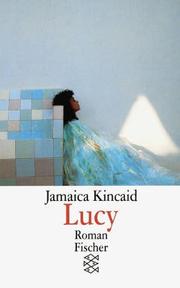
Lucy (1990) is a novella by Jamaica Kincaid. The story begins in medias res: the eponymous Lucy has come from the West Indies to the United States to be an au pair for a wealthy white family. The plot of the novel closely mirrors Kincaid's own experiences.
Lucy retains the critical tone of A Small Place but simplifies the style of Kincaid's earlier work by using less repetition and surrealism. The first of her books set completely outside the Caribbean, Lucy, like most of Kincaid's writing, has a strong autobiographical basis. The novel's protagonist, Lucy Josephine Potter, shares one of Kincaid's given names and her birthday. Like Kincaid, Lucy leaves the Caribbean to become an au pair in a large American city. At nineteen, Lucy is older than previous Kincaid protagonists, which lends the book a more mature and cynical perspective than in her previous fiction. Still, Lucy has pangs of homesickness and unresolved feelings about her mother, and she has never lived on her own or seen much of the world. With plenty of room for growth and Lucy becoming a photographer, the story takes the form of a künstlerroman, a novel in which an artist matures.
Lucy also joins the tradition of American immigration literature, tales that recount a newcomer's experience in the United States, such as those seen in Anzia Yezierska’s Bread Givers, Willa Cather’s My Ántonia, and Julia Alvarez’s How the Garcia Girls Lost Their Accents. Along with exploring immigration, Lucy, as does much of Kincaid's work, grapples with tensions between mother and daughter. Colonial themes of identity confusion and the connection between maternal and imperial rule stand out less clearly in Lucy than in Kincaid's earlier books but have an underlying presence in Lucy's relationship with her white, affluent employers, her homeland, and her new surroundings.
Plot summary
Eager to leave the West Indies, Lucy longs to leave her past behind. She does not feel nostalgic for her childhood and her homeland, where she felt oppressed by toxic colonial and family influences. However, on her arrival to North America, she reflects on the differences between the place that she had previously called home and where she now lives. She feels as if something is wrong because the sun is shining but the air is still cold. Additionally, she recalls fond memories of her grandmother along with her favorite foods from home that her grandmother would cook for her, both of which are no longer available to her. She moves to America to work as an au pair for a well-off family. Although she is initially enamored with their seemingly perfect life, she grows disillusioned with their lifestyle and feels alienated from the family. Despite this, she does grow close to the mother, Mariah, who reminds Lucy of both the good and bad in her own mother. The relationship between Lucy and her mother is a central theme. At one point in her relationship with Mariah, Lucy sees Mariah (her boss) and her mother as the same, because they both try to control Lucy. (At other times, Lucy feels like Mariah's friend.) Lucy also sees a resemblance when she sees Lewis, Mariah's husband, cheats on Mariah, because Lucy's own father cheated on her mother.
Throughout the book, Lucy's strained relationship with her mother drives her quest for independence and ability to create her own identity against that of her mother's. Lucy's mother was committed to her father, who had children by multiple other women. Angry that her mother valued proper, committed relationships (and taught Lucy to behave the same way) and still ended up hurt, Lucy attempts to identify herself against her mother through her multiple sexual encounters devoid of emotional attachment. This novel explores Lucy's sexuality as part of her identity search, illustrated through her various sexual encounters with men as well as her homoerotic relationship with her friend Peggy, whom Mariah dislikes for being a bad influence.
Lucy's father is not referred to as much as her mother is spoken about, so it is unclear what kind of relationship they have or if she feels as negatively towards him as she does towards her mother. Lucy's father was an older man when he married her mother, and she describes their arrangement as mutually beneficial. Her mother married someone who would not bother her too much, while she was still able to maintain appearances. Likewise, her father in his old age married someone in order to take care of him. Her father had several love affairs and children with other women before he married her mother. Some of these women tried to cause harm to both Lucy and her mother throughout their lives. Lucy's father was raised by his grandmother. His mother left him at the age of five and then at the age of seven his father left to work on the Panama Canal, and he never saw either of them again. His grandmother then died in the middle of the night one night and did not wake up the next morning.
以上文字摘自英文维基百科「Lucy (novel)」(有删节,去掉了参考文献等尾部小节),按 CC BY-SA 4.0 使用,作者为维基百科的各位编者。
资料卡
- 原题
- Lucy
- 原作语言
- 英语
- 首次出版
- 1990 年 9 月
- 作品形式
- 长篇小说、中篇小说
- 首版出版社
- 法勒、施特劳斯和吉鲁出版社
资料卡来自 Wikidata Q6698160(CC0),众包数据,个别字段可能不全。