书单
百科
这个词条暂时没有中文维基百科条目,下面是英文维基百科的内容(英文原文):
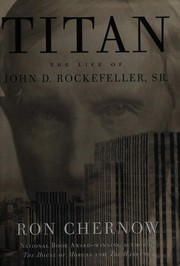
Titan: The Life of John D. Rockefeller, Sr. is a 1998 non-fiction book by American author Ron Chernow. The book covers the life of the American business magnate John D. Rockefeller from his early days as the son of an itinerant snake-oil salesman, into his founding of Standard Oil and its massive success and eventual dissolution, and through the large-scale philanthropy that consumed much of his later life. At the time of its writing, the book was unique in its attempt at a balanced view of Rockefeller's career, bucking the trend of his biographers portraying him and his business practices as either good or evil. The book's release came while the federal government was considering pursuing an antitrust lawsuit against the Microsoft Corporation, and parallels were drawn by critics between that ongoing investigation and the one into Standard Oil's business practices.
The book was generally well received by critics, who mostly praised Chernow's meticulous research and neutral approach to describing the life of a polarizing figure, though some reviewers considered the account less neutral than others. It was called "a triumph of the art of biography" by The New York Times Book Review and became a finalist for the National Book Critics Circle Award for Biography.
Background
John D. Rockefeller, former head of Standard Oil, died in 1937 at the age of 97. Shortly thereafter, in 1940, Allan Nevins released a two-volume study on the man's life and career that would be revised and published in 1953 as the single-volume Study in Power: John D. Rockefeller, Industrialist and Philanthropist. Nevins, who sought to burnish Rockefeller's reputation after its battering by Progressive and New Deal-era critics, painted the magnate's business ethics in a favorable light. Despite the Rockefeller family's release in the 1970s of his personal papers, by the beginning of the 1990s no significant biography of John Sr. had been attempted since Nevins.
After Chernow published his second book, The Warburgs, his publisher Random House suggested he pursue an in-depth profile of Rockefeller. Chernow was initially resistant, saying that Rockefeller's notorious secrecy around his private life would make it difficult for a biographer to learn about the man's inner thoughts and feelings. Chernow said this inability to "hear the music of his mind" made the prospect of multiple years of research unpalatable.
On a suggestion by his editor at Random House, Chernow visited the Rockefeller Archive Center in New York, home of the papers and records of Rockefeller University and the Rockefeller family. He discovered a 1,700-page transcript of private interviews conducted over three years late in the tycoon's life. The interviews, which showed an articulate, funny, and analytic side of Rockefeller, had yet to be used in a biography of the man, and Chernow decided to pursue the project. The book ultimately took five years to complete and according to Chernow took "the psychology and stamina of a marathon runner".
Synopsis
Titan begins during Rockefeller's childhood and describes his formative years living with two very different parents: a devout Baptist mother and a traveling salesman father. William Avery Rockefeller was a grifter and peddler of snake oil health cures. A neighbor of the family once remarked, "They had a big jug full of medicine, and they treated all diseases from the same jug." William practiced bigamy as well. He abandoned the family for long stretches of time, much of it spent with an entirely separate family in Philadelphia. He also moved a mistress into the Rockefeller household and fathered children with both her and John's mother. Chernow traces John's longstanding Christian faith as well as his frugal nature to the influence, both positive and negative, of his parents.
Chernow continues tracking Rockefeller through the formation of what became Standard Oil, and describes how a Cleveland merchant with no great education or contacts came to control nearly all of the nation's oil refining industry. Chernow argues that Rockefeller recognized the "anarchy of production" that plagued unfettered capitalism, and that, "At times, when he railed against cutthroat competition and the vagaries of the business cycle, Rockefeller sounded more like Karl Marx than our classical image of the capitalist." His fellow oil refiners waged vicious price wars and refused to taper production even when new oil discoveries glutted the market with product. Chernow reveals that Rockefeller profited by buying out other refiners and thus curtailing competition, as well as by convincing railroads to give his company secret discounts on the shipment of his product.
These business practices incurred scrutiny, Chernow writes. Muckrakers in the press—notably, Ida Tarbell—published scathing, multi-part exposés about the oil trust's underhanded tactics. These pieces vilified Rockefeller, who by that time had largely, though not publicly, retired from his company's operations. He opted not to respond to Tarbell's widely popular series, which ultimately harmed his reputation even further. Tarbell's series and subsequent book raised public awareness of the oil trust; less than a decade later, it was broken up by the U.S. government.
以上文字摘自英文维基百科「Titan: The Life of John D. Rockefeller, Sr.」(有删节,去掉了参考文献等尾部小节),按 CC BY-SA 4.0 使用,作者为维基百科的各位编者。
资料卡
- 原题
- Titan: The Life of John D. Rockefeller, Sr.
- 原作语言
- 英语
- 首次出版
- 2004 年 3 月 30 日
- 页数
- 832
- 主题
- 约翰·戴维森·洛克菲勒
资料卡来自 Wikidata Q124355302(CC0),众包数据,个别字段可能不全。