书单
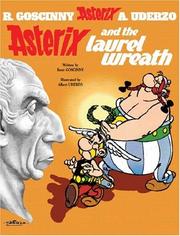
Asterix and the Laurel Wreath (1972)
百科
这个词条暂时没有中文维基百科条目,下面是英文维基百科的内容(英文原文):
Asterix and the Laurel Wreath (French: Les Lauriers de César, "Caesar's Laurels") is the eighteenth volume of the Asterix comic book series, by René Goscinny (stories) and Albert Uderzo (illustrations). It was originally serialized in the magazine Pilote, issues 621–642, in 1971 and translated into English in 1974.
Plot summary
The story begins in Rome where Asterix and Obelix are talking, but flashes back to Lutetia, where Asterix, Obelix, Chief Vitalstatistix, and the chief's wife Impedimenta visit Impedimenta's brother, Homeopathix, a rich businessman who immediately shows off his wealth. At dinner, Vitalstatistix quickly becomes drunk and boasts that, as a Chief, he can obtain for Homeopathix something money cannot possibly buy, a stew seasoned with Julius Caesar's laurel wreath, whereupon the equally drunk Obelix volunteers himself and Asterix to fetch the wreath.
In Rome, Asterix and Obelix see a man coming out of Caesar's palace. Upon discovering that he is a kitchen slave there, they offer themselves to the slave trader Typhus, who supplies Caesar's palace. When Typhus' other slaves provoke the Gauls into a fight, the wealthy patrician, Osseus Humerus, is amused and offers to buy them; Asterix mistakes him for Caesar's major-domo and completes the sale. The Gauls are placed under the supervision of Goldendelicius, Humerus' chief slave. Goldendelicius expresses dislike of the two Gauls because they come from Typhus (a mark of distinction among slaves) and fears that they might usurp his office.
Realizing their mistake, Asterix and Obelix attempt to get Humerus to return them to Typhus. First, they cook a volatile stew, which accidentally cures Humerus' heavy-drinking son Metatarsus of his constant hangovers. Next they disturb the sleeping family by making noise, which only inspires the family to throw an impromptu party. The next day, a tired Humerus sends the Gauls to Caesar's palace to justify his absence to a secretary there. Goldendelicius seizes the opportunity to tell the palace's guards that the Gauls intend to kill Caesar. As a result, Asterix and Obelix are thrown into the palace prison upon arrival, but they escape during the night and unsuccessfully search the palace for the laurel wreath. At daybreak, they return to their cell (to the confusion of the palace guards) and decide to find Caesar and seize the wreath from him.
The next morning, a lawyer comes to defend Asterix and Obelix in a show trial for the "attempt" on Caesar's life. The lawyer takes for granted that they will be found guilty and thrown to the lions in the Circus Maximus. Asterix is encouraged when the lawyer says Caesar might attend the execution. During the trial, the prosecutor announces the same initial speech intended by the defense lawyer, prompting the latter to call for a suspension in proceedings. Anxious to be sentenced to the Circus, Asterix himself speaks for the prosecution, outlining all the "wrongdoings" committed by himself and Obelix. The whole audience, including Typhus and the Humerus family, is moved by this plea, and the Gauls are sentenced to death in the Circus. In the cells, they enjoy luxurious food funded by Typhus and Humerus. But, as they are about to enter the arena, Asterix and Obelix learn that Caesar is not present, having gone off to fight pirates. Therefore, the Gauls refuse to go into the arena until he returns, which results in the big cats in the arena eating each other, a mass riot of the audience, and everyone (including Asterix and Obelix and the last remaining lion) being evicted from the circus.
That night, Asterix and Obelix sleep at a doorway, where they are woken by brigands. They defeat the brigands, after which their chief, Habeascorpus, offers Asterix and Obelix shelter in return for their help in robberies. Asterix accepts, but attempts to warn the victim they are assigned, who turns out to be a drunken Metatarsus. Refusing to attack an innocent, Asterix and Obelix vanquish the bandits again. From Metatarsus, the two Gauls learn that Goldendelicius has been appointed as Caesar's personal slave, and that Caesar himself is due to hold a triumph for his victory over the pirates. Asterix and Obelix corner Goldendelicius in a tavern and coerce him into exchanging Caesar's laurel wreath for one of parsley. The next day, during the triumph, Goldendelicius nervously holds the parsley wreath over Caesar's head. Caesar does not acknowledge the switch, but secretly "feels like a piece of fish", which baffles him.
Upon Asterix and Obelix's return, Homeopathix arrives in his brother-in-law's village in order to eat the stew containing Caesar's laurel wreath, and Vitalstatistix states that a wealthy man like him would never eat such a meal in his own house. Homeopathix "agrees" by pointing out that it is overcooked and of poor quality, which provokes Vitalstatistix to strike him senseless. The album ends with the note that, with Asterix's cure for drunkenness now available to the Romans, they initiate a series of ever-increasing parties that result in the collapse of the empire.
Named characters
Asterix
Obelix
Vitalstatistix
Impedimenta – Vitalstatistix' wife
Homeopathix – Impedimenta's brother
Tapioca – Homeopathix' wife
Kumakros – One of Caesar's slaves
Typhus – Owner of The House Of Typhus
Osseus Humerus
Fibula – Osseus Humerus' wife
Tibia – Osseus Humerus' daughter
Metatarsus – Osseus Humerus' son
Goldendelicius – Osseus Humerus' slave, now Caesar's slave
Titus Nisiprius – lawyer
Habeascorpus – Chief of a group of thieves
Julius Caesar
In other languages
Arabic: أستريكس و إكليـل الغار (Asteriks we-iklil el-ghar)
Catalan: Els llorers del Cèsar
Croatian: Cezarove lovorike
Czech: Asterix a Vavřínový věnec
Danish: Cæsars laurbær
Dutch: De lauwerkrans van Caesar
Finnish: Asterix ja Caesarin laakeriseppele (also translated into Helsinki slang under the title Kessen rehukotsa, roughly meaning "Caesie's weed hat")
Galician: Os loureiros do César
Gaelic: Asterix agus Crùn Cheusair
German: Die Lorbeeren des Cäsar
Greek: Οι δάφνες του Καίσαρα
以上文字摘自英文维基百科「Asterix and the Laurel Wreath」(有删节,去掉了参考文献等尾部小节),按 CC BY-SA 4.0 使用,作者为维基百科的各位编者。
资料卡
- 原作语言
- 法语
- 首次出版
- 1972 年
- 首版出版社
- 达高出版社
- 所属系列
- 阿斯泰利克斯历险记
- 前作
- The Mansions of the Gods
- 续作
- Asterix and the Soothsayer
- 主要人物
- Asterix
资料卡来自 Wikidata Q593947(CC0),众包数据,个别字段可能不全。