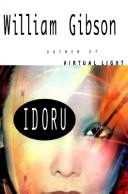
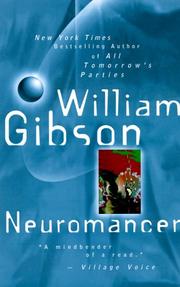
书单
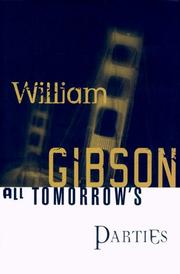
百科
这个词条暂时没有中文维基百科条目,下面是英文维基百科的内容(英文原文):
All Tomorrow's Parties is a 1999 novel by William Gibson and the third and final novel in the Bridge Trilogy. Set in a near-future San Francisco Bay Area and Tokyo, the novel brings together several continuing characters from the earlier Bridge books, including Berry Rydell, Chevette Washington, and Colin Laney. Its plot centers on Laney's attempt to prevent the public-relations magnate Cody Harwood from exploiting an approaching "nodal point" of historical change focused on the settlement built on the Bay Bridge.
Critics have generally treated the novel as part of Gibson's turn away from the distant futures of his early cyberpunk fiction and toward a more immediate near-future mode concerned with media, infrastructure, urban space, and corporate power. Commentary on the novel has often emphasized the Bridge as an interstitial and precarious social space, the book's interest in prediction and historical contingency, and its treatment of embodiment and virtual presence through the figure of Rei Toei.
Reception was mixed. Reviewers often praised Gibson's prose and his rendering of a near-future urban environment, while also expressing reservations about characterization, clarity, and the ending. The novel later placed 15th in the 2000 Locus Awards and was nominated for the 2001 Seiun Award for best foreign novel.
Background and publication
All Tomorrow's Parties is a 1999 novel by William Gibson and the concluding volume of the Bridge Trilogy. Critics and scholars have treated the trilogy as a distinct phase in Gibson's work, one that shifts from the more remote futures of his early cyberpunk fiction toward a near-future setting closer to the social and material conditions of the 1990s.
In later comments on his fiction, Gibson described the Bridge novels as his version of the 1990s and characterized them as near-future or alternate-history works rather than conventional far-future science fiction. This shift in emphasis has often been treated as part of a broader turn in his writing away from cyberspace as a dominant imaginative setting and toward the built environment, everyday technology, and the texture of contemporary urban life.
Gibson also said that the trilogy was not planned in rigid outline from the beginning. In a 1999 interview, he said he tended to arrive at trilogies indirectly, with one novel generating material for the next, and he described Colin Laney's pattern-recognition ability as a figure for aspects of his own compositional method. In another interview from the period, Gibson described the bridge community at the center of the trilogy as an autonomous zone that was nevertheless exposed to commercialization and absorption into the larger urban economy.
The novel was published in the United States in 1999 by G. P. Putnam's Sons. A British edition was issued the same year by Viking in London. Later reissues grouped the novel explicitly with Virtual Light and Idoru as part of the Bridge sequence, and Penguin Random House currently lists it as the third book in the trilogy.
Plot
Colin Laney is living in hiding in Tokyo's Shinjuku district, weakened by earlier 5-SB drug trials that have left him physically ruined but able to perceive "nodal points", moments when events are about to shift decisively. Watching the movements of public-relations magnate Cody Harwood, Laney concludes that Harwood has also recognized an approaching nodal point and intends to exploit it. Believing that the next such convergence will occur in San Francisco around the Bay Bridge settlement, Laney asks Shinya Yamazaki to find Berry Rydell and send him there in his place because he is too ill to travel.
Rydell is working security at a Lucky Dragon convenience store in Los Angeles when Yamazaki finds him and relays Laney's request. He also gives Rydell a projector unit containing Rei Toei, the virtual idol introduced in Idoru. Laney offers little explanation beyond insisting that Rydell take the unit to San Francisco and keep moving. Trusting Laney's judgment, Rydell leaves Los Angeles and heads north.
Chevette Washington is also returning to San Francisco. Having left her abusive boyfriend Carson, she goes back to the Bridge, where she had once lived, hoping to disappear among its residents. Her friend Tessa, an Australian film student making a documentary about marginal urban communities, drives her there and continues filming the Bridge and the people around it. Carson follows Chevette, determined to recover control over her.
Harwood sends the assassin Konrad west as part of the same operation. Konrad closes in on Rydell but, when he has the chance, does not kill him. Instead, he turns on the other men pursuing Rydell and begins moving alongside him rather than against him. On the Bridge, Fontaine is caring for a mute boy named Silencio, who is obsessed with watches and seems uncannily able to find them. Silencio becomes fixated on one particular watch, and Fontaine realizes that the boy's obsession is connected to larger events.
After Rydell reaches San Francisco, Harwood's men attack him directly. Konrad intervenes and keeps him alive. Rydell and Konrad then encounter Chevette, who takes them to Fontaine's watch shop on the Bridge. Fontaine and Silencio shelter them there, bringing the main strands of the pursuit together in one place. Realizing that the people and objects he wants have converged on the Bridge, Harwood escalates the conflict. When his operatives fail to resolve the situation, he orders the Bridge set on fire.
以上文字摘自英文维基百科「All Tomorrow's Parties (novel)」(有删节,去掉了参考文献等尾部小节),按 CC BY-SA 4.0 使用,作者为维基百科的各位编者。
资料卡
- 原题
- All Tomorrow's Parties
- 原作语言
- 英语
- 首次出版
- 1999 年 10 月 7 日
- 作品形式
- 长篇小说
- 体裁
- 赛博朋克、科学幻想
- 首版出版社
- 维京出版社
- 所属系列
- 桥梁三部曲
- 前作
- 阿伊朵
- 故事发生地
- 旧金山
资料卡来自 Wikidata Q900595(CC0),众包数据,个别字段可能不全。