书单
百科
这个词条暂时没有中文维基百科条目,下面是英文维基百科的内容(英文原文):
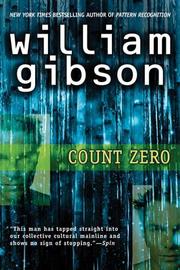
Count Zero is a science fiction novel by American-Canadian writer William Gibson, originally published in 1986. It presents a near future whose technologies include a network of supercomputers that created a "matrix" in "cyberspace", an accessible, virtual, three-dimensionally active "inner space", which, for Gibson, was seen as being dominated by violent competition between small numbers of very rich individuals and multinational corporations. The novel is composed of a trio of plot lines that ultimately converge.
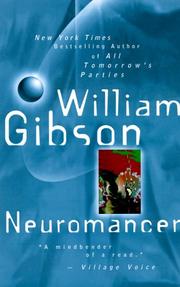
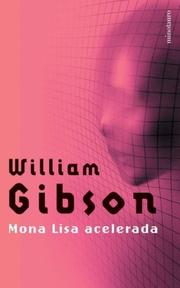
Count Zero is the second volume of the Sprawl trilogy, which began with Neuromancer and concludes with Mona Lisa Overdrive. It was serialized in the January through March 1986 monthly issues of Isaac Asimov's Science Fiction Magazine; the January cover was devoted to the story, with art by Hisaki Yasuda.
While Gibson did not introduce the concept or coin the term "cyberpunk", a subgenre of science fiction (nor particularly associated himself with it), he is considered to have first envisioned and described the concept of "cyberspace". The novel, Count Zero, is nonetheless regarded as an early example of the cyberpunk subgenre.
Publication history
Volume 2 of the Sprawl trilogy, Count Zero follows Neuromancer (1984), with the series being concluded by Mona Lisa Overdrive (1988). It appeared in serial form in Isaac Asimov's Science Fiction Magazine, in the January, February, and March 1986 issues (the January being the 100th of that magazine), where each part was accompanied by black and white art produced by J. K. Potter. The January cover of the magazine was devoted to the story, with art by Hisaki Yasuda. According to a published letter from Gibson, the magazine version was edited with his permission to contain less swearing and sexual content, in part to allow access to youth audiences in the United States.
It was first published in novel form in 1986.
Title
The title of the book is a pseudonym of the main character Bobby Newmark. The front leaf of the book suggests that it is a programming practice on the Zilog Z80 processor, quoting a guide by Rodnay Zaks: "On receiving an interrupt, decrement the counter to zero." While Zaks's guide is real, the quotation is fictitious. In the context of Z80 programming, "zero count" is a signal that the Z8430 timer circuit generates to interrupt the processor when it completes a countdown (the reverse of Gibson's description).
Plot
Introduction
In Count Zero Gibson presents "a high-tech near-future of linked super-computers... [a matrix that] has given rise to "cyberspace," an "inner" space something like a three-dimensional video display... [in a] world is dominated by multinational corporations... a few fabulously rich individuals, and the cutthroat competition between them." Seven years after the events of Neuromancer, strange things begin to happen in the Matrix, leading to the proliferation of what appear to be voodoo gods (hinted to be the fractured remains of the joined AIs that were Neuromancer and Wintermute). Two powerful multinational corporations, Maas Biolabs and Hosaka, are engaged in a battle for control over a powerful new technology, a biochip, using hackers and the Matrix as well as espionage and violence.
Expansive plot summary
As with later Gibson works, Count Zero has multiple story-lines; in it, a trio of plot lines ultimately converge:
Thread One: In the southwestern US, Turner, a corporate mercenary soldier, has been hired by former partner Conroy to help Christopher Mitchell, a brilliant researcher and bio-hacker, make an illegal career move from Maas' corporate fortress built into a mesa in the Arizona desert to Hosaka, a rival corporation. The attempt is a disaster, and Turner ends up escaping with Angie Mitchell, the scientist's young daughter, instead. Implanted in her brain by her father, she carries the secret plans of the construction of the valuable "biosoft" that has made Maas so influential and powerful. This "biosoft" is what multibillionaire Josef Virek (see thread three) ruthlessly pursues so that he can make an evolutionary jump to something resembling omniscience and immortality. During their flight from both Maas and Hosaka agents, Turner and Angie stay with Rudy, the former's estranged brother, and Sally, his partner and caretaker. Rudy identifies a device implanted in Angie's skull: her father had apparently altered her nervous system to allow her to access the Cyberspace Matrix directly, without a "deck" (a computer with an interface directly into the user's brain), but she is not aware of this. During their stay, Turner has a one-night stand with Sally and then leaves with Angie. In the Sprawl he meets with Bobby's group in a shopping mall besieged by agents of Maas and Conroy.
Thread Two: In Barrytown, New Jersey a young amateur computer hacker, Bobby Newmark, self-named "Count Zero", is given a piece of black market software by some criminal associates "to test". When he plugs himself into the matrix and runs the program, it almost kills him. The only thing that saves his life is a sudden image of a girl made of light who interferes and unhooks him from the software just before he flatlines. After fleeing his house (which is immediately thereafter destroyed) he meets Lucas, Beauvoir, and Jackie, a group fascinated by and dedicated to the recent appearance of voodoo deities in Cyberspace, who take him into their protection as they are collectively targeted by various corporate agents. It is eventually revealed that Bobby's mysterious savior is Angie (see Thread One); the two only meet physically at the very end of the book.
以上文字摘自英文维基百科「Count Zero」(有删节,去掉了参考文献等尾部小节),按 CC BY-SA 4.0 使用,作者为维基百科的各位编者。
资料卡
- 原题
- Count Zero
- 原作语言
- 美国英语、英语
- 首次出版
- 1986 年 1 月
- 作品形式
- 长篇小说
- 体裁
- 赛博朋克、科学幻想
- 首版出版社
- 维克多·格兰茨出版社
- 所属系列
- 蔓延三部曲
- 前作
- 神经浪游者
- 续作
- 重启蒙娜丽莎
- 获奖
- 20世纪百大英文小说
资料卡来自 Wikidata Q2384854(CC0),众包数据,个别字段可能不全。