书单
百科
这个词条暂时没有中文维基百科条目,下面是英文维基百科的内容(英文原文):
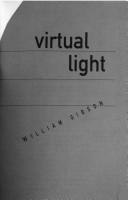
Virtual Light is a 1993 novel by the American-Canadian writer William Gibson. First published by Bantam Books, it is the first volume in Gibson's Bridge trilogy. Set in a near-future California, the novel takes place after an earthquake has damaged the San Francisco-Oakland Bay Bridge and turned it into an improvised settlement known as the Bridge.
The novel follows Chevette Washington, a bicycle messenger who steals a pair of virtual light glasses without realizing that they contain valuable concealed data, and Berry Rydell, a former police officer who becomes drawn into the attempt to recover them. Their intersecting pursuit brings together private security interests, violent intermediaries, and the Bridge community, linking the device to plans for a redeveloped San Francisco.
Critics and scholars have treated Virtual Light as a transitional work in Gibson's fiction, emphasizing its shift from the cyberspace-oriented mode of his earlier novels toward a more material and urban setting. Discussion of the novel has often focused on surveillance, redevelopment, and the tension between privatized urban order and the improvised social space of the Bridge. The novel was a finalist for the 1994 Hugo Award for Best Novel and placed fourth in the 1994 Locus poll for best science fiction novel.
Background and publication
In later interviews, William Gibson described Virtual Light as part of a new phase in his fiction: a near-future novel set close enough to the present to make contemporary life look estranged rather than remote. He later grouped it with Idoru and All Tomorrow's Parties as the Bridge trilogy, calling the sequence his take on the 1990s, and said that this phase of his work often felt less like conventional futurism than like a form of alternate history. Gibson also said that he had grown dissatisfied with what he called the "capital-F Future", and that Virtual Light was written to feel like an intensified, distilled version of the contemporary world.
That shift also marked a change in emphasis from the abstract spaces associated with Gibson's earlier cyberspace fiction to a more physical and immediate urban setting. Gibson described the novel as comic in intention, though not necessarily unbleak, and said that its world was essentially the present with the volume turned up. In discussing the period in which he wrote the novel, he said that Los Angeles had already "slipped" into the twenty-first century and pointed to Mike Davis's City of Quartz as an important point of reference; later critics have also linked the novel's urban setting and spatial politics to that influence. Gibson also said that Chevette drew in part on San Francisco bicycle-messenger culture, and that his research included the messenger zine Mercury Rising as well as time spent observing local messenger hangouts.
A direct precursor to the novel was Gibson's short story "Skinner's Room", published in Omni in 1991. In the acknowledgments to Virtual Light, Gibson wrote that a work commissioned for the 1990 exhibition Visionary San Francisco became "Skinner's Room", and that his collaboration with the architects Ming Fung and Craig Hodgetts provided several elements later used in the novel, including Skywalker Park, the Trap, and the Sunflower towers. Those materials connected the book's future San Francisco to a design and exhibition context as well as to Gibson's broader interest in improvised urban space.
Virtual Light was first published in New York by Bantam Books in 1993. A Canadian edition from Seal Books appeared the same year, and Penguin issued a British edition in 1994. A Spectra mass-market paperback followed in 1994, and the novel was later reissued in ebook and audiobook formats.
Plot
Virtual Light is set in a near-future California after a major earthquake has damaged the San Francisco-Oakland Bay Bridge and turned it into a dense improvised settlement known as the Bridge. Chevette Washington, a bicycle messenger who lives there, becomes involved in a larger conflict after wandering into a party at a hotel and impulsively stealing a pair of dark glasses from a man named Hans Rutger Blix. She does not know that they are virtual light glasses, a device that projects images directly into the optic nerve, or that they contain concealed data of great value. After Blix is murdered, Chevette finds herself pursued by multiple people seeking to recover the glasses.
Another central character is Berry Rydell, a former police officer who now works for the private security firm IntenSecure. After losing that job when hackers lure him into responding to a false emergency, he agrees to freelance in San Francisco with Lucius Warbaby and Warbaby's associate Freddie. Although the assignment is presented as part of the investigation into Blix's murder, Rydell gradually realizes that the real objective is to recover the missing glasses. He is told that Chevette is a suspect, but he comes to see that the people directing him are involved in a broader scheme connected to the device.
Chevette turns for help to her friend Sammy Sal DuPree and to Skinner, an older resident associated with the early Bridge community. A Japanese researcher, Shinya Yamazaki, is also living on the Bridge while studying Skinner and the settlement. Before Chevette can dispose of the glasses, Sammy shows her how they work, and she sees that they contain plans for a radically redeveloped San Francisco. The information points to a secret project involving advanced nanotechnology and major financial interests. Loveless, an enforcer connected to the scheme, closes in, and during the confrontation, Sammy helps Chevette escape but is shot off the Bridge and presumed dead. Chevette goes deeper into the Bridge community, realizing that the theft has drawn her into something larger than the murder itself.
以上文字摘自英文维基百科「Virtual Light」(有删节,去掉了参考文献等尾部小节),按 CC BY-SA 4.0 使用,作者为维基百科的各位编者。
资料卡
- 原题
- Virtual Light
- 原作语言
- 英语
- 首次出版
- 1993 年 9 月 6 日
- 作品形式
- 长篇小说
- 体裁
- 赛博朋克、科学幻想、反乌托邦作品
- 所属系列
- 桥梁三部曲
- 续作
- 阿伊朵
- 故事发生地
- 加利福尼亚州
资料卡来自 Wikidata Q897105(CC0),众包数据,个别字段可能不全。