书单
百科
这个词条暂时没有中文维基百科条目,下面是英文维基百科的内容(英文原文):
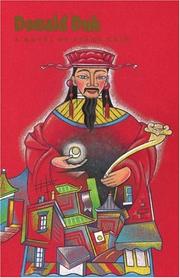
Donald Duk is a coming-of-age novel written by Frank Chin, first published in February 1991. It is about an eleven-year-old boy turning twelve, completing a cycle of the Chinese zodiac, in San Francisco, and his struggles juggling cultures and growing into his name.
Setting
The novel, written in 1991, is set in then present-day Chinatown, San Francisco, though it makes reference to many other historical periods.
Plot elements
Donald Duk is an eleven-year-old Chinese-American, preparing to celebrate both his twelfth birthday and Chinese New Year. He is the son of a Chinese chef named King Duk, and a Chinese mother named Daisy Duk. Donald has two older twin sisters named Penelope and Venus Duk. From the start of the book we are told how embarrassed Donald is of his name and of being introduced with his family.
The story begins with Donald comparing himself to Fred Astaire. Donald believes he dances as well as Fred and throughout the novel considers himself the real "Chinese Fred Astaire" (91). Donald immerses himself in old black-and-white movies, and especially admires Fred Astaire and Ginger Rogers films. He envies the way "everyone" adores Fred when he dances. Donald wishes he could "live the late-night life in old black-and-white movies and talk with his feet like Fred Astaire, and smile Fred Astaire's sweet lemonade smile" (1).
King Duk fears Donald sees the world too much in black-and-white, wanting to become as American as possible. Donald is ashamed of the way his family rejects American culture and that even when they watch television "they make everybody on the TV look Chinese!" (91). Donald does not want to be like them; he considers himself American because he was born in America. Donald's father tells him, "I think Donald Duk may be the very last American-born Chinese-American boy to believe you have to give up being Chinese to be an American" (42).
Having to put up with harassment due to his uncomfortable name, Donald also listens to his father's advice on standing up to bullies.
As Donald and his family welcome the Chinese New Year, Donald's best friend, Arnold Azalea, stays over at Donald's home in Chinatown in order to observe Chinese culture and celebrate the new year. On the first day of the New Year, Donald's family begins to talk about Chinese immigrants working on the Central Pacific Railroad end of the Transcontinental Railroad. Donald begins to have dreams of being a lion dancer, urging the Chinese gandy dancing railroad men on in a race to Promontory Summit. As these dreams progress, he is inspired to read up on the work the Chinese immigrants put into this track-laying and finds that the photos in the history books of Promontory Summit only show white workers: the role of Chinese labor had disappeared from history. Suddenly Donald finds himself claiming that white people are racists. King reminds his son that not all white people are racist and that up to that point, Donald had been the one acting ashamed of his cultural identity.
Hallucinatory dreams are interwoven with trips to the Chinese apothecary with his father and with tales of illicit firecracker dealers from the neighborhood gang. Subplots include Donald stealing and destroying one of the model airplanes his family has been making for the festival; Donald and Arnold getting in trouble with the police for blowing up fireworks in traffic; Donald's annoyance at the UC Berkeley idealism of his schoolteacher concerning Chinese Americans; and Donald's discomfort at learning that a Vietnam veteran in his neighborhood has been incorrectly arrested for a murder that happened while he had been with Donald.
Characters
Donald Duk is a Chinese American boy turning twelve who lives with his family in Chinatown, San Francisco. "Donald Duk hates his name. He is not a duck. He is not a cartoon character" (1). Donald wishes he was Fred Astaire and aspires to be like him. He loves tap dancing and sometimes daydreams he is talking with Astaire. Donald is ashamed of being Chinese and wishes he was only American. He finds his culture stupid, boring and embarrassing. The story covers his search for identity and his path to accepting his culture.
Arnold Azalea is Donald's best friend and attends the same school as Donald. He is white and is very fascinated by Donald's culture. He stays with Donald for a couple weeks so he can spend Chinese New Year with Donald and his family. He can't understand why Donald hates his culture and Chinese people so much. At one point, he and Donald get into a fight over Arnold's interest in the Chinese. It is also implied that he sometimes shares Donald's dreams about the railroad workers.
King Duk is Donald's father. King owns a Chinese restaurant in Chinatown, of which he is the chef. He is recognized by his community as having the most authentic Chinese food. King is also the one who provides Donald with tough love rather than pity when Donald complains of the bullies in the neighborhood. King's response is, "You walk like a sad softie...you look like you want everyone to beat you up" (3). He is direct with Donald and refuses to allow him to linger in self-pity but rather provides him with insight to allow him to accept his heritage. King had assimilationist parents and learned about his Chinese heritage only after he ran away from home and studied Chinese opera overseas.
Daisy Duk is Donald's mother. She is the reasonable one in the family. Daisy keeps the balance within the family when Donald upsets his father with anti-Chinese remarks.
Penelope Duk is Donald's older sister. Penny has a twin sister named Venus. She is eccentric and likes to make pop culture references often when the mood is sour and in order to lighten it.
Venus Duk is Donald's other older sister. She is Penny's twin and with Penny, she discusses pop culture and both provide the book with a sense of humorous relief.
以上文字摘自英文维基百科「Donald Duk」(有删节,去掉了参考文献等尾部小节),按 CC BY-SA 4.0 使用,作者为维基百科的各位编者。
资料卡
- 原题
- Donald Duk
- 原作语言
- 英语
- 首次出版
- 1991 年 2 月
- 作品形式
- 长篇小说
- 体裁
- 年轻成人小说
- 首版出版社
- Coffee House Press
- 故事发生地
- 旧金山
资料卡来自 Wikidata Q5294264(CC0),众包数据,个别字段可能不全。