书单
百科
这个词条暂时没有中文维基百科条目,下面是英文维基百科的内容(英文原文):
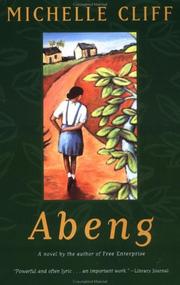
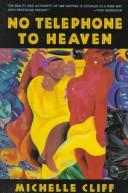
No Telephone to Heaven, the sequel to Abeng (novel), is the second novel published by Jamaican-American author Michelle Cliff. The novel continues the story of Clare Savage, Cliff's semi-autobiographical character from Abeng, through a set of flashbacks that recount Clare's adolescence and young adulthood as she moves from Jamaica to the United States, then to England, and finally back to Jamaica. First published in 1987, the book has received attention for its articulation of the paradoxes of history and identity after, and counter to, the experience of colonization.
Plot summary
The novel begins with a small group of armed militants, a much older Clare Savage among them, traveling through Jamaica's remote Cockpit Country. The militants have settled on land once owned by Clare's grandmother Miss Mattie, where they train together and grow food as well as produce illegal drugs.
The second chapter tells the story of Paul H., who is initially at a party with Harry/Harriet, the gay and feminine half-brother to one of Paul's friends. Paul returns home after a late night to find a horrific scene: his family and all of their servants have been murdered with a machete. He stumbles upon Christopher, another servant employed by Paul's parents, and enlists his help in dealing with the bodies and the burials. But we learn in flashback that Christopher, an orphan whose family has served Paul's parents for generations, committed the murders when he went to ask a favor from Paul's father—to help Christopher find where his grandmother is buried so that he could give her spirit rest—and was turned down. Christopher had been waiting for Paul, and kills him before Paul figures out what has happened.
The story then shifts time periods to 1960, when Boy Savage, Clare's father, is immigrating with his family to the United States. Kitty Savage, Clare's mother, is not happy about moving away from all she has ever known, but she resigns herself to quiet depression upon departure from Jamaica and arrival in Miami. Boy purchases a used car and the family travels north to New York City. While traveling through the state of Georgia, Boy attempts to get a room in a segregated motel; the innkeeper suspects that he is black, but Boy is able to convince the innkeeper that he is white by telling him that his ancestors once owned plantations. When the family arrives in New York City they go to stay with Winston and Grace, relatives from Kitty's mother's side of the family. Soon, however, they stop any contact with Kitty's relatives in order to fully assume a white identity. Boy eventually takes a job driving a laundry truck and Kitty goes to work in the office of his employer. Fed up with the constant racism she encounters, Kitty decides to slip messages into the linens before they are delivered—messages such as “Marcus Garvey was right” and “America is cruel. Consider kindness for a change” aimed at the white customers. Mr. B, Kitty's employer, finds out about the messages and fires two of the black workers, Georgia and Virginia; Mr. B suspects that they were the ones slipping in the messages. Kitty quits her job, then takes Clare's younger sister Jennie and returns to Jamaica.
After her mother and sister leave, Clare becomes increasingly lonely, since she has not yet started school and is not allowed to leave the house by herself. She stays home and watches movies and remembers the first American she met—a white teacher at her Catholic school in Jamaica who taught lessons on the American Civil War, took the girls to see the “documentary” Gone With the Wind, and extolled the benefits of racial hierarchies. When Clare begins school in New York she is told that, despite her intelligence, she will be held back for a year because children from Third World countries develop differently from American children. Boy tries to convince the school that Clare is white, but the school does not believe him, nor do they have a category for biracial students—a student is either black or white. Five years pass, and Kitty is still living with Clare's younger sister in Jamaica. Clare, who is now a sophomore in college, comes home one evening to find her father crying. He tells her that her mother has died and later that her sister Jennie will be coming to live with them. After Jennie moves in, Clare borrows some money from her uncle Fredrick and leaves home for England.
Upon arriving in London Clare finds a room to rent and spends some time visiting various museums, browsing bookshops and generally getting to know England. She eventually becomes a legal resident and enrolls at the University of London to study art history. After some time at the university Clare decides to take her uncle up on his invitation to come back to Jamaica, where she attends the same party as Paul H. before he was killed by Christopher, and meets Harry/Harriet. Clare and Harry/Harriet become good friends while Clare is in Kingston, Jamaica, spending time together first in a Spanish galleon-themed bar and then on a beach discussing the history and current social conditions of Jamaica. The two keep in touch, via letters, after Clare returns to England. Upon her return, Clare witnesses a National Front march and is deeply disturbed by the aggression and racism on display on her college campus. She tries to explain why she is so disturbed to her friend Liz, but gets nowhere and ends up feeling isolated and alone.
以上文字摘自英文维基百科「No Telephone to Heaven」(有删节,去掉了参考文献等尾部小节),按 CC BY-SA 4.0 使用,作者为维基百科的各位编者。
资料卡
- 原题
- No Telephone to Heaven
- 原作语言
- 英语
- 首次出版
- 1987 年
- 作品形式
- 长篇小说
- 首版出版社
- E·P·都顿
- 故事发生地
- 伦敦
资料卡来自 Wikidata Q7045063(CC0),众包数据,个别字段可能不全。