 书单
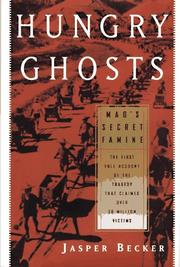
饿鬼:毛时代大饥荒揭秘 (1998)
- 作者
- Jasper Becker
- 首版
- 1998 年
- 国家/地区
- 英国
- Open Library
- 4 个版本
百科
《饿鬼:毛时代大饥荒揭秘》(Hungry Ghosts: Mao's Secret Famine)是由《南华早报》驻北京记者站主任贾斯柏·贝克写的一本书。中译本由姜和平翻译,明镜出版社出版。本书详细描述了毛泽东的大跃进所造成的大饥荒。本书曾获荷兰PIOOM人权奖。
对于大饥荒造成的死亡人数,中国经济体制改革研究所所长陈一咨表示,该所根据中国共产党党内文件所写成的秘密报告,认为饥荒死亡数是4300万-4500万。另一份提供中央领导参阅的资料认为人数达5、6千万。
贝克指出,如果不是毛泽东长时间否认危机的存在,食物严重短缺和饥荒是可以避免的。1949年后,共产党完全垄断中国舆论工具。在中国的言论沉默期间,西方观察家的作用变得重要。西方媒体向世界披露了中国的实情,但当大跃进成为可怕的悲剧时,左派观察家如埃德加·斯诺、路易·艾黎和安娜·路易丝·斯特朗保持沉默或淡化它的严重性。
贝克结论,如果中共高官敢与毛泽东争论,第一年后悲剧本来是可以避免的。
书评
《泰晤士报文学增刊》:《饿鬼》是第一本详细说明1958年到1962年之间中国大饥荒的英文书籍。
《纽约时报》:贝克先生的书了不起,它明确证明大跃进所造成的大饥荒是历史上最严重的惨剧之一,严重的打击了故意无视大饥荒。
以上文字摘自维基百科「餓鬼:毛時代大饑荒揭秘」(去掉了参考文献等尾部小节),按 CC BY-SA 4.0 使用,作者为维基百科的各位编者。
中文维基百科的条目比较短,下面附上英文维基百科的内容(英文原文):
Hungry Ghosts: Mao's Secret Famine is a book about the Great Chinese Famine by British author Jasper Becker, the former Beijing bureau chief for the South China Morning Post. Becker interviewed peasants in Henan Province and Anhui Province, both of which were significantly affected by the famine. Hungry Ghosts was the first major English book to provide a "comprehensive accessible account" of the man-made famine.
Background
In 1958, Mao declared that China would be more prosperous than the United Kingdom within 15 years. His government set up thousands of people's communes to increase industrial production in a campaign called the Great Leap Forward. For a number of reasons, including radical agricultural policies, social pressure, economic mismanagement, and coincidental natural disasters, this campaign resulted in declining grain production, food insecurity, and eventually starvation in many parts of the country between 1959 and 1961. This famine would eventually be known as the Great Chinese Famine; estimated death tolls range from 15 million to 55 million people.
Reception
Hungry Ghosts was positively reviewed by academics and reviewers, especially for the depth of its research and its clear account of the famine. Many called it horrifying or chilling. Others noted that the book was a valuable resource for Western audiences.
Kirkus Reviews called it "a remarkable book, the more devastating for its quietness and absence of rhetoric." A New York Times Book Review by political economist Nicholas Eberstadt called the book "a grim tribute to the dead and a challenge to our consciences." Isabel Hilton of The Independent argued that the book provides "a small memorial to those uncounted millions, a memorial the leaders who brought about those deaths will never erect."
Caroline Moorehead, writing in the New Statesman, stated that Becker's account was "as full as possible" given the difficulty of obtaining information on the famine. Publishers Weekly stated that the book was a "gripping, well-researched account" and "a testament to the folly of utopian engineering." Several reviewers, including historian Lee Feigon, sinologist Robert Ash, as well as Ann Scott Tyson of the Christian Science Monitor, highlighted the in-depth interviews from survivors as one of the most important aspects of the book.
Several critics pointed out the strong argument that Becker made against Mao's government and policies, especially the Great Leap Forward. A reviewer for The Economist wrote that Becker "passionately but precisely, Mr. Becker records the tragic results of one of the boldest example of Utopian engineering ever attempted". A review in Asiaweek referred to the book as "admirable history" and stated that Becker's research was a "damning indictment of Maoist policies." In The New York Times, Richard Bernstein stated that the book "firmly establishes the Great Leap and the resulting famine as one of the worst atrocities of all time". Journalist and historian Philip Bowring suggested that if there was greater awareness of the reality of the famine in China, there would be less reverence for Mao. Colina MacDougall, writing for Asian Affairs, agreed, saying that "publication of the truth would safeguard China against future leadership folly."
Historian Susan Whitfield, writing in the Financial Times, and French academic Jean-Philippe Beja, writing in the journal China Perspectives, both praised Becker for challenging the official explanation for the famine, which positioned it as being the result of natural disasters and downplayed the importance of political decisions. Writing in the London Review of Books, American sinologist Perry Link stated that "Becker makes an important argument that secrecy about famines is more than morally dubious in its own right, and more than practically disastrous because it erases the possibility of foreign aid."
以上文字摘自英文维基百科「Hungry Ghosts: Mao's Secret Famine」(有删节,去掉了参考文献等尾部小节),按 CC BY-SA 4.0 使用,作者为维基百科的各位编者。
资料卡
- 原作语言
- 英语
- 首次出版
- 1998 年 4 月 15 日
- 主题
- 三年大饥荒
资料卡来自 Wikidata Q5943479(CC0),众包数据,个别字段可能不全。