书单
百科
这个词条暂时没有中文维基百科条目,下面是英文维基百科的内容(英文原文):
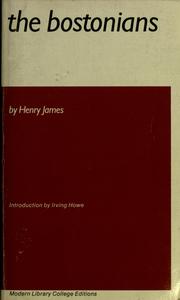
The Bostonians is a novel by Henry James, first published as a serial in The Century Magazine in 1885–1886 and then as a book in 1886. This bittersweet tragicomedy centres on an odd triangle of characters: Basil Ransom, a political conservative from Mississippi; Olive Chancellor, Ransom's cousin and a Boston feminist; and Verena Tarrant, a pretty, young protégée of Olive's in the feminist movement. The storyline concerns the struggle between Ransom and Olive for Verena's allegiance and affection, though the novel also includes a wide panorama of political activists, newspaper people, and quirky eccentrics.
Publication
Henry James originally entered into an agreement with the Boston publisher James R. Osgood & Co. to publish the book in the United States for $4,000. Osgood made a separate agreement with The Century for the magazine to serialize the novel. In May 1885, before the serialization had finished and James had been paid any of the money owed to him, Osgood's firm went bankrupt. James was able to recover part of the lost sum by selling the copyright to Macmillan and Co., which published The Bostonians in a three-volume edition in Britain in February 1886, and in a one-volume edition in the US in May 1886. James was not, however, able to recover any money for the serialization in The Century.
Synopsis
When Basil Ransom, a Mississippi lawyer and Confederate Civil War veteran, visits his affluent cousin Olive Chancellor in Boston, she reluctantly takes him to a political meeting where Verena Tarrant delivers a feminist speech. Ransom, a stubborn conservative who opposes women's suffrage, is discomfited by the speech but fascinated with the speaker. Olive, who has never seen Verena before, is equally fascinated. She persuades Verena to leave her parents' house, move in with her, and study in preparation for a larger role in the feminist movement. Meanwhile, Ransom returns to his law practice in New York, which is not doing well. Still enchanted with Verena, he visits Boston again, travels to Cambridge where she is visiting her parents, and walks with her through the grounds of Harvard College, including the Civil War Memorial Hall. Verena finds herself attracted to the charismatic Ransom and, without telling him of her decision, accedes to his request not to disclose their encounter to Olive, who, she well understands, strongly objects to her southern cousin's beliefs and fears he will come between her and Verena.
As Olive prepares Verena to become a platform speaker supporting the cause of feminism and the liberation of women from male domination, she accepts an invitation to speak in New York to a gathering of fashionable women from Mrs. Burrage, a very rich society woman whose son, Henry, had courted and been rejected by Verena in Boston when he was a student at Harvard College. Basil, invited by Mrs. Burrage at the request of Verena, comes to her talk. When Olive learns that Verena had requested Basil be invited and that, back in Boston, she had received a letter from him, she begins to fear that he will take her young protegée away. When the two women return to their temporary quarters on Tenth Avenue before going out to dine with Henry Burrage, they find two notes, one from Basil requesting an hour of Verena's time and another from Mrs. Burrage inviting Olive to her house for a conversation. During her meeting with Mrs. Burrage, Olive discovers that she is acting on behalf of her son, who still wants to marry Verena. Though she despises men and wants to hold onto Verena, Olive gives serious thought to supporting Mrs. Burrage's proposal after she leaves her house. But when she returns to Tenth Avenue, she discovers that Verena has gone out walking with Basil. During their walk, Basil expounds on his belief that women should not be granted suffrage and legal equality to men because their proper sphere is within the home wives and mothers. Attracted by his manner and personality, but appalled by his views, Verena leaves him and falls into Olive's arms, begging in tears that they immediately leave New York and return to Boston.
Some time later, Olive and Verena are taking an August holiday in Marmion, a fictional seaside community in Cape Cod, where Verena is preparing for her first important public appearance as an advocate of feminism. Olive has hired an agent and rented the Boston Music Hall for Verena's speech. When Basil shows up in Marmion, he tells Verena that he finally feels able to ask her to marry him because, with the imminent publication of an article setting forth his conservative views, he now believes he has a future he can share with her. Verena is more drawn to him than ever, but the death of Miss Birdseye, a companion in their rented cottage and a notable reformer and abolitionist, makes Verena flee again. Unable to bear the thought of abandoning Miss Birdseye's ideals and wounding Olive, she goes into hiding to prevent Basil from following her.
On the night that Verena is to speak at the Boston Music Hall, she sees Basil in the audience before she comes out to give her address and becomes unable to take the stage. Despite the presence of a policeman guarding the door backstage, Basil forces his way in and compels Verena to elope with him, to the distress of Olive and her fellow feminists. The final sentence of the novel mentions Verena in tears—not to be her last, James's narrator assures the reader.
以上文字摘自英文维基百科「The Bostonians」(有删节,去掉了参考文献等尾部小节),按 CC BY-SA 4.0 使用,作者为维基百科的各位编者。
资料卡
- 原题
- The Bostonians
- 原作语言
- 英语
- 首次出版
- 1886 年
- 作品形式
- 长篇小说
- 故事发生地
- 波士顿、马萨诸塞州、纽约
资料卡来自 Wikidata Q2338040(CC0),众包数据,个别字段可能不全。
改编作品
电影1
- 《波士顿人》The Bostonians
名单来自 Wikidata(CC0):只列条目里写明「改编自 / 取材于」这本书的作品,不按名字猜;众包数据,可能不全。