书单
百科
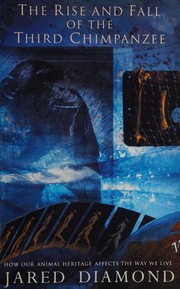
《第三种黑猩猩:人类的身世与未来》(英语:The Third Chimpanzee: The Evolution and Future of the Human Animal)是一本贾德·戴蒙创作的科普图书,获得1992年的英国皇家学会科学图书奖,是贾德·戴蒙第一次获得此奖。
以上文字摘自维基百科「第三种黑猩猩」(去掉了参考文献等尾部小节),按 CC BY-SA 4.0 使用,作者为维基百科的各位编者。
中文维基百科的条目比较短,下面附上英文维基百科的内容(英文原文):
The Third Chimpanzee: The Evolution and Future of the Human Animal is a 1991 book by academic and popular science author Jared Diamond, in which the author explores concepts relating to the animal origins of human behavior. The book follows a series of articles published by Diamond, a physiologist, examining the evidence and its interpretation in earlier treatments of the related species, including cultural characteristics or features often regarded as particularly unique to humans. The book was released in the United Kingdom in 1991 by Radius under the title The Rise and Fall of the Third Chimpanzee: How Our Animal Heritage Affects the Way We Live and in the United States in 1992 by HarperCollins under the title The Third Chimpanzee: The Evolution and Future of the Human Animal. In 2014, Diamond published an adapted version for young people with Seven Stories Press titled, The Third Chimpanzee for Young People.
Diamond explores the question of how Homo sapiens came to dominate its closest relatives, such as chimpanzees, and why one group of humans (Eurasians) came to dominate others (indigenous peoples of the Americas, for example). In answering these questions, Diamond (a professor in the fields of physiology and geography) applies a variety of biological and anthropological arguments to reject traditional hegemonic views that the dominant peoples came from "superior" genetic stock and argues instead that those peoples who came to dominate others did so because of advantages found in their local environment which allowed them to develop larger populations, wider immunities to disease, and superior technologies for agriculture and warfare.
The Third Chimpanzee also examines how asymmetry in male and female mating behaviour is resolved through differing social structures across cultures, and how first contact between unequal civilizations almost always results in genocide. The book ends by noting that technological progress may cause environmental degradation on a scale leading to extinction.
Organization and summary
Despite the broad canvas, the book manages to link together a coherent argument, much of which was novel at the time of publication. Borrowing insights from fields ranging from the humanities (history, linguistics, anthropology), to evolutionary biology, The Third Chimpanzee compiles a portrait of humanity's success and also its potential for disaster.
The book is divided into five parts. Part one deals with the similarity between humans and chimpanzees.
The chimpanzee's closest relatives (part one)
The title of the book refers to how similar taxonomically humans and the two species of chimps are, as their genes differ by just 1.6%, whereas chimps and gorillas differ by 2.3% (p. 19).
Thus the chimp's closest relatives are not the other apes with which it is classed, but the human (see Homininae). In fact, the chimpanzee-human difference is smaller than some within-species distances: e.g. even closely related birds such as the red-eyed and white-eyed vireos differ by 2.9%. Going by genetic differences, humans should be treated as a third species of the genus, Pan (after the common or robust chimpanzee and the bonobo or gracile chimpanzee). Or possibly the chimpanzee's scientific name should be Homo troglodytes instead of Pan troglodytes. Diamond observes in his book that this would provide food for thought to people passing this side of the bars of a cage with the label Homo.
以上文字摘自英文维基百科「The Third Chimpanzee」(有删节,去掉了参考文献等尾部小节),按 CC BY-SA 4.0 使用,作者为维基百科的各位编者。
资料卡
- 原题
- The Third Chimpanzee
- 原作语言
- 英语
- 首次出版
- 1991 年
- 体裁
- 随笔
- 首版出版社
- 伽利玛出版社
- 续作
- 性趣何来?
- 主题
- 人类演化、人类学
资料卡来自 Wikidata Q440914(CC0),众包数据,个别字段可能不全。