书单
百科
这个词条暂时没有中文维基百科条目,下面是英文维基百科的内容(英文原文):
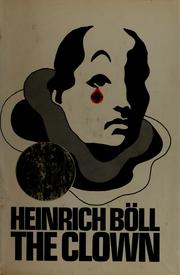
The Clown (German: Ansichten eines Clowns, lit. "Views of a clown") is a 1963 novel by West German writer Heinrich Böll.
Plot
Hans Schnier is the "Clown" of the novel's title. He is a twenty-seven years old agnostic from a very wealthy family. At the beginning of the story he arrives in Bonn, Germany. As a clown, he had to travel across the country from city to city to perform as an artist. He always sees himself as an artist. His home is in Bonn, so he has to stay in hotels when he is not in Bonn. The woman he has been living with, Marie, has left him to marry another man, Zupfner. Therefore, Hans has become depressed. He wants to get Marie back from Zupfner, and also has serious financial problems.
He describes himself as a clown with no church affiliation. His parents, devout Protestants, sent him to a Catholic school. He met Marie in school and fell in love with her. Although Marie was a Catholic, she agreed to live with him. They never got legally married, largely because Hans would not agree to sign a paper agreeing to raise his children as Catholics. He did not even want to get a marriage license, because he thought that they were for people who did not go to church. While living together, they never had any children. Marie always stated that even though she was living in sin, she was still a Catholic. Once in high school, Hans saw her holding hands with Zupfner, but she told him that Zupfner was only a friend. Hans brought her along on every trip and took her everywhere he went. After five years, there was a Catholic conference near their hotel in a German city. Marie wanted to breathe some Catholic air and ask Hans to go there. Hans had a performance at the same time. When they arrived late at night, he fell asleep. The next morning, he discovered Marie was gone, but had left a note. He never saw her again. The note read: “I must take the path that I must take.”
Hans has a mystical peculiarity, as he can detect smells through the telephone. As he explains, he does not only suffer from depression, headaches, laziness and that mystical ability, but also suffers from his disposition to monogamy. There is only one woman that he can live with: Marie. His reversal of values is clearly shown in his statement: "I believe that the living are dead, and that the dead live, not the way Protestants and Catholics believe it."
When he goes to his home in the Bonn, the first person he meets is his millionaire father. He remembers all of his memories from the past. He had a sister named Henrietta. The family forced her to volunteer for anti-aircraft duty seventeen years ago and she never came back. He also has a brother named Leo. He recently converted to Catholicism and is studying theology in college. Hans tells his father about his financial problems. After his father offers him to work for him for a relatively low wage, Hans rejects the offer. He tells his father that he and his brother never benefited from the wealth of their family. War has affected the family. They were never given enough food or pocket money. Many things were regarded as extravagances. Thus, he lacks any positive memories of the past, which may have been a factor that drove him, at age 21, to leave home to become a clown.
He calls many of his relatives in Bonn, but nobody can help him. He soon discovers that Marie is now in Rome on her honeymoon. This news only depresses him more. Finally, he calls his brother, Leo, who promises to bring him money the next day. But, in the middle of the conversation, Leo says that he has talked to Zupfner about something and that they became friends. Because Leo has converted to Catholicism, his father no longer supports him. Therefore, Leo is not in a good position financially. In anger, Hans tells him not to come to bring the money. At the end, Hans takes his guitar to the train station and plays as people throw coins into his hat.
Social issues
Böll's novel reflects the German society under Hitler and in the postwar years. It criticises many aspects of society such as political and religious beliefs, marriage issues, the conflict between Catholics and Protestants, the effect of war on families (a millionaire one), and many other things in the society of Germany. Heinrich Böll revealed all of those postwar problems and related them to some psychological aspects that harmed a man with some weird beliefs like Hans.
Böll sought to focus on the role of the Roman Catholic Church, to exhibit its role in Europe. He includes a depiction of establishment moralities and politics in the novel. The church limited the relations between Catholics and Protestants, and it categorized German society into religious groups. Although the Protestants are shown as richer people in the novel, Böll portrays society was mainly under the influence of Catholics, especially in political and moral issues. The protagonist Hans does not get any benefit from either group. He is shown as a kind of pagan, but a pagan who has some Protestant and Catholic relatives and participates in some ceremonies of both religions — although his beliefs are quite different from either. Even his clown's art does not win approval from some political parties, although he is a great performer. But after he injures his left knee, he is unable to perform as well as before. In conclusion, he describes the age in this statement: "If our era deserves a name, it would have to be called the era of prostitution."
以上文字摘自英文维基百科「The Clown (novel)」(有删节,去掉了参考文献等尾部小节),按 CC BY-SA 4.0 使用,作者为维基百科的各位编者。
资料卡
- 原题
- Ansichten eines Clowns
- 原作语言
- 德语
- 首次出版
- 1963 年
- 作品形式
- 长篇小说
- 首版出版社
- Kiepenheuer & Witsch
- 主题
- 市民、同盟国军事占领德国
- 故事发生地
- 波恩、科隆
- 故事年代
- 20世纪40年代、20世纪50年代
- 主要人物
- Hans Schnier
- 改编作品
- The Clown
资料卡来自 Wikidata Q514002(CC0),众包数据,个别字段可能不全。
更多资料与书评
在哪读
海因里希·伯尔 的其他作品
作者页 ›相似的书