 书单
百科
这个词条暂时没有中文维基百科条目,下面是英文维基百科的内容(英文原文):
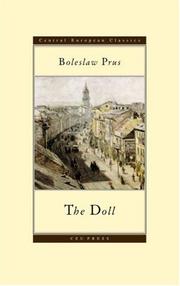
The Doll (Polish: Lalka) is a realist novel by the Polish writer Bolesław Prus, first published in periodical form between 1887 and 1889, and released as a book in 1890. The story centers on Stanisław Wokulski, a successful merchant whose unrequited love for the aristocratic Izabela Łęcka exposes the social inequalities, class divisions, and contradictions of 19th-century Warsaw. The novel's title has a dual referent as it derives from a minor episode involving a stolen toy, while also serving as a metaphorical reference to the novel's principal female character.
A major theme of The Doll is the conflict between different social classes and the limitations imposed by social stratification. The novel portrays an aristocracy that retains considerable social prestige despite its declining economic position, alongside a growing middle class bourgeoisie whose wealth does not provide social acceptance. Prus examines poverty, inequality, prejudice, antisemitism, the position of women, and the difficulties in attempting to ameliorate social circumstances. The novel's combination of personal tragedy and social observation allowed Prus to examine the tensions between romantic ideals and the practical values of society. Most of the story is presented by a third-person narrator who follows the characters, while substantial sections consist of the diary of Ignacy Rzecki, Wokulski's older associate and trusted shopkeeper.
The novel has been regarded by some, including Nobel laureate Czesław Miłosz, as the greatest Polish novel. According to Prus biographer Zygmunt Szweykowski, it may be unique in 19th-century world literature as a comprehensive, compelling picture of an entire society. However, Aleksander Świętochowski and other Positivist writers were quite critical of the work, claiming that it is ambiguous and psychologically complex. It has been translated into twenty-eight languages, and has been produced in several film versions and, most famously, as a television miniseries in 1977.
Title
The title of the novel remains the subject of debate and varying interpretations. The most common interpretation associates it with the character of Izabela Łęcka, a beautiful but spoiled and emotionally shallow young aristocratic woman. In the novel itself, Mrs Zasławska uses the word "dolls" to describe spoiled young women of the aristocracy. Elsewhere, Rzecki arranges mechanical dolls on a shop counter and sets them in motion, suggesting that the world depicted in the novel resembles a puppet theatre.
Prus himself, however, explained the title differently. In a letter to Władysław Korotyński, he wrote: "In the novel The Doll, there is a chapter devoted to a trial concerning the theft of a doll, an actual child’s doll. Such a trial really took place in Vienna. Since this incident caused the whole novel to crystallize and come together in my mind, out of gratitude I used the word 'doll' as its title. The novel they are discussing ought to have been entitled Three Generations. Perhaps it would even have been better understood under that title". The trial did in fact take place in Brno and was reported in the Polish press on 9 February 1887. A young, impoverished woman was accused of stealing a doll from the home of a wealthy acquaintance. When the doll was cut open, the mark of the shopkeeper from whom the accused had purchased the toy was found inside. This proved that the doll was not the same one that had disappeared from the accuser’s home. The trial ended in her acquittal.
Prus recreated this episode in the novel. Helena Stawska is accused of stealing a doll for her daughter by Baroness Krzeszowska, while the toy itself had been purchased at Wokulski’s store. The case is resolved in the courtroom in exactly the same way.
Nevertheless, at the time, the term “dolls” was also used disparagingly to describe members of the upper classes, particularly young women displayed like dolls on the marriage market. The expression was popularized by Józef Ignacy Kraszewski in his 1873 novel Lalki: Sceny przedślubne (transl. Dolls: Pre-Wedding Scenes). Moreover, the instalment describing the ball at the Łęckis’ home (later chapter "Ladies and Women" in volume II), appeared in the 3 March 1889 issue of "Kurier Codzienny" alongside an article entitled Dolls, which criticized the ball as a kind of marriage market where young women were put on display.
Structure
The novel was not initially published as a complete book, but appeared in installments in the Kurier Codzienny, beginning on 29 September 1887 and continuing until 24 May 1889. Prus was already a successful journalist, columnist and a regular contributor to the newspaper. While writing the novel, Prus drew on his own notes and records of current affairs, made during the period in which the story is set. Readers received the novel progressively, and the newspaper's schedule imposed practical demands on Prus's composition. Publication was not continuous; in 1888 there was a substantial interruption after Prus left Warsaw for Nałęczów. The newspaper context shaped how contemporary readers encountered the novel and placed it alongside reports on current events.
The collated story was eventually published as a novel in 1890 by Gebethner i Wolff. Prus revised the structure of the work, altered the division into chapters and volumes, and made various textual corrections and deletions prior to publication. Prus had originally intended to name the book Three Generations.
以上文字摘自英文维基百科「The Doll (Prus novel)」(有删节,去掉了参考文献等尾部小节),按 CC BY-SA 4.0 使用,作者为维基百科的各位编者。
资料卡
- 原题
- Lalka
- 原作语言
- 波兰语
- 首次出版
- 1887 年
- 作品形式
- 长篇小说
- 体裁
- 社会小说
- 首版出版社
- Gebethner i Wolff
- 故事发生地
- 波兰
资料卡来自 Wikidata Q7476662(CC0),众包数据,个别字段可能不全。
改编作品
电影2
电视剧 / 剧集1
名单来自 Wikidata(CC0):只列条目里写明「改编自 / 取材于」这本书的作品,不按名字猜;众包数据,可能不全。